
From a grieving brother’s open letter to the goalkeeper whose mother nearly missed his big moment, this week’s World Cup notebook is for the women, the families, and the fine print behind the football.
Last week, this notebook covered Thomas Partey’s visa block, the tournament’s six women referees, and Argentina’s stadium ban on fathers behind on child support. This week, the World Cup gave us something softer and something far more cynical, sometimes in the same story.
A letter the whole continent is reading
 This week’s biggest World Cup story did not happen on a pitch. Ivory Coast forward Yan Diomande, 19, published an open letter to his late sister, Roxane, who died last year aged 15. Her family says her drink was spiked at a party.
The letter, published by The Players’ Tribune, traces a childhood in Abidjan, a string of failed European and American trials, and the night a phone call from home changed everything. Diomande had made his senior debut for Leganés against Real Madrid only weeks before.
One line has now travelled further than any of his assists this tournament: that he intends to prove his sister right. “I will prove that you were right, or I will die trying.”
It is the kind of story that belongs in a women’s column, not as a World Cup human-interest sidebar, but because a spiked drink and a 15-year-old girl represent a loss far too many families recognise. It deserves care, not just clicks.
Africa arrives dressed for the occasion
 Long before kick-off, African teams were already winning the World Cup’s other competition: style. The Democratic Republic of Congo landed in Houston in custom black suits with leopard-print sashes and crystal cheetah brooches, a nod to their Léopards nickname and to La Sape, Congo’s celebrated sartorial movement.
Ivory Coast and Senegal also swapped tracksuits for tailoring, working elephant embroidery and national colours into their travel looks. Before a single ball was kicked, the continent had already made a statement.
On the pitch, Ghana’s home shirt riffs on Kwaku Ananse, the trickster spider of West African folklore, while their gold away kit has been called one of the tournament’s best dressed. South Africa’s green and gold kit references the country’s 12 official languages, and Senegal’s away shirt nods to Dakar’s hand-painted car rapide minibuses.
Toronto turns Ghanaian
 When Caleb Yirenkyi scored Ghana’s winner in the fifth minute of stoppage time against Panama, Toronto’s Sankofa Square turned into an open-air jama session that ran past 2 a.m. Police briefly closed the intersection as fans danced and sang in the rain.
Earlier that day, Otumfuo Osei Tutu II appeared in full regalia at a Ghana fan festival alongside Black Stars legend Asamoah Gyan, who led the crowd in jama himself. Ghanaian royalty, a stoppage-time winner, and a street party until 2 a.m. — Toronto didn’t know what hit it.
Ghana then took their composure all the way to Boston, where they held England — despite 72% possession, 19 shots, and one very embarrassed Harry Kane — to a goalless draw on 23 June. The Black Stars went into their final group game against Croatia with four points and a confirmed place in the Round of 32, Ghana’s first knockout appearance since 2010. Worth every second of that rain in Toronto.
How Africa is faring: group-stage snapshot
Ten African nations are at this World Cup, the most ever. After two rounds of matches, the picture across the continent looks like this:
Team Group Played Record Pts
———————————————————————————————————————————————————————
Algeria Group J2 1W 1L 3
Cabo Verde Group H2 0W 2D 2
DR Congo Group K2 0W 1D 1L 1
Egypt Group G2 1W 1D 4 ✓
Ghana Group L2 1W 1D 4 ✓
Ivory Coast Group E2 1W 1L 3
Morocco Group C2 1W 1D 4 ✓
Senegal Group I2 0W 0D 2L 0
South Africa Group A2 0W 1D 1L 1
Tunisia Group F2 0W 0D 2L 0 ✗
✓ = through to Round of 32 | ✗ = eliminated
Morocco is the most convincing African side so far. They drew 1-1 with Brazil and beat Scotland 1-0, sitting top of Group C on goal difference ahead of their final match against Haiti. Egypt surged to four points after beating New Zealand 3-1, having drawn with Belgium in their opener. Both Ghana and Morocco have secured their spots.
Ivory Coast, with three points from two games, know that a win against Curaçao on 25 June will almost certainly take them through. Algeria are in the same position heading into their final match against Austria. Cabo Verde drew 2-2 with Uruguay and still have an outside chance.
The hurt is real, too. Senegal have lost both matches, to France (3-1) and Norway (3-2), and face elimination. Tunisia, who sacked their coach after a 5-1 loss to Sweden, then shipped four more against Japan. They are out. South Africa is still alive on one point but need a result against South Korea tonight.
The goalkeeper, his mother, and a $15,000 question
 The tournament’s warmest subplot belongs to Cabo Verde’s 40-year-old goalkeeper, Josimar “Vozinha” Dias. His seven saves against Spain delivered a result his country had never managed before, but his mother, Ana Cândida Évora, was not there to see it.
She could not afford the $15,000 bond required for a US visa under rules that apply to Cabo Verde and several other nations. After Vozinha spoke about it publicly, US officials, including House Minority Leader Hakeem Jeffries, intervened to waive the fee within 48 hours, and she flew from Praia in time for their second match against Uruguay. Cabo Verde drew 2-2 with Uruguay in Miami. She was there.
It is a reminder that the women behind the players — mothers, sisters, wives — often carry costs the cameras never show.
The player who left: Jeremy Doku and the right to be there
While the tournament debates hydration breaks and offside lines, Belgium winger Jeremy Doku quietly made the most human decision of the World Cup so far. He left the squad mid-tournament to be in London for the birth of his son, Praise, with his wife, Shireen. The Belgian federation gave him permission. He was back in Seattle with the team within 24 hours.
Not everyone thought that was fine. A French sports presenter on L’Équipe described childbirth as a moment where “dads are useless.” The broadcaster had to issue a public apology and suspend the presenter within days. England striker Ollie Watkins, a father himself, put it plainly: calling a birth “disgustin’” is “not a way to label a birth.”
For what it is worth, Doku’s Instagram statement needed no TV segment. He wrote that welcoming Praise into the world was “one of the greatest blessings God has ever given me” and thanked his team before saying it was time to get back to football. Brief, gracious, settled. The presenter who called him “useless” had fewer of all three qualities.
It is also worth noting that not every player made the same call. South Korean goalkeeper Kim Seung-gyu missed his daughter’s birth to stay at camp. Norway defender Leo Østigård watched his son’s birth over FaceTime. FIFA has no formal paternity policy. Whether a player stays or goes is still largely left to chance, squad culture, and the personal courage to ask. That, too, is a conversation worth having.
Water break or cash break?
FIFA’s new three-minute hydration breaks, mandatory in both halves of every match regardless of temperature, were sold to the public as player welfare. The science behind that claim is real: at last year’s Club World Cup, three matches should have been suspended or postponed on heat grounds, according to FIFPRO, the global players’ union.
But the breaks have also created an entirely new advertising slot. Broadcasters can run adverts from 20 seconds into the stoppage until 30 seconds before play resumes — more than four minutes of fresh inventory per match.
In the United States, Fox is reportedly charging between $200,000 and $750,000 for a single 30-second hydration-break advert, depending on the fixture. Industry estimates put the total advertising haul in the US alone above $250 million, which is more than half of Fox’s entire $485 million rights fee for the tournament.
Canadian defender Alistair Johnston said what most stadiums were already communicating with boos: it is “probably making some more money for FIFA, a hydration break turned into a commercial break.” Didier Deschamps went further, noting that the game now effectively has four quarters, not two halves. Nobody is arguing against players staying hydrated in 35-degree heat. The question is whether welfare or revenue is really driving the policy and, on current evidence, the money makes its own case.
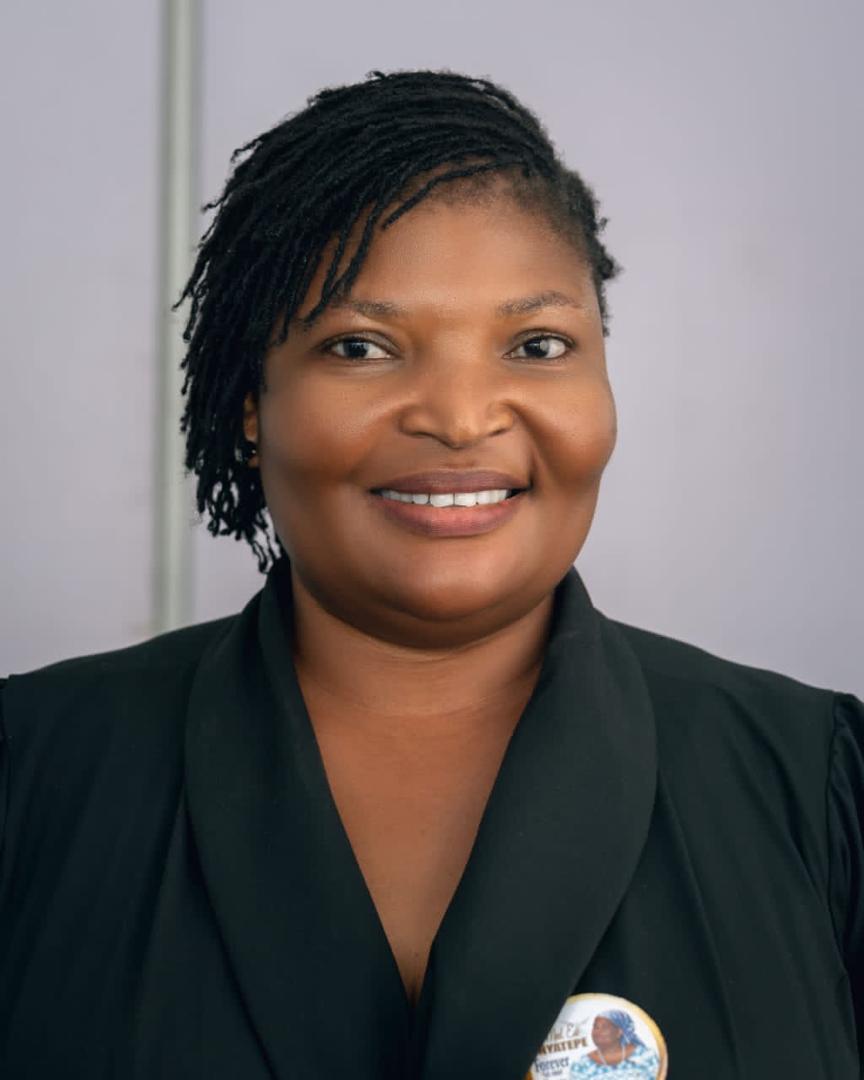
Bridget Mensah believes the right story, told well, can change everything. A communications strategist and gender equality advocate with 10+ years in Ghana’s media industry, she uses words as tools for accountability and amplification particularly for women. She leads communications for the Network of Women in Broadcasting (NOWIB), She is the Head of Corporate Affairs at Ghana Digital Centres Ltd, (GDCL)
Post Views: 8
Discover more from The Business & Financial Times
Subscribe to get the latest posts sent to your email.