


Say the word feminist out loud at a family gathering and watch what happens. Someone laughs nervously. Someone mutters that you are too aggressive, too angry, too Western. A man might joke that feminists are bitter women who could not find husbands. A woman might say it too, eager to prove she is not one of those women. Both are wrong, and both are repeating a story written for them, not by them.
So let us start at the beginning. What is feminism, actually?
It is the simple, almost embarrassingly basic idea that women deserve the same rights, dignity, and opportunities as men. That is the whole definition. There is no clause about hating men, no requirement to reject marriage, motherhood, lipstick, or romance novels. A feminist can be married for thirty years and deeply in love with her husband, can have sons she adores and raises to be decent men. The only requirement is believing that a woman’s worth is not negotiable, and that her rights should not depend on a man’s mood, permission, or approval.
If that sounds obvious, good. That means you already are one, whether you have claimed the label or not.
Patriarchy is not a man
Here is what trips people up, including some women. Many of us think of patriarchy as a club that all men belong to and all women are locked out of. So when we talk about dismantling it, men hear “we are coming for you personally,” and some women think, well, my husband is kind, my father is kind, so this does not apply to my house.
But patriarchy is not a man. It is a system, a set of inherited rules about who gets to lead, who gets believed, who gets paid, who gets blamed, and who gets forgiven. And here is the uncomfortable truth: patriarchy does not actually serve most of the men living under it either. It serves a narrow idea of what a man should be, and punishes everyone, including men, who fall outside it.
It tells men they cannot cry, cannot ask for help, must always provide, must always be in control. It is the same system that makes a man feel like a failure if his wife earns more than him, that tells an abused boy to stay quiet because “men do not get raped,” that pushes men toward anger as the only acceptable emotion and then acts surprised when that anger turns violent.
Patriarchy benefits a very small number of men at the very top, and asks everyone else to police each other to keep the system running. That is why even men favoured by patriarchy, men with good jobs, good marriages, good intentions, often find it does not actually make them happy. It just makes them comfortable enough not to question it.
This is why feminism was never just about marriage
There is a tired argument that feminism is really about who does the dishes, who “submits” to whom, who is the head of the household. It shows up in church sermons, radio call-in shows, and family WhatsApp groups during wedding season.
But marriage is one room in a very large house. Feminism walks through every room.
It walks into the hospital, where a woman with crushing period pain is told she is being dramatic, and a woman with fibroids is told by a man who has never had a uterus that her contraceptives caused them. It walks into the workplace, where a woman doing the same job as her male colleague discovers she is paid less, not because she is less qualified, but because someone decided her time was worth less. It walks into the courtroom, the police station, the parliament chamber.
Let me put some numbers to this, because numbers are harder to argue with than feelings.

Globally, women earn roughly 83 cents for every dollar a man earns. The World Economic Forum’s Global Gender Gap Report for 2025 found that, after twenty years of tracking, the world has closed only 68.8 percent of the overall gender gap. At the current pace, full parity is roughly 123 years away. A child born today would be long dead before it closes, if nothing changes.
Then there is the extreme end, the part we do not like to look at directly. According to the latest UN Women and UNODC femicide report, around 50,000 women and girls were killed by an intimate partner or family member in 2024 alone, one roughly every ten minutes, an average of 137 a day. By contrast, only 11 percent of male homicide victims are killed by a partner or family member. For men, danger mostly comes from outside the home. For women, the home itself is often the most dangerous place. Africa recorded the highest rate of these killings in the world, three victims per 100,000 women and girls. This is not a faraway problem. This is regional. This is close.
When a woman says she is afraid, she is not being dramatic. She is reading statistics that were written into the world long before she was born.

And right now, the same pattern is playing out in Ghana’s parliament. In late May, lawmakers passed the Human Sexual Rights and Family Values Bill with remarkable speed, even bypassing the usual waiting period before its reading. Whatever one’s view of its content, notice the efficiency. When lawmakers want to legislate morality, they can move fast. Yet bills that would strengthen protections for survivors of domestic violence, close gaps in how courts handle defilement and rape cases, or give women fleeing abusive homes faster access to justice, can sit untouched for years. The contrast tells you exactly what kind of behaviour a society is in a hurry to control, and what kind of suffering it can apparently wait on indefinitely. This is what feminists mean when we say the personal is political. It is not a slogan. It is a description of how power moves.
The bear in the woods
There is a question that went viral a while back, worth sitting with. Women were asked: if you were alone in a forest and had to choose between encountering a strange man or a bear, which would you choose? An overwhelming number chose the bear. Cue outrage, confusion, men asking, hurt, why women would rather face a wild animal than them.
But the question was never really about bears, or about all men. It was about uncertainty, and what is at stake when you guess wrong. A bear’s behaviour is fairly predictable, if you do not corner it, it will likely leave you alone. A strange man’s is not, and women have learned this not from movies but from lived experience.
Here is the detail that should haunt us more than it does. When men were asked whether they would prefer to live in a world with only men, the majority said no. Many women, asked the reverse, said yes, they would manage just fine. Men, who statistically face most of their violence from other men, still do not want a world without women in it. Women, who face the bulk of their violence from men, said they would be fine without them. That is not hatred. That is exhaustion, the quiet, weary maths of risk assessment women do every day without realising it, when choosing a taxi, a route home, a man to marry.
And the maths is not paranoia. In Germany, investigators uncovered Telegram groups with up to 70,000 members in which men shared tips, photographs, and step by step instructions on how to drug, overpower, and sexually assault women, with some members live streaming their attacks. In Ireland, around 200 young men coordinated through a WhatsApp group to harass a single woman at the University of Limerick, gathering outside her accommodation and throwing eggs at her door. And reporting in 2026 has pointed to online communities, sometimes numbering in the millions, where men exchange material that effectively functions as instruction manuals for sexual violence, including footage of assaults on unconscious women viewed tens of thousands of times.
These are not edge cases dreamed up by feminists to win an argument. They are documented and real. When women say men are dangerous, this is the texture of what they mean: organised, networked, at scale.
When the men’s team loses, who pays for it
Researchers across multiple countries have confirmed that during major football tournaments, rates of domestic violence rise, not slightly, significantly. In England, a widely cited study found reports of domestic abuse rose by 38 percent when the national team lost a match, and by 26 percent even when they won or drew. In the United States, an unexpected loss by the home team correlated with a 10 percent rise in violence against wives and girlfriends in the hours immediately following the game. Studies in Canada found similar spikes in calls to domestic violence hotlines simply when a local team was playing, regardless of the result.
A grown man can watch other grown men lose a game of football, and the person who pays the emotional and physical price for his disappointment is the woman in his house. It is a window into how casually some men have been taught that the woman closest to them is the safest place to put their anger, safe for him, never for her.
Now overlay that with this year’s football calendar. As the men’s World Cup approaches, billions of dollars in prize money, sponsorship, and broadcast deals will flow toward the men’s game. FIFA has spoken for years about closing the gap with the women’s tournament, and progress has been made, women’s World Cup prize money has grown substantially since 2019. But the women’s game still operates on a fraction of what the men’s game commands, even as the players train just as hard and increasingly draw growing audiences of their own. And here is the small, telling detail that says everything: when men play, commentators simply call it the World Cup. When women play, it becomes the Women’s World Cup, as though their game is a separate, lesser category, while men’s football gets to be the default. Funny, until you notice how much money sits on either side of that label.
The shame that lands on the wrong shoulders
Scroll through social media long enough and you will find young people, often raised by single mothers, mocking those same mothers, or single mothers in general, for “failing” to keep a man around. Rarely does anyone ask where the father went, or interrogate the man who walked away, stopped sending money, started a new family and forgot the old one. The mother stayed. She is visible, and therefore available for blame. The father’s absence, strangely, protects him from scrutiny.
This is patriarchy working exactly as designed. It does not need to actively punish women if it can simply arrange things so that women are left holding the responsibility, and then criticised for how they hold it.
So what do we do with all this
I am not asking anyone to hate men. Most of us love the men in our lives, our fathers, brothers, sons, partners, friends. What I am asking is for all of us, women included, to stop being afraid of a word that simply means fairness.
Feminism is not bitterness. It is not loneliness dressed up as politics. It is women refusing to accept that their pain is normal, their underpayment is fine, their fear is an overreaction, and their anger is unreasonable. And it is an invitation to men too, out of a system that was never really built for their wellbeing either, only for their compliance.
We do not need a moratorium on conversation. We need more of it, the honest kind. Because pretending everything is fine has not worked for anyone, and it certainly has not worked for the women who did not survive to read this column.
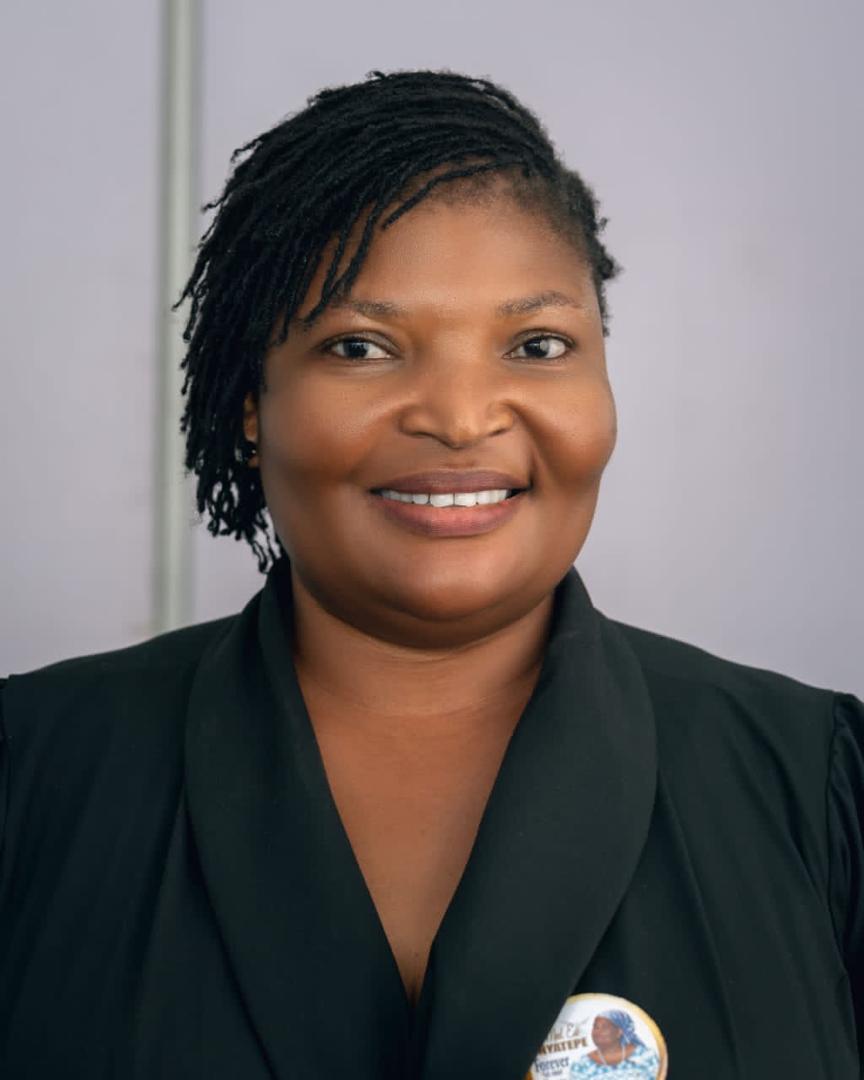
Bridget Mensah believes the right story, told well, can change everything. A communications strategist and gender equality advocate with 10+ years in Ghana’s media industry, she uses words as tools for accountability and amplification particularly for women. She leads communications for the Network of Women in Broadcasting (NOWIB), She is the Head of Corporate Affairs at Ghana Digital Centres Ltd (GDCL)
Post Views: 2
Discover more from The Business & Financial Times
Subscribe to get the latest posts sent to your email.