By: Jennifer Nerkie Kenney
By the time the evening drew to a close, the awards had been presented, the speeches delivered and the celebrations enjoyed. But beyond the glamour of Mfantsipim’s 150th anniversary dinner was a story of history, identity, brotherhood and a school whose influence has travelled far beyond its classrooms.
The first thing that caught my attention was not the hall, the decorations or even the guests. It was the cars.
At the parking area, row upon row of luxury vehicles greeted arriving guests. Lexus, Mercedes-Benz and some of Kia’s latest models were among the cars that caught my attention. Their polished exteriors and imposing presence made quite a statement. It was one of those sights that made you pause for a moment, almost as if the evening’s elegance had begun long before guests stepped into the hall.
I was attending the Mfantsipim School 150th Anniversary Awards and Fundraising Dinner at the Grand Arena of the Accra International Conference Centre on Saturday, October 31, 2026. I had expected an evening of celebration, but the atmosphere that welcomed me was something else.
The occasion was formal, and every detail seemed to understand the assignment.
Guests were received through a red-carpet reception, with cocktails and canapés setting the mood before they proceeded into the main hall. Black and red, the school’s colours, dominated the setting. Subdued lighting gave the room an intimate, almost theatrical atmosphere.
And then there were the people.
The old boys arrived dressed for the occasion, many accompanied by their wives. Carefully selected formal outfits, accessories and elegant shoes added to the visual character of the evening. The men looked distinguished, while the women brought their own expressions of style and grace.
For a moment, it felt as though I was watching history dressed up for dinner.
Yet beneath the polished appearance was a much bigger story. This was not simply a reunion of well-dressed men and their families. It was a celebration of an institution that has shaped Ghanaian education for a century and a half.
From 17 students to a national institution
Long before the black cars, red carpet and anniversary dinner, Mfantsipim began with a much smaller gathering.
On April 3, 1876, Wesleyan High School began operating in Cape Coast with 17 students and an 18-year-old Frenchman, James Picot, as its first headmaster.
Established under the Methodist missionary tradition, it became the first secondary school in the Gold Coast, now Ghana, with a mission to provide structured secondary education and prepare young people for service to society.
The contrast is remarkable. An institution that began with 17 students would go on to educate generations of Ghanaians and become one of the country’s most recognisable educational establishments.
Its early years, however, were not without challenges. The school experienced changes in name, leadership and location. In 1905, the Wesleyan Collegiate School and a separate institution established by Fante Public Schools Limited merged under the name Mfantsipim. It later moved to its present location at Kwabotwe Hill in Cape Coast in 1931.
Another defining chapter in its history is the story of the eight boys who remained at the institution in 1907, teaching themselves in the absence of a headmaster or teacher. When Reverend W.T. Balmer arrived, he named them the “Faithful Eight”.
The distinction matters: the school began with 17 students in 1876, while the Faithful Eight became part of its later story of resilience.
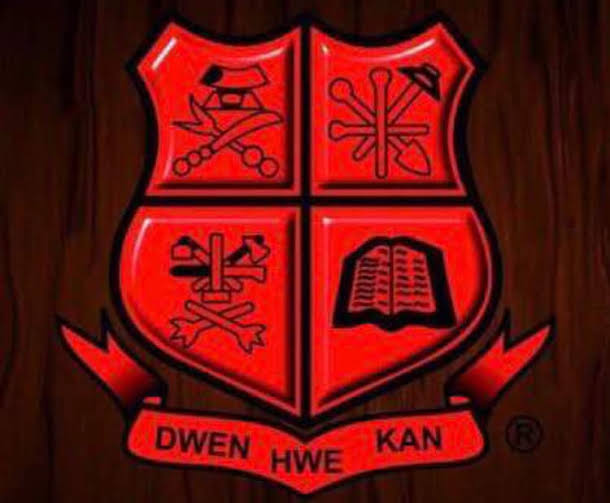
The name Mfantsipim itself carries an identity beyond that of an educational institution. Its history is closely associated with John Mensah Sarbah, a former student and prominent lawyer who contributed to the school’s development. Its motto, Dwen Hwe Kan, calls on students to think and look ahead.
One hundred and fifty years later, that message remains relevant.
A name that has travelled beyond Cape Coast
An institution’s legacy cannot be measured by the number of years it has existed alone. It must also be measured by the people it has educated and the contributions they have made.
Mfantsipim’s alumni include some of Ghana’s most prominent figures. Among them is the late Kofi Annan, former Secretary-General of the United Nations and Nobel Peace Prize laureate, whose work in international diplomacy earned him global recognition.
The late Paa Kwesi Amissah-Arthur, who served as Ghana’s Vice-President from 2012 to 2017, is another notable alumnus. In business and technology, Herman Chinery-Hesse became known for his work in software entrepreneurship, while Kofi Amoa-Abban established himself in the oil and gas industry through Rigworld.
Their careers followed different paths, but they share an educational connection to the same institution.
Mfantsipim’s pioneering position in Ghanaian education also makes its anniversary an opportunity to reflect on the generations of teachers, administrators and students who have contributed to the country’s educational development.
The question, therefore, is not simply how long the school has existed, but what its existence has meant to Ghana.
The boys, the brotherhood and the meaning of MOBA
At the anniversary dinner, the relationship between the school and its old boys was difficult to miss.
Men from different generations, professions and walks of life gathered to reconnect, celebrate and remember a shared experience. There was a visible sense of familiarity among guests, many of whom appeared to have stories that stretched back decades.
This is where the expression “God is a MOBA” becomes particularly interesting.
MOBA, the Mfantsipim Old Boys Association, represents the organised fraternity of former students. But the expression carries a meaning that extends beyond membership of an association. It is a declaration of allegiance, belonging and pride in an institution that remains part of its members’ identities.
The phrase gained further public attention during Mfantsipim’s 2025 National Science and Maths Quiz victory, when supporters were reported chanting it as the school secured its fourth national title.
At the dinner, the expression sat comfortably alongside the anniversary theme: A Legacy of Excellence, Leadership and Service to Inspire the Future.
The fraternity itself dates back to the formal inauguration of the Mfantsipim Old Boys Association in 1947. Over the years, alumni have supported various initiatives aimed at sustaining the institution.
Their responsibility, therefore, is not simply to celebrate what the school has produced, but to contribute to what it can become.
An evening of recognition
As the formal programme commenced, the atmosphere shifted from reception and social interaction to the business of the night.
An opening performance by Perez Musik introduced the proceedings before the master of ceremonies welcomed guests and acknowledged distinguished personalities. Capt. John B. Yamoah, Chairman of the Anniversary Planning Committee, delivered the welcome address, followed by remarks from Prof. David Ofori-Adjei, Chairman of the Awards Committee.
For Capt. Yamoah, the anniversary was not an endpoint but an opportunity to reflect on the school’s history and prepare for its future.
“150 years is not the end of the Mfantsipim story. It is an opportunity to renew our purpose and prepare for the next 150 years,” he said.
He also acknowledged the generations whose contributions had sustained the institution.
“Tonight we honour generations of teachers, old boys and other stakeholders whose dedication and service have helped shape Ghana’s progress.”
His remarks offered an important reminder: an institution’s achievements cannot be credited to its most famous graduates alone. Behind every celebrated alumnus are teachers, administrators and support staff whose contributions may never receive the same public attention.
Prof. Ofori-Adjei, meanwhile, explained that the awards process involved nominations, assessments and the engagement of subject matter experts.
“From the outset, the subcommittee had resolved that these awards should be credible, fair and worthy of the name Mfantsipim,” he said.
He clarified that recognition extended beyond former students.
“It was conceived to remember and recognise alumni, staff and friends of the school. So it was not limited only to old boys.”
That distinction broadened the meaning of the ceremony, acknowledging the wider community that contributes to an institution’s development.
Behind the awards: The question of credibility
Recognition means little if the process behind it cannot be trusted.
That was the point underscored by the PwC Ghana, which provided independent review support for the awards process.
PwC explained that the firm examined the award guidelines, eligibility requirements, scoring methodologies and procedures used to determine finalists.
For the MOBA Fraternity Award, which involved voting, the review included examining the voting platform, its logs and the comparison of voting results with the committee’s final compilation.
Other categories underwent reviews of nomination information, supporting documents, scoring procedures and calculations.
“Recognition means more when we can trust both the outcome and the process behind it,” the representative said.
The awards covered several areas, including education, academia and research, arts and culture, public service and governance, business and entrepreneurship, science and technology, and media and communication.
The breadth of the categories reflected an understanding that excellence is not confined to one profession. It can be found in a classroom, laboratory, newsroom, business or public institution.
The programme also included special recognition for organisations and institutions, alongside an auction and fundraising session.
Excellence beyond the classroom
For a school with a history stretching back to 1876, academic achievement remains central to its identity. But Mfantsipim’s record extends beyond traditional classroom performance.
Its National Science and Maths Quiz history provides a recent example. The school has won the competition four times, in 1999, 2014, 2024 and 2025.
The achievement demonstrated its continued competitiveness in a contest that demands knowledge, speed, teamwork and composure under pressure.
Sport has also contributed to the school’s reputation. Mfantsipim has recorded successes in the Sprite Ball Championship, including victories in 2011–2012, 2012–2013 and 2015.
There are also examples of student interest in practical innovation, including reports of a student-led electric three-wheel motorbike project.
Together, these achievements offer a picture of an institution whose identity has been shaped by different forms of competition, creativity and accomplishment.
The next 150 years must be built
One of the evening’s striking moments came during the fundraising and auction session, when a Caveman watch was sold for GH¢250,000. The generosity extended beyond the auction, with individual donations reaching as high as GH¢500,000.
The figures added another dimension to the celebration. The evening was not simply about displaying the success of Mfantsipim’s old boys; it was also about mobilising their resources to sustain the institution that had helped shape their journeys.
The fundraising session brought attention back to the school’s future. Capt. Yamoah appealed to old boys, corporate partners, benefactors and friends of the institution to support its development priorities.
“Supporting Mfantsipim is an investment in the principle that quality education is essential to national development,” he said.
He added: “Every contribution represents an investment in education, leadership and our nation’s future.”
The appeal gave the anniversary a practical dimension. Celebrating 150 years of history is one thing; ensuring that the institution remains equipped to serve future generations is another.
A long history is an achievement, but it does not guarantee future success. Institutions must continue to adapt, invest in their students and respond to the demands of a changing society.
When the evening became a memory
The programme continued with comedy from D. James Brown (a MOBA), while Sefa and Efya were among the artistes who brought live to the event through their performance. A formal toast, networking, food and the school song added to the celebrations.
By then, the evening had moved through several moods: the formality of the reception, the speeches, the anticipation surrounding the awards and the lighter moments of music and conversation.
Yet one detail stayed with me long after the other moments had begun to settle into memory.
It was a hymn.
As the evening drew towards its close, the singing of “Yɛn bo tan pa” became one of my most memorable takeaways. I found myself holding on to the phrase, even after the awards, performances and conversations had begun to blur into one another.
There was something fitting about ending an evening that celebrated 150 years of institutional history with a song shared by the school community.
The cars would eventually leave the parking area. The decorations would come down. The guests would return to their homes and professional lives. The hall would host another gathering.
But the story that brought them together would remain.
Mfantsipim began in 1876 with 17 students. It has since educated generations, produced notable public figures, built a strong alumni fraternity and secured a place in Ghana’s educational history.
Its 150th anniversary brought those threads into one room: history, achievement, identity, gratitude and the responsibility to give something back.
Perhaps that is what the expression “God is a MOBA” seeks to capture. Not simply the pride of having attended a particular school, but the conviction that the relationship between an institution and its people does not end at graduation.
One hundred and fifty years after its doors first opened, Mfantsipim’s story is still being written.
And if the evening was anything to go by, its old boys have no intention of putting down the pen.