

By Richard Nii Amarh, ESQ
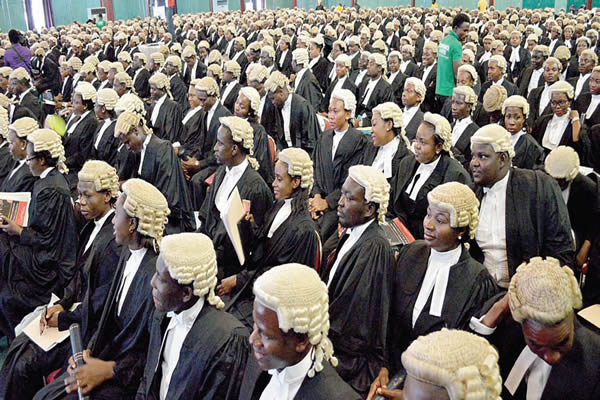
On Friday, October 9, 2026, the General Legal Council of Ghana recorded the names of 1,568 individuals onto the roll of lawyers, marking the single largest number of individuals called to the bar since Ghana started training its own lawyers.
The prestigious flaunting of photos by the new lawyers, alongside their families and friends, has re-ignited an annual conversation. Many are asking whether Ghana is producing too many lawyers and if our economy can absorb them into meaningful jobs. Concerned commentators often compare the number of lawyers to engineers, doctors, and other professionals, questioning which field is most critical for national development. Others worry about the heavy representation of lawyers in politics, which feeds into the persistent—though statistically unfair—perception that both lawyers and politicians are trained to bend the truth.
This article explores and compares the lawyer-to-citizen ratios of various countries near and far, examines the diverse career paths available to lawyers, and sets the stage for an informed conclusion on whether Ghana’s legal boom is a blessing or a burden.
A Global Perspective: Lawyer-to-Citizen Ratios
1. The United Kingdom (UK)
Population: ~70 million
Lawyer Population: ~217,000
Ratio: 1 lawyer to every 440 citizens
GDP: ~$3.4 trillion
Average Income: £60,000 ($80,000 USD) per year
2. The United States of America (USA)
Population: ~350 million
Lawyer Population: ~1,374,720
Ratio: 1 lawyer to every 240 citizens (one of the highest densities globally)
GDP: ~$32.5 trillion
Average Income: ~$170,000 USD per year
3. China
Population: ~1.4 billion
Lawyer Population: ~830,000
Ratio: 1 lawyer to every 1,700 citizens
GDP: ~$18 trillion
Average Income: ¥900,000 ($140,000 USD) per year
4. Nigeria
Population: ~242 million
Lawyer Population: ~225,000
Ratio: 1 lawyer to every 2,000 citizens
GDP: ~$290 billion
Average Income: ₦14 million ($10,000 USD) per year
5. West African Neighbors (Nigeria Excluded)
Benin: Population of 14 million | GDP: $24.4 billion | 500 active lawyers | Ratio: ~1:32,000 | Average Salary: ~7 million CFA ($13,000 USD).
Togo: Population of 8.6 million | GDP: $11.9 billion | 350 active lawyers | Ratio: ~1:30,000 | Average Salary: 2M–5M CFA ($3,300 to $8,300 USD).
Ivory Coast: Population of 32 million | GDP: $99.7 billion | 800 active lawyers | Ratio: ~1:40,000 to 1:50,000 | Average Salary: 2.4M–6.7M CFA ($4,000 to $11,000 USD).
Burkina Faso: Population of 23–24 million | GDP: ~$32.5 billion | ~300–400 lawyers | Ratio: ~1:65,000 to 1:75,000 | Average Salary: 2.4M–5.5M CFA ($4,000 to $9,000 USD).
Liberia: Population of ~5.5–6 million | GDP: ~$5.2 billion | ~600–900 lawyers | Ratio: ~1:7,000 to 1:9,000 | Average Salary: $4,000 to $12,000 USD.
6. Ghana
Population: ~35 million
GDP: $77 billion
Lawyer Population: Nearly 10,000 (according to Ghana Bar Association data)
Ratio: 1 lawyer to every 4,000 citizens
Average Income: Estimated at GHS 180,000 annually (~$15,000 USD)
The Local Reality: Courts, Judges, and Concentration
Legal services are tightly tethered to economic activity. Unsurprisingly, the vast majority of lawyers in Ghana are heavily concentrated in Accra, Kumasi, and Takoradi, leaving other regions and secondary cities underserved.
While hard scientific research on whether Ghana has an “excess” of lawyers is sparse, a few critical metrics helps clarify the picture:
Ghana currently has roughly 500 courts operating nationwide.
The Judicial Service Staff Association recently reported that there are about 130 courts without judges (currently only qualified lawyers can be appointed to the bench).
The bottleneck here isn’t a shortage of lawyers willing to serve as judges; rather, it is a matter of financial clearance. Just like any other public sector employment, the Ministry of Finance must approve funding before judges can be appointed and paid.
The absence of judges in these 130 courts puts enormous pressure on the justice system, causing endless adjournments, delayed adjudications, and intense frustration for litigants. If Ghana is struggling to fund 130 more judges, why are we pumping 1,500 new lawyers onto the market every year?
Beyond Litigation: Where Do Lawyers Work?
A law degree is remarkably versatile. Beyond traditional courtroom battles, new lawyers enter a wide range of rewarding career paths:
Litigation Counsel: Representing individual, corporate, or institutional clients across all court levels (Circuit, High Court, Supreme Court) in civil, criminal, land, and human rights disputes.
Corporate & Commercial Practice: Advising businesses on corporate governance, mergers and acquisitions, regulatory compliance, and foreign investments.
Intellectual Property (IP) Practice: Managing trademark, copyright, and patent registrations, alongside IP licensing and disputes.
In-House Counsel / Legal Officer: Managing legal risks, drafting commercial contracts, and ensuring compliance for banks, telcos, mining firms, and fintechs.
Company Secretary: Serving as principal administrative and governance officer for corporate boards under the Companies Act.
State Attorney / Legal Counsel: Working within the Attorney-General’s Department and Ministry of Justice to advise government bodies, prosecute state cases, and draft legislation.
Judicial Service: Serving as Magistrates, Registrars, or judicial research assistants.
Regulatory Bodies & Commissions: Enforcing sector-specific laws at institutions like the Bank of Ghana, SEC, NCA, and EPA.
Arbitrator or Mediator: Specializing in out-of-court settlements under Ghana’s Alternative Dispute Resolution framework.
Law Lecturer / Researcher: Teaching and training future advocates at faculties like UG, KNUST, GIMPA, UPSA, and the Ghana School of Law.
Advocacy & Policy Consultant: Driving public interest litigation, law reform, and human rights work with think tanks and NGOs.
Conclusion: Are We Producing Too Many?
To answer whether Ghana is producing too many lawyers, I will give a typical lawyer’s answer: It depends.
Major Western economies can comfortably support large numbers of lawyers and sustain high-income jobs despite low lawyer-to-citizen ratios, largely due to the sheer size of their markets. In West Africa, however, Nigeria stands out as the only country with a lower lawyer-to-citizen ratio than Ghana—and it possesses a significantly larger economy.
If Ghana rapidly scales up its economic power to match the growing influx of annual law graduates, these numbers won’t pose a problem. However, if economic growth remains stagnant, policymakers will inevitably need to take a hard look at the trajectory and regulation of legal education in Ghana.
Disclaimer: Most statistics used in this article were compiled from online sources and actual figures are subject to minor variations.
Written by Richard Nii Amarh, ESQ (Private Legal Practitioner and Head of the Legal Department, Centre for Legitimacy and Rule of Law)
DISCLAIMER: The Views, Comments, Opinions, Contributions and Statements made by Readers and Contributors on this platform do not necessarily represent the views or policy of Multimedia Group Limited.
DISCLAIMER: The Views, Comments, Opinions, Contributions and Statements made by Readers and Contributors on this platform do not necessarily represent the views or policy of Multimedia Group Limited.
Source link