

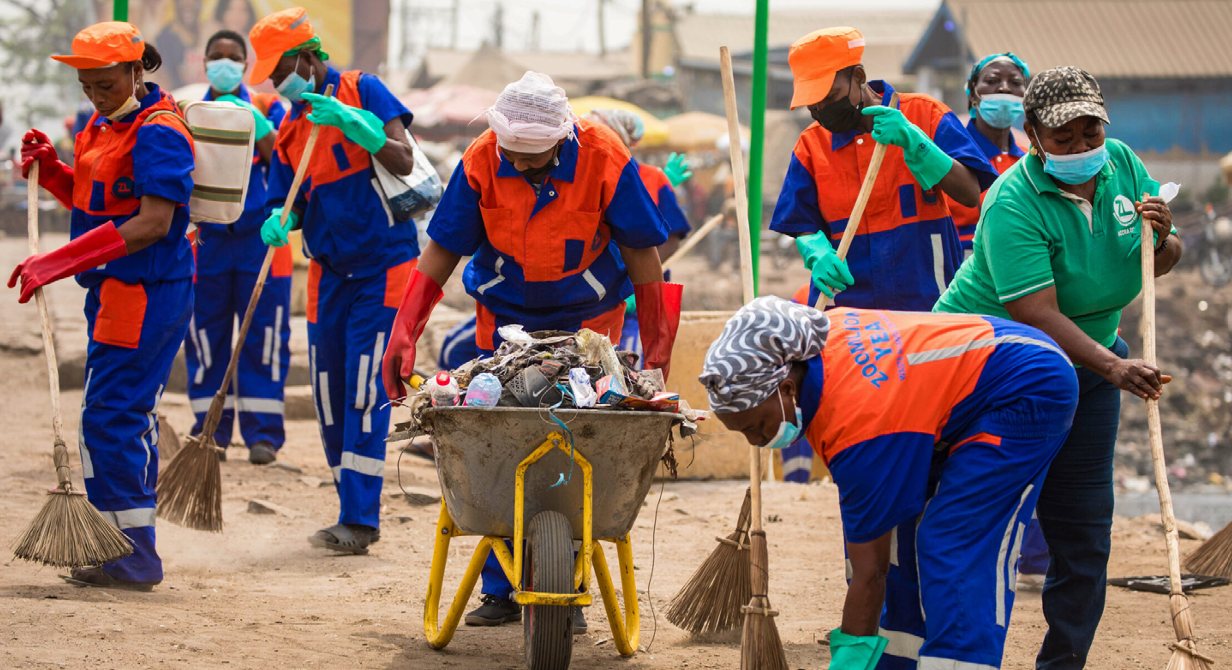
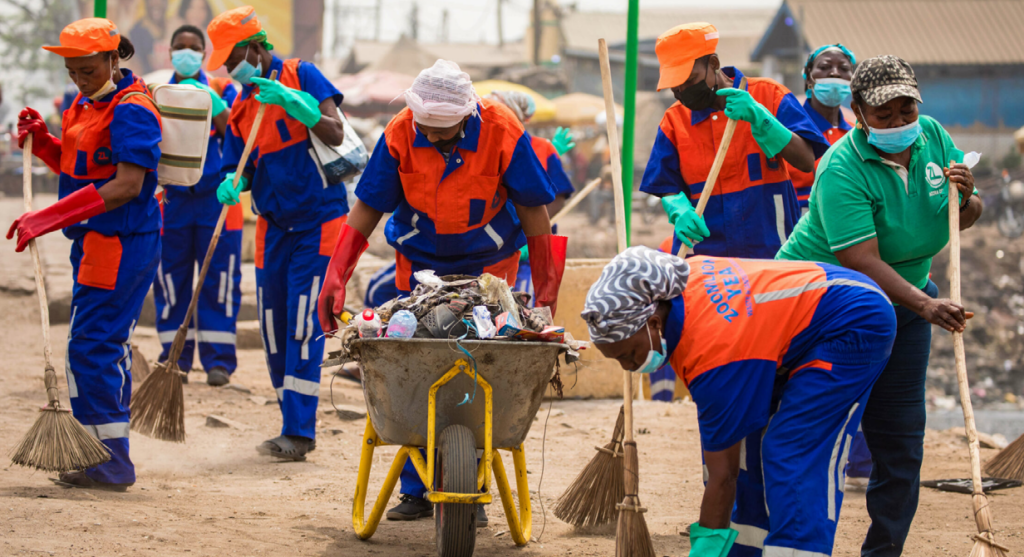
The Institute of Statistical, Social and Economic Research (ISSER) has called on the government to substantially increase investment in waste management and sanitation, arguing that inadequate funding is costing Ghana billions of cedis annually in healthcare expenditure and lost productivity while undermining national development.
In a new policy brief titled Waste or Wealth? The Economic Returns to Sanitation Investment in Ghana, the University of Ghana research institute says sanitation should be elevated from a routine environmental expenditure to a strategic national investment capable of improving public health, creating jobs and driving economic growth. The study recommends that Ghana align its waste management spending with the average investment levels of lower-middle-income countries, describing the current level of expenditure as significantly below international best practice.
Among its key recommendations, ISSER wants government to significantly increase budgetary allocations for sanitation, drainage infrastructure and environmental health programmes, noting that the economic cost of poor sanitation far exceeds current public spending on the sector.
The institute also wants investment targeted at densely populated urban communities, flood-prone settlements and underserved peri-urban areas, where sanitation-related health and environmental risks are highest.
According to the report, prioritising these communities would reduce disease outbreaks, lower mortality rates and ease the disproportionate burden borne by vulnerable populations while enabling Metropolitan, Municipal and District Assemblies (MMDAs) to address sanitation challenges more effectively.
ISSER further recommends that government integrate the health and economic benefits of sanitation into national budgeting and development planning, arguing that current expenditure frameworks often overlook the substantial savings that could be realised through improved waste management.
The report says treating sanitation as an investment rather than a recurring cost would help policymakers better appreciate its contribution to economic productivity, environmental sustainability and public health.
The institute also called for increased investment in infrastructure aimed at reducing sanitation-related diseases, including household and communal toilet facilities, faecal sludge treatment plants, improved stormwater drainage systems and reliable solid waste collection services.
It said these interventions would help eliminate breeding grounds for disease vectors while reducing the incidence of preventable illnesses such as malaria, cholera and typhoid.
To improve service delivery, ISSER urged government to strengthen the institutional capacity of MMDAs by enhancing planning, budgeting, regulation and monitoring of waste management services. It also recommended greater use of environmental and public health data in local planning to improve resource allocation and track the economic returns from sanitation investments.
The report additionally called for better regulation of informal waste operators, recommending that municipal assemblies encourage operators, including tricycle (“aboboyaa”) waste collectors, to enrol in active health insurance schemes and undergo regular medical screening.
ISSER concludes that closing Ghana’s sanitation investment gap presents a significant opportunity to improve public health, strengthen human capital, stimulate the circular economy and accelerate progress towards the country’s sustainable development goals.
“Strategic and scaled-up investment in waste and sanitation… represents a high-yield opportunity to boost public health and enhance economic productivity,” the report states.
Read the full report below.
DISCLAIMER: The Views, Comments, Opinions, Contributions and Statements made by Readers and Contributors on this platform do not necessarily represent the views or policy of Multimedia Group Limited.
DISCLAIMER: The Views, Comments, Opinions, Contributions and Statements made by Readers and Contributors on this platform do not necessarily represent the views or policy of Multimedia Group Limited.