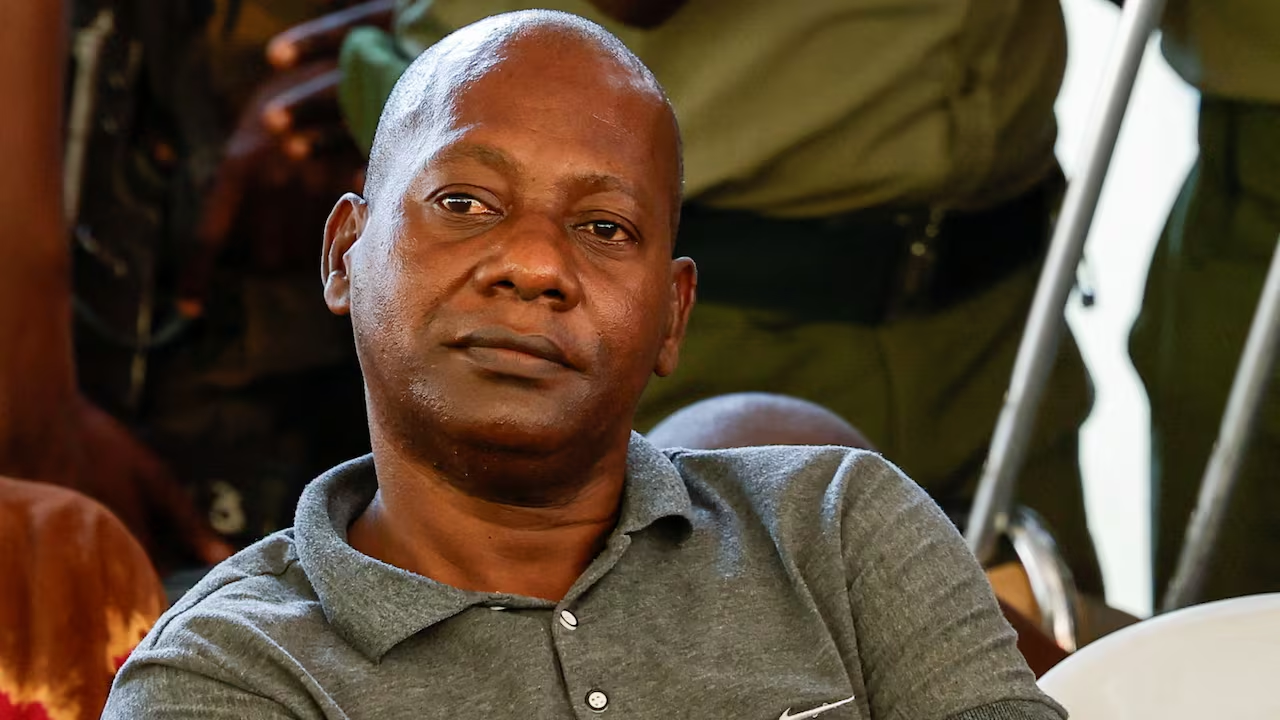
By Nana Karikari, Senior Global Affairs Correspondent
A Kenyan court has sentenced self-styled pastor Paul Mackenzie to 200 years in prison for the mass murder of 191 people. The High Court in the coastal city of Mombasa issued the verdict on Friday following one of the deadliest episodes of cult activity in global history. Mackenzie, the founder of the Good News International Church, was convicted alongside 28 co-defendants for orchestrating a fatal fasting campaign inside the remote Shakahola forest.
Lady Justice Diana Kavedza ruled that Mackenzie bore the primary criminal culpability for relocating his followers to the wilderness and ordering them to fast to death to “meet Jesus.” The magistrate handed down two consecutive 100-year terms, dividing the punishment between counts of homicide and offenses related to forced starvation. The consecutive structure ensures that Mackenzie will serve out his remaining life in prison without possibility of early release.
Details of the Murders
The judicial findings revealed a systematic structure of violence targeted primarily against minors. Out of the 191 victims included in this specific trial, 190 were children. Official court records documented that 161 of the victims were aged nine or younger, 22 were between ten and 13 years old, and five were between 14 and 16 years old. The exact ages of two victims could not be established.
Justice Kavedza stated that 183 of the victims died directly from starvation, while the remaining eight children were suffocated, strangled, or beaten to death. Post-mortem examinations confirmed that while severe emaciation caused the majority of fatalities, secondary causes included suffocation, neck compression, and blunt-force head injuries. Several children belonging to the convicts remain missing and are presumed dead inside the forest.
Forest Operations and Enforcement
Mackenzie established the Good News International Ministries in 2003, operating a Malindi church and broadcasting sermons on Times TV. His doctrines banned medical care, formal education, and digital identity cards, framing outside society as “evil,” healthcare as “against the doctrine,” and digital cards as “the mark of the devil.” In
2019, Mackenzie closed his main church and instructed his followers to move to an 800-acre property on Chakama Ranch in Kilifi County.
The court established that Mackenzie used end-times theology to compel his followers to starve, predicting the world would end in August 2023. Children were ordered to starve first, followed by youth, women, and finally men, who were tasked with burying the deceased. Enforcers and gravediggers prevented members from escaping or seeking food.
During the trial, one co-accused testified that followers who “resisted the directive to fast must be forced to go to heaven through kicks and blows.” Justice Kavedza noted that burials within the compound were called “weddings” where victims “were celebrated as having wedded with Jesus” and remembered as “heroes of faith.” Followers who openly opposed the doctrines were beaten to death.
Legal Arguments and Death Penalty Exemption
State prosecutors requested the death penalty for Mackenzie and life sentences for his co-defendants. Defense attorney Lawrence Obonyo opposed the length of the terms, stating that the decision was “circling around the constitution to give a sentence that is unattainable” since terms spanning 160 to 200 years functionally equal life imprisonment. All 29 convicted individuals had pleaded not guilty prior to their October 19 conviction, insisting that participation was voluntary. They have been granted 14 days to lodge an appeal.
Justice Mochache declined to impose capital punishment, noting that “nevertheless, the court declines the invitation to impose the death penalty on any of the victims,” adding that capital punishment would eliminate any prospect of rehabilitation and disengagement. Kenya has not executed a condemned prisoner since 1987, routinely commuting capital judgments to life sentences. In her sentencing remarks, Justice Mochache emphasized that “the sentence is appropriate and just, to send an unmistakable message that such atrocities warrant the maximum penalties allowed by law.” She described the killings as “cold and calculated,” observing that the defendants showed no remorse and expressed a willingness to fast to death themselves. Legal analysts noted that avoiding the gallows also prevented Mackenzie’s followers from framing his execution as a holy martyrdom to “meet Jesus”.
Accomplices and Co-Defendants
The court sentenced Mackenzie’s 28 co-defendants to terms of up to 160 years in prison based on their individual roles in the camp. The group included armed guards who patrolled the perimeter and enforced fasting orders, as well as gravediggers who helped conceal victims in shallow mass graves.
During the sentencing proceeding, Mackenzie was seen smiling and conversing with his assistant pastor, Smart Mwakalama. Mwakalama received a 160-year prison sentence for his role in managing the forest camp and enforcing compliance among the devotees.
Victims’ Families and Reactions
The court ruling drew intense reactions from survivors, victims’ relatives, and local residents who gathered at the court complex.
Before the hearing began on Friday morning, Francis Wanje, who lost eight relatives including two grandchildren in Shakahola forest, told reporters that he was “hoping for… a sentence which will match his [Mackenzie’s] deeds in the forest.”
Rodgers Shibutse, a Nairobi resident who identified his mother’s remains among those exhumed, expressed mixed feelings regarding the judicial outcome. “I cannot say that I am 100% satisfied. It is not enough to pay for the life of my mum, but we have no other choice. At least, he (Mackenzie) cannot finish the 200 years in jail and will die eventually,” Shibutse said.
Suleiman Ziro, a father who traveled 120 kilometers to attend the sentencing after losing six children and his wife, expressed frustration over the length of the sentence. Ziro called for the execution of the defendants and noted that he has not yet recovered the remains of his family members.
Conversely, Mackenzie’s son, Dan Mackenzie, offered a different perspective on the outcome, stating that “it is justice served to the victims.”
Dan Mackenzie explained that he survived by “rebelling” against his father’s directives, a choice that resulted in frequent physical punishments before his escape. Two of his younger brothers and three sisters were rescued from the ranch by authorities and currently reside in a state-monitored children’s home.
Law Enforcement and Institutional Oversight
The discovery of the mass graves in April 2023 exposed critical gaps in local administrative and police oversight. Authorities have exhumed 429 bodies from the Chakama Ranch site, though the current murder convictions account for 191 of those victims.
An investigation conducted by the state-funded Kenya National Commission on Human Rights revealed that local administration and law enforcement officers repeatedly ignored warnings regarding Mackenzie’s actions. Francis Wanje reported the cult to the police in March 2023 after a relative in the security forces helped rescue his grandson. The child informed investigators about the forest operations and pointed out the grave
site of his siblings. “We expected at that time the police would take action immediately to go and rescue the other members there, but it didn’t happen,” Wanje noted, adding that “it was [supposed to be] his last day.. they [would have killed] my grandson.”
Following the public outcry, President William Ruto established a presidential commission of inquiry to examine systemic failures, though the body was subsequently ruled unconstitutional by Kenyan courts. Mackenzie had been arrested in previous years for radicalization and operating unregistered institutions, but was repeatedly released due to a lack of prosecution evidence.
Remaining Legal Proceedings
The conclusion of the murder trial addresses only a portion of the criminal allegations linked to the Shakahola forest deaths. Authorities continue to process evidence related to more than 200 remaining exhumed bodies recovered from the area.
Mackenzie and several key associates still face separate trials in different court divisions. These ongoing cases include charges of terrorism, manslaughter, child abuse, and torture. The High Court confirmed that further murder indictments may be filed as legal teams finalize forensic identifications and post-mortem analyses on the remaining exhumed remains.
Impact on National Religious Policy
The sentencing marks a decisive turning point in Kenya’s judicial approach to religious extremism and unmonitored cult activity. As authorities finalize additional charges against Mackenzie, the ruling underscores a national imperative to balance religious freedoms with rigorous institutional safeguards. The 200-year prison sentence establishes a legal precedent designed to deter extreme doctrinal exploitation while offering accountability to grieving families across East Africa.