
By Celestine Avi and Seth Eyiah
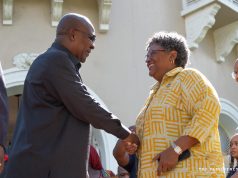
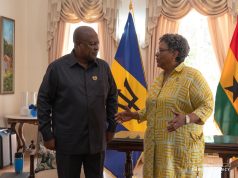
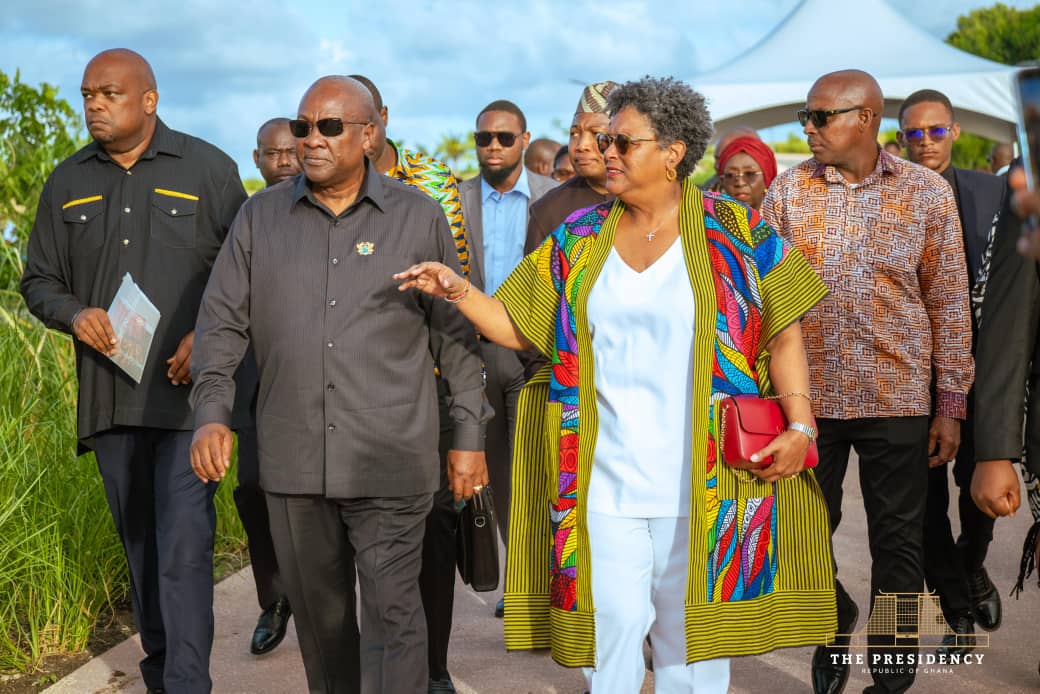
President John Dramani Mahama and Barbados Prime Minister Mia Amor Mottley have called for renewed efforts towards reparatory justice and the preservation of the history and dignity of enslaved Africans, as Barbados officially opened the Ancestral Memorial to the Enslaved at Newton.
The memorial honours the men, women and children who were buried at the historic Newton plantation burial ground, providing a permanent place of remembrance and reflection on the human cost of slavery.
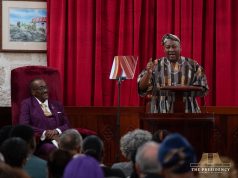
Speaking at the opening ceremony, President Mahama said the memorial and Ghana’s coastal forts and castles offered important reminders of the brutality of the transatlantic slave trade and its enduring consequences for Africa and the Caribbean.

He said the estimated 570 people buried at Newton were individuals with names, families and lives of their own, but were treated as property under a system that separated families, extracted labour through violence and denied them dignity even in death.
President Mahama noted that archaeological excavations at the site revealed evidence of starvation, torture and harsh plantation conditions, with many of those buried there not living beyond their thirties.

He said Newton and Ghana’s historic slave forts, particularly Elmina and Cape Coast Castles, together bore witness to the human cost of the transatlantic trade in enslaved Africans.
The President called for an honest accounting of the history of slavery, stressing that reparatory justice must go beyond remembrance to addressing the lasting consequences of the system.

He observed that while the forced labour of enslaved Africans generated wealth that benefited generations in the West, African communities lost generations of people whose skills, talents and contributions could have shaped their development.
President Mahama also called on Africans and people of African descent to defend one another against prejudice and discrimination, regardless of skin colour, birthplace, nationality or migration circumstances.
MOTTLEY: REPARATORY JUSTICE IS A CONTINUOUS JOURNEY
Prime Minister Mia Amor Mottley described the opening of the memorial as part of Barbados’ continuing journey towards redemption, healing and the restoration of its national identity.
She said the country must recognise the sacrifices of generations who endured slavery and fought against systems designed to deny them their humanity, freedom and opportunities.

Mrs Mottley recalled the 1661 Slave Code, which classified Africans brought to Barbados as chattel to be sold, whipped and separated from their families.
She said the struggle for freedom did not end with the abolition of slavery, pointing to subsequent laws and practices that continued to tie formerly enslaved people to plantations through forced labour.
The Prime Minister highlighted education, land ownership, security of tenure and political participation as important measures through which successive generations of Barbadians had pursued self-repair.
She said the memorial was also intended to restore the spiritual and historical identity of the nation by ensuring that those buried at Newton were not erased from collective memory.
GHANA AND CARIBBEAN TO ADVANCE STRUCTURED DIALOGUE
Prime Minister Mottley announced that Barbados would join Ghana and other Caribbean countries in structured dialogue on reparatory justice, including engagements with the United Kingdom, beginning next year.
She said the discussions would seek not only to address historical injustices but also to confront Afrophobia and negative perceptions of people of African descent.

Mrs Mottley stressed that Africa and the Caribbean must also work towards mental emancipation, noting that the effects of slavery had deeply influenced the mindset of their people.
President Mahama, on his part, urged Africans and people of African descent to give practical meaning to their shared history and kinship by standing up for one another and protecting the dignity of their communities.
He said the pursuit of justice must be matched by solidarity and mutual respect across national borders.
BARBADOS TO ESTABLISH GENEALOGICAL RESEARCH CENTRE AND MUSEUM
Prime Minister Mottley also announced plans to establish a genealogical research centre at the Newton site to house historical records relating to the transatlantic slave trade.
She said Barbados had been digitising its records over the past three to four years and intended to use the collection to help people trace their ancestry and better understand the country’s history.
A museum is also planned for the site to tell the story of Barbados and its people from their own historical perspective.
Mrs Mottley said the memorial was only the first phase of a broader effort to preserve the country’s heritage and ensure that future generations understood the sacrifices of their ancestors.
A SHARED RESPONSIBILITY FOR FUTURE GENERATIONS
Both leaders urged Africa and the Caribbean to sustain cooperation in preserving their shared history and addressing the legacies of slavery.

President Mahama thanked the Barbadian government, historians, researchers, architects and other stakeholders whose work made the memorial possible.
He said Newton would serve as a place where families could mourn, communities could remember and future generations could learn about the lives and labour of those who helped shape Barbados.
Prime Minister Mottley called on Barbadians to honour their ancestors not only through remembrance but also through the choices they make with the freedom they enjoy today.
She said the responsibility to preserve their legacy and advance justice rested with every generation.
The opening ceremony brought together regional leaders, including heads of government from the Caribbean, as well as national and cultural figures.