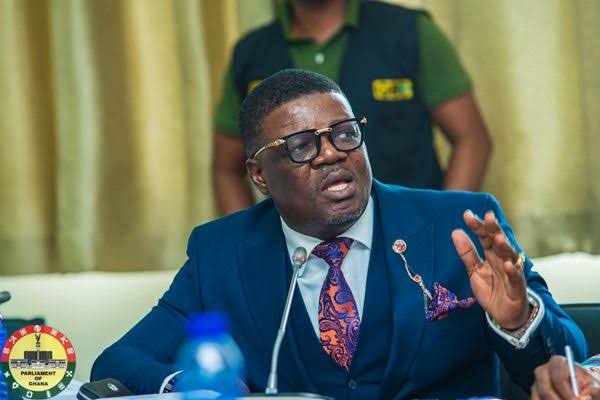
Majority Chief Whip and Member of Parliament for South Dayi, Rockson-Nelson Dafeamekpor, has defended the government’s proposed tribunal system, arguing that it is a constitutional requirement designed to improve access to justice and reduce the growing backlog of cases in Ghana’s courts.
Speaking on Channel One TV, Mr Dafeamekpor said the establishment of regional tribunals is expressly provided for under the 1992 Constitution and should not be viewed as the creation of a parallel judicial system.
He cited Articles 142 and 295 of the Constitution, explaining that regional tribunals are constitutionally recognised courts whose operationalisation has long been delayed.
According to him, Ghana’s population has grown from about 16.5 million in 1993 to approximately 33 million today, placing enormous pressure on existing courts and making the tribunal system necessary to improve the delivery of justice.
Mr Dafeamekpor said the proposed tribunals would handle specialised criminal cases, including illegal mining (galamsey), robbery and other serious offences, allowing conventional courts to focus on other matters.
He also defended the inclusion of lay panel members in tribunal proceedings, noting that the arrangement is comparable to jury systems in other jurisdictions, where non-lawyers determine facts while judges interpret and apply the law.
The Majority Chief Whip further argued that introducing fixed timelines for hearing cases would help address prolonged criminal trials that often take years to conclude.
However, the proposal has attracted criticism from some legal analysts, who argue that aspects of the bill may conflict with the Constitution.
Critics contend that establishing an independent “tribunal system” with its own administrative framework could undermine the authority of the Chief Justice and the independence of the judiciary as guaranteed under Article 127 of the Constitution.
They have also questioned provisions establishing a Tribunal Oversight Committee, arguing that the Judicial Council alone has the constitutional authority to create its own committees under Article 154.
Another concern relates to the bill’s mandatory timelines for adjudicating cases. Opponents argue that Article 157 reserves the power to make rules governing court practice and procedure to the Rules of Court Committee, making it unconstitutional for Parliament to prescribe trial timelines through legislation.
The debate also reflects Ghana’s judicial history. While regional tribunals remain recognised under the Constitution, district and circuit tribunals were abolished in 2002, and regional tribunals gradually ceased operating between 2010 and 2011 after their judges were reassigned to the High Court.
The proposed legislation seeks to restore the tribunal system and expand its operations across the country as part of broader efforts to improve access to justice and strengthen the administration of criminal cases.