… not worth much
By Kweku Ananse MANSOH
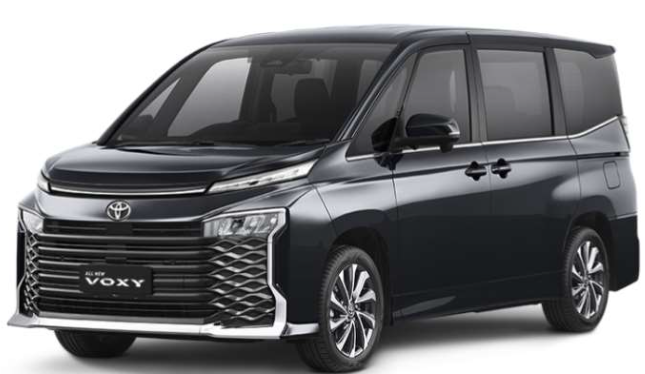
Banning Toyota Voxy vehicles alone would not solve (or even significantly reduce) road accidents in Ghana. The report itself never recommends a ban. Instead, it identifies systemic, multi-factorial causes far broader than any single vehicle model and proposes targeted enforcement, regulatory fixes, standards development, and behavioural interventions.
Here are all my reasons why the VOXY-SPECIFIC ban does not underpin the solution:
Voxy vehicles represent a tiny fraction of total crashes nationally.
National crash data (2020–2025) shows Voxy involvement is less than 1% of all crashes. Even in 2025 (when Voxy registrations surged), overall crashes rose 9.3%, and the fatality rate per 100 crashes hit a record high of 20 — driven by all vehicle categories, especially motorcycles (46.5% of 2025 fatalities) and commercial vehicles in general.
Regional spikes (Bono 14.6%, North East 12.7%, Western Central 11.0%) are real but still minor in absolute national terms. Banning one model leaves the other 99% untouched.
The primary crash causes are driver behaviour and economic pressure — not the vehicle itself.
Station masters, drivers, and converters unanimously attribute Voxy crashes to unrealistic weekly sales targets (GH¢3,500–4,000) that force inexperienced or low-hour drivers to speed. Voxy’s lower seating capacity (7–8 seats vs. HiAce’s 14–15) means drivers must make nearly twice as many trips to achieve the same revenue, amplifying speeding.
Respondents explicitly rejected the idea that conversions or the vehicle design cause crashes. The report accepts this economic pressure as a “primary contributor” to avoidable accidents.
The core safety problem is the illegal and substandard RHD-to-LHD conversion process, not the original vehicle.
Toyota confirms it never manufactures LHD Voxy/Noah and never endorses conversions (declined CKD-plant requests for safety reasons).
About 90% of conversions happen locally by uncertified artisans using informal apprenticeships. They involve complete dashboard removal, wiring splicing, servo relocation, structural cutting, and gas welding — compromising braking, steering, and electrical systems. No formal standards, no NRSA registration of workshops, no certification.
The report calls this a “public safety crisis” caused by systemic regulatory failure, not the Voxy model per se. Banning Voxy does nothing to stop the same unsafe conversion industry from operating on Noah, Alphard, Vellfire, Sienta, or any other imported right-hand-drive (RHD) model.
Regulatory failures across multiple agencies are the real enablers.
The report lists systemic dereliction of duty:
- Customs Act 2015 (Act 891) prohibits RHD imports without Ministerial approval — yet >7,257 RHD vehicles (including Voxy) entered.
- Ghana Standards Authority failed to enforce GS 4510:2022 (pre-shipment inspection).
- DVLA registers converted vehicles without enhanced inspection (contrary to L.I. 2180).
- NRSA has never enforced Regulations 75 & 76 of L.I. 2468 (mandatory registration and qualification of mechanics, converters, workshops).
- MTTD fails to police private-registered vehicles being used commercially.
A Voxy ban treats a symptom while these structural enforcement gaps remain.
Voxy is being used outside its design specifications — the solution is proper use limits, not elimination.
Toyota states the Voxy is a family minivan (ground clearance 150 mm) for urban/middle-class use. Only HiAce, GranAce, and Coaster are designed for commercial passenger transport (185 mm clearance). Drivers already modify Voxy post-conversion with longer struts and larger tyres to cope with Ghanaian roads. The report’s immediate recommendation is to limit commercially registered Voxy to intra-city commutes only — not ban them. This directly addresses misuse without removing the vehicles.
Market dynamics and passenger preference would simply shift demand elsewhere.
Voxy sells for around GH¢150,000, offers better fuel economy, comfort, and faster boarding/acceleration (0–100 km/h in 10 seconds vs HiAce’s 20). Passengers actively prefer it. It has already displaced HiAce on many routes. A ban would push operators toward other converted minivans or unregulated alternatives, perpetuating the same unsafe conversion practices and economic pressures.
The report’s own recommendations prove a ban is unnecessary and insufficient.
The phased recommendations focus on:
0–6 months: Enforce import bans on new RHD vehicles, sanction misuse of private registrations, limit commercial Voxy to intra-city, issue public advisory, stop registering non-compliant conversions.
6–12 months: Implement GS 4510:2022, enhanced driver licensing, rigorous inspections.
12–24 months: National standard for conversions (manufacturer-designed parts only), certify workshops, speed limiters.
24+ months: Modernise crash data, inter-agency MoUs, engage exporting countries.
Plus a suggestion to commission another study. Nowhere does the report call for banning existing Voxy vehicles. It explicitly targets configuration, deployment, regulation, and driver behaviour.
Broader road-safety trends dwarf the Voxy issue.
Motorcycle fatalities alone rose 30% (2020–2025) and now dominate. Overall fatality rate per crash is at its highest in the period. Commercial-vehicle fatalities jumped 21.5% in 2025. Fixing one popular model ignores the documented rise in severity across all categories.
In summary, the report concludes that Voxy vehicles “as presently configured and deployed” pose risks — but the configuration (unsafe local conversions) and deployment (commercial misuse driven by economics and weak enforcement) are the problems.
A blanket ban on Voxy would be a narrow, symbolic measure that leaves the conversion industry, regulatory failures, driver pressures, and 99% of crashes untouched. The evidence-based solution is the report’s own comprehensive, multi-agency enforcement and standards roadmap — not vehicle elimination.
Ok. I’m weaving my web. Thanks for reading.
Kweku is a Forensic Scientist ,Ghana National Fire Service
Post Views: 23
Discover more from The Business & Financial Times
Subscribe to get the latest posts sent to your email.