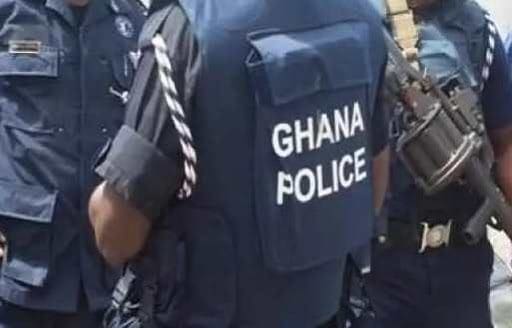

The Ghana Police Service has allegedly withdrawn personnel from checkpoints along the Tamale to Walewale and Bolgatanga highways following a fatal attack that claimed one officer’s life and injured two others.
The December 28th incident at Karimenga claimed the life of General Constable Oppong Damoah Seth, who was shot in the head from behind while seated at the checkpoint around 11:00 pm. Two other officers sustained leg injuries during gunfire exchanges with the attackers. The withdrawal of checkpoint personnel has sparked considerable anxiety among highway users and communities dependent on police presence for security.
Unidentified gunmen initially ambushed a bus traveling along the highway, prompting police response that foiled the first assault. The attackers fled into surrounding bush areas before regrouping for a second strike specifically targeting the Karimenga Police checkpoint. The tactical nature of the dual assault suggests organized planning rather than opportunistic criminal activity.
The injured officers are receiving treatment at an undisclosed hospital following the attack. Police sources have not released information regarding whether the incident represents targeted violence against law enforcement or connects to broader criminal patterns along the highway corridor. The motive behind the coordinated attack remains under investigation by Walewale and Bolgatanga police commands conducting joint inquiry.
General Constable Seth Oppong was scheduled for promotion in January 2026 before his untimely death. His killing represents the latest in a series of security incidents affecting the northern highway network linking critical commercial and administrative centers. The region has experienced periodic violence related to the longstanding Bawku chieftaincy conflict, though authorities have not established connections between that situation and the Karimenga attack.
The Bolgatanga to Walewale to Tamale highway serves as a vital transportation artery for commercial traffic, public transportation, and administrative movement between Upper East, North East, and Northern Regions. Checkpoint presence along this route has historically provided both traffic management and security screening functions. The alleged withdrawal leaves substantial highway stretches without visible police presence, creating potential vulnerability for travelers and commercial operators.
British travel advisories updated in recent months noted security challenges along northern highways, specifically mentioning attack incidents on the Nasia to Walewale to Bolgatanga road and the Bolgatanga to Zebilla to Bawku to Pulmankom road since October. The advisories noted that many travelers have begun arranging police escorts when using these routes, reflecting heightened security concerns predating the December 28th checkpoint attack.
Earlier security incidents in the region include attacks on immigration officers at other checkpoints, demonstrating patterns of violence targeting uniformed personnel at fixed positions along northern transportation routes. In October, Ghana Immigration Service officers stationed at Gbintiri Inland Checkpoint near Nalerigu faced similar assault, resulting in one death and serious injuries. That incident also involved theft of official equipment before perpetrators fled.
The Ghana Police Service and Ghana Armed Forces previously issued joint statements assuring the public of efforts to maintain security along the Bolgatanga to Walewale to Tamale highway through coordinated deployments. Those assurances came during October 2024 tensions related to Bawku conflict spillover affecting highway security. The current checkpoint withdrawal, if confirmed, would represent significant departure from stated security postures.
Highway robbery incidents have occurred periodically along northern routes, with attackers sometimes establishing temporary roadblocks to stop vehicles and rob passengers. Previous incidents documented robbers interrogating passengers about ethnic identity before determining targets, raising concerns about conflict-related motivations beyond pure criminal profit seeking. Such patterns complicate security responses requiring both law enforcement and conflict resolution approaches.
The December attack’s timing and methodology raise questions about intelligence gaps and checkpoint vulnerability assessments. Officers seated at fixed positions face inherent tactical disadvantages against attackers approaching from concealed positions with predetermined plans. The shooting from behind suggests perpetrators conducted reconnaissance before executing their assault, indicating premeditation rather than spontaneous criminal opportunity.
Local communities and transportation operators have expressed alarm at the reported checkpoint withdrawal, viewing police presence as deterrent against both opportunistic crime and organized assault. Commercial drivers operating along affected routes face difficult decisions balancing livelihood needs against personal safety concerns. Passenger transport services may experience disruptions if operators conclude risk levels exceed acceptable thresholds without visible security presence.
The Ghana Police Service has not issued official statements confirming checkpoint withdrawals or explaining security deployment adjustments following the Karimenga attack. Media reports citing sources suggest the withdrawal has occurred, but official confirmation regarding extent, duration, and alternative security arrangements remains pending. The Service’s public affairs directorate has not addressed questions about personnel safety protocols at exposed checkpoint positions.
Security analysts suggest checkpoint operations require reassessment considering evolving threat patterns targeting fixed police positions. Alternative approaches might include mobile patrols, unmarked vehicle surveillance, or checkpoint positioning variations reducing predictability. However, such tactical adjustments require resource commitments and coordination potentially challenging current capacity constraints.
The incident highlights broader northern Ghana security challenges requiring sustained attention from national authorities. Multiple conflict dynamics, porous borders with unstable neighboring countries, small arms proliferation, and economic pressures create complex environments where criminal violence and conflict-related attacks sometimes overlap. Effective responses demand integrated approaches addressing root causes while maintaining immediate security presence.
General Constable Seth Oppong’s death resonated across social media platforms where tributes emphasized his dedication to service and impending career advancement. The human cost of checkpoint duty dangers became visceral for many Ghanaians previously viewing such positions as routine administrative functions rather than potentially dangerous assignments. His sacrifice underscores risks uniformed personnel accept while performing duties the public often takes for granted.