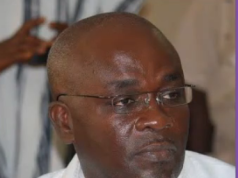

The Adviser on Gender and Social Protection to former Vice-President Dr Mahamudu Bawumia, Akosua Manu, has criticised state institutions over what she describes as their failure to adequately protect female students allegedly sexually abused by the headmaster of Obuasi Senior High Technical School.
Her comments follow allegations involving 19 female students at Obuasi Senior High Technical School, brought to public attention through Manasseh Azure Awuni’s investigative documentary, Inside the Dreaded Headmaster’s Bungalow.
Speaking on JoyNews’ Newsfile on Saturday, October 24, Ms Manu said the Ghana Education Service (GES), Ministry of Education and Ministry of Gender, Children and Social Protection should have taken immediate steps to identify and protect the alleged victims, preserve evidence and prevent further abuse.
She stressed that although the headmaster, Zakaria Abdulai, is entitled to due process and the presumption of innocence, authorities do not need to wait for a criminal conviction before implementing measures to safeguard students.
“First of all, Zakaria and whatever due process he’s entitled to is the law. He should experience it, no problem,” she stated.
“Now, protective measures do not require a criminal conviction. I’m saying this because Zakaria does not need to go to court to be found guilty before the state, from GES, Ministry of Education, Gender Ministry, for them to trace the victims,” she added.
Ms Manu argued that the response of state institutions had been inadequate, particularly following the allegations and accounts presented in investigative journalist Manasseh Azure Awuni’s documentary.
“And this is where I believe the state failed, especially in light of the overwhelming evidence that has been presented in the last week,” she said.
She also expressed concern about reports of individuals allegedly approaching families of complainants, stressing the need for authorities to protect potential witnesses and preserve relevant evidence.
According to her, the controversy should not be reduced to political disagreements, as the welfare of the affected students must remain the priority.
“I’m going to focus on the girls, and it’s important that we do. Because it goes beyond the politics at this point,” she emphasised.
Highlighting the global prevalence of sexual violence, Ms Manu cited UNICEF’s 2024 estimates indicating that more than 370 million girls and women alive today experienced rape or sexual assault before the age of 18, representing approximately one in eight.
She noted that the global estimate rises to about 650 million when non-contact forms of sexual violence are included, while approximately 79 million girls and women in sub-Saharan Africa have experienced contact sexual violence during childhood.
Ms Manu further raised concerns about the unequal power relationship between teachers and students, arguing that some girls may feel compelled to comply with inappropriate demands because of fears about punishment or their academic performance.
“What does this tell you? It tells you there is a certain power dynamic as far as the school is concerned,” she said.
She warned that sexual abuse could have lifelong psychological consequences, including trauma and school dropout, particularly where effective protective measures are absent.
The former adviser also questioned why media interviews with the headmaster had not sufficiently examined whether similar allegations had arisen during his previous postings at Juaben, Toase and Nsawam.
She disclosed that a woman who had previously attended school at Juaben sent her a private message alleging that the headmaster had made inappropriate advances towards her and treated her harshly after she rejected them.
“Once he makes advances towards you and you decline, you are dead. He will hit you with passion. He hated me so much, and I hated him back and avoided him like the plague,” Ms Manu quoted the woman as saying.
She further relayed the woman’s claim that the number of potential complainants at Juaben could exceed 100, although that allegation has not been independently established.
Ms Manu criticised sections of the media for what she described as insensitive reporting on sexual abuse, warning that sensational coverage could discourage victims and their families from seeking justice.
Ms Manu maintained that protecting students, supporting complainants and ensuring a thorough investigation must take precedence over political considerations, while respecting the legal rights of everyone involved.
DISCLAIMER: The Views, Comments, Opinions, Contributions and Statements made by Readers and Contributors on this platform do not necessarily represent the views or policy of Multimedia Group Limited.
DISCLAIMER: The Views, Comments, Opinions, Contributions and Statements made by Readers and Contributors on this platform do not necessarily represent the views or policy of Multimedia Group Limited.
Source link