By Nana Karikari, Senior International Affairs and Political Analyst
South Sudan has postponed its first presidential and parliamentary elections to February 11, 2027. The vote was previously scheduled for December 22. The National Election Commission published the revised timetable on social media on Saturday, the same day nationwide voter registration was set to begin.
The published document did not state a formal reason for the delay. However, commission spokesperson Josephine Achiro Fortelo said the timeline followed thorough consultations with stakeholders. The postponement comes amid acute funding shortages, logistical gaps, and rising violence across the world’s youngest nation. Since gaining independence from Sudan in 2011, South Sudan has delayed its inaugural ballot multiple times, including in 2022 and 2024.
Dismantled Power-Sharing and Constitutional Warnings
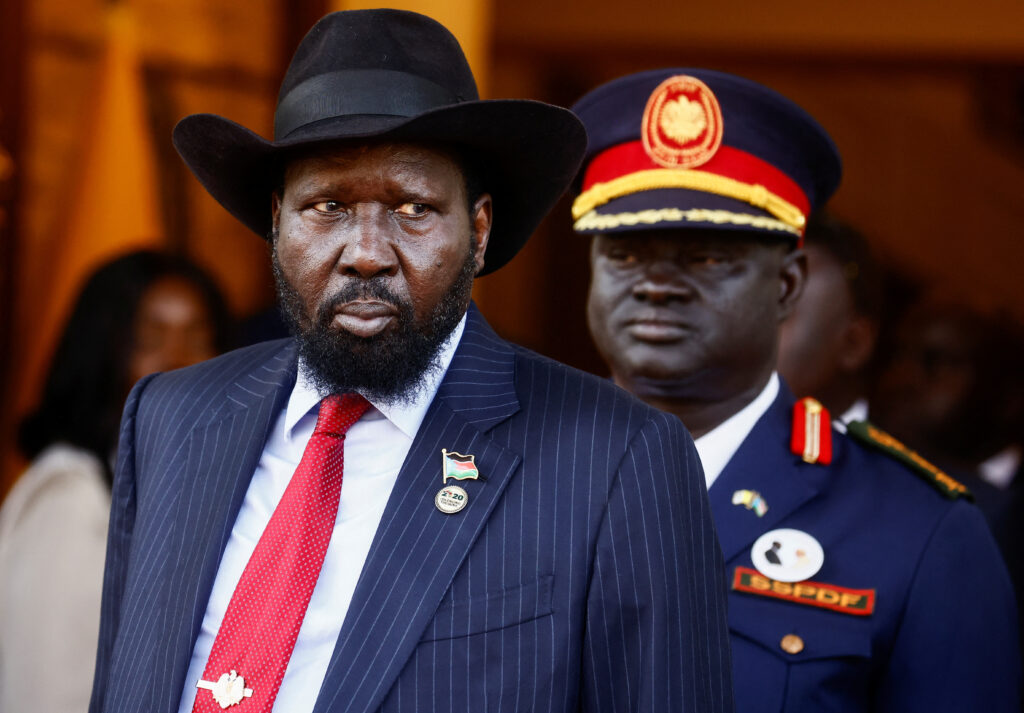
Political tensions spiked in September when President Salva Kiir dissolved the transitional unity government. He replaced it with a caretaker administration. That move allowed officials to pursue elections without completing a national census or a permanent constitution. Both steps were previously tied to the transition roadmap.
Analysts and human rights monitors warned that ending the power-sharing deal concentrated authority in Kiir’s hands. They also noted it threatens a fragile 2018 peace agreement. That accord ended a five-year civil war between Kiir’s forces and fighters loyal to detained former Vice President Riek Machar. The conflict killed at least 400,000 people.
“This amounts to a constitutional coup through legislative reforms,” Yasmin Sooka, chair of the United Nations Commission on Human Rights in South Sudan, said in October. “Whether elections take place or not, South Sudan will still need an inclusive political settlement, protection for civilians and institutions capable of preventing further violence,” she added.
Security Deterioration and Pre-Election Violence
Deadly clashes have escalated in recent months between government troops and Machar’s supporters. Machar has been under house arrest since last March on charges of crimes against humanity. Local ethnic fighting and cattle-rustling battles have further strained the impoverished country of roughly 15 million people.
Violence has also hit Kiir’s ruling Sudan People’s Liberation Movement, or SPLM. On Thursday, gunmen killed two SPLM delegates in Miri Loko village in Western Equatoria state. The victims were returning from party primaries and congresses. One of those killed was Veronica Lucy Gordon, a former South Sudan Broadcasting Corporation journalist recently nominated for a women’s seat in the National Legislative Assembly.
Deng Dau Deng, chair of the SPLM’s high-level committee in Western Equatoria, said the ambush was the third security incident targeting party primaries in the state. Edmund Yakani, director of the Community Empowerment for Progress Organization, condemned the attack. He urged political opponents to choose dialogue over bloodshed.
Logistical Hurdles and Unbalanced Party Activity
Election officials still moved ahead with a large mobilization drive. On Friday in Juba, commission chairperson Gabriel Bol Deng announced that voter registration would run from November 14 to November 28 across 3,161 centers. More than 22,000 staff members were recruited across South Sudan’s 10 states and three administrative areas. Under the revised schedule, candidate nominations precede a 45-day campaign period from December 27 to February 9. A one-day campaign silence follows before the February 11 vote, with final results scheduled for declaration on February 15 and a 148-day window set aside for resolving election disputes.
Major operational hurdles persist. The U.N. Security Council heard this week that the commission has received only $21 million (approximately 246 million Ghana cedis) of the $276 million (approximately 3.24 billion Ghana cedis) it requested to run the polls. Meanwhile, World Bank figures show about 90 percent of South Sudanese citizens lack state-recognized identification. Deng said community leaders, especially in rural areas, will verify residents and issue an “identification form” so they can vote.
Civil society leaders questioned the transparency of the process. After Saturday’s delay was announced, Yakani called for clearer communication from the commission. He noted that officials had not published registration center locations on the morning enrollment was scheduled to begin.
International Calls for Inclusive Dialogue
Civic groups and U.N. leaders warn that holding a rushed vote without political consensus risks reigniting wider conflict. In late October, the South Sudan Civil Society Forum stated that current conditions do not support a fair, credible, peaceful, or inclusive election. The group called for broad dialogue on electoral preparations and the transition.
While the ruling SPLM has actively held primaries nationwide, rival parties have shown little campaign activity. Briefing the U.N. Security Council on November 10, Anita Kiki Gbeho, head of the United Nations Mission in South Sudan, warned that a ballot alone cannot heal the country’s divisions.
“Elections must be a milestone in the transition, not its conclusion. Elections cannot substitute for political dialogue, confidence-building and continued implementation of the Peace Agreement,” she said.
As the February 2027 deadline approaches, South Sudan’s leaders face mounting pressure to bridge funding gaps, secure unstable regions, and bring opposition factions back into the political process. Whether the extra two months will produce credible conditions for the country’s first democratic test—or simply extend a fragile political stalemate—remains the central question for millions of voters.