
By Love Wilhelmina Abanonave
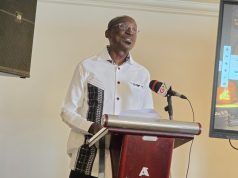
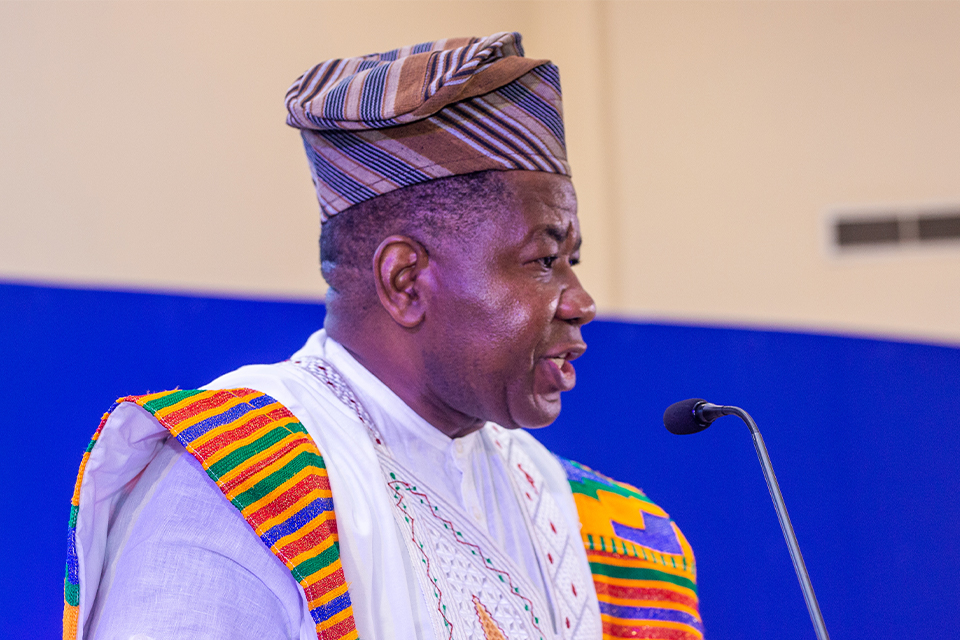
The Resident Representative of the United Nations in Ghana, Edmond Moukala, has challenged Chief Executive Officers (CEOs) in Africa to stop watching poverty as a spectacle and start building the reality and prosperity that all Africans long to see.
He said CEOs must move beyond seeing their corporate social responsibility as charity and begin to see themselves as strategic, sustainable investors in the very people who reside at the margins of the economy.
“Let us stop watching as a spectacle the poverty around us and start building the reality and prosperity that we all long to see,” Mr Moukala said.
Mr Moukala made the call when he addressed business leaders at the Ghana CEO Vision high-level engagement today, focused on repositioning the private sector at the heart of Ghana’s development and the attainment of the Sustainable Development Goals (SDGs).
He proposed a new way of recognizing corporate leadership, where CEOs are not judged by quarterly profits alone, but by the percentage of their supply chain that has moved from vulnerable to resilient.
“Imagine recognising a CEO not for their quarterly profits alone, but by the percentage of their supply chain that has moved from vulnerable to resilient. We must deliberately target rural areas, I believe, and regions facing development challenges,” he stated.
Drawing lessons from China’s economic transformation, Mr Moukala recounted his experience in China in the 1980s when the Asian country was still classified as a third world country.
“The reason I say that, I was in China in the 1980s. China was a third world country. Many people think that all the investment and development that we see in China came out of the Chinese government budget. Not at all. Largely it was a private sector,” he explained.
He said the Chinese government only provided incentives, policies and conditions, but the real transformation was driven by private companies who were recognized by authorities for their contributions.
“The government stood to put some incentives, they put the policy, they set all the conditions and the criteria, but the powers that brought the transformation, the changes of the construction and the business, were the companies. And every time they invested they got a recognition from the authority and the officials,” he noted.
According to him, many Chinese companies currently operating in Africa benefited from opportunities opened up by their government after performing well domestically, and that model does not always require huge government spending but rather deliberate empowerment of the private sector.
“So the government has their own companies, but most of the companies that you see around, particularly in the case of China, are coming from the private sectors. And because they have performed well in the country and they’ve been given opportunities, so it doesn’t really require issue of money as they try to invest and bring transformation in their country. We can do the same thing here,” he said.
Mr Moukala urged Ghanaian CEOs to deliberately target rural areas and regions facing development challenges, and to become strategic and sustainable investors in the very people who live at the margin of the current economy.
He argued that by empowering the vulnerable, businesses are not merely performing an act of charity, but are securing their own future and legacy.
“So by empowering the vulnerable, you are not merely performing an act of charity, as I say, but you are becoming strategic, sustainable investors in the very environment where your companies operate. You are securing your own legacy by ensuring a prosperous, stable and inclusive Ghana,” he stated.
Mr Moukala charged CEOs to prove that they are true architects of Ghana’s renewal and that their hearts are large enough to encompass the needs of the most vulnerable in society.
“As true architects of Ghana’s renewal, let us prove that the heart of CEOs is large enough to encompass the needs of the most vulnerable. Let us win the race of the 2030 agenda, not just for the numbers, but for the people, because what matters is not really the numbers, it’s the people that are being transformed,” he said.
He expressed confidence in the power of African CEOs to lead change, noting that no force is greater than empowered CEOs who have been enabled to perform.
” We have already seen it in Ghana because we see some of the successful work that you are doing, but we know you can do more, we know you can transform more, you can bring a large number of people out of poverty into a framework where they become some of your beneficiary as well as those who will be your clients in your various businesses,” he added.
Mr Moukala concluded that with CEOs at the heart of development and equipped with the heart to lead, the attainment of the SDGs and inclusive prosperity for Ghana would be possible.