

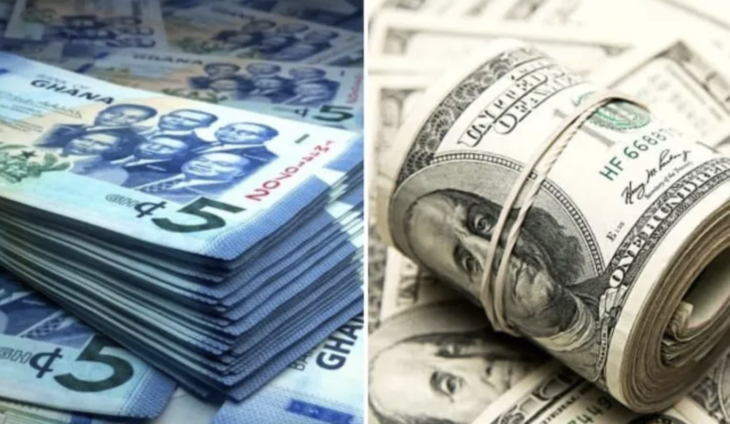
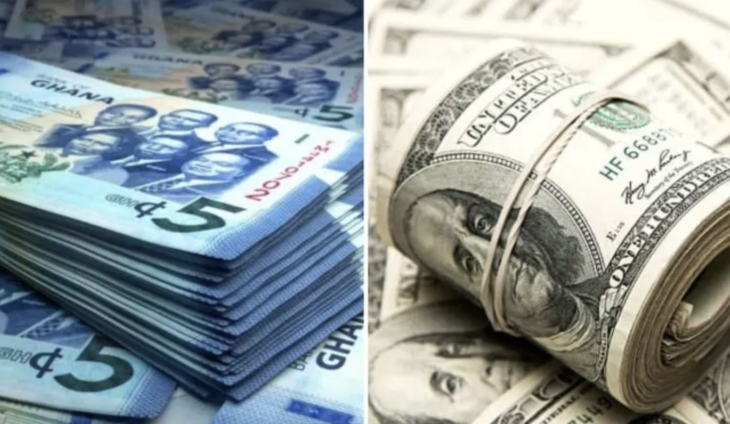
A recent assertion circulating among Ghanaian youth and entrepreneurs poses a fundamental economic question: Is the current exchange rate of approximately 10.94 Cedis to the US Dollar literally killing local jobs by making imported products drastically cheaper than locally manufactured goods?
To answer this objectively, the conversation must first acknowledge the unprecedented and highly successful macroeconomic rescue orchestrated by the current administration.
Following the devastating 2022 to 2023 economic crisis, the government has achieved a decisive, historic turnaround. Inflation, which once suffocated the masses, has plummeted to 4.6%, and the economy is growing robustly at 5.5%. The Bank of Ghana has provided massive relief by aggressively slashing the monetary policy rate to 14.0%, down from its crushing 30% peak.
Furthermore, the state is successfully executing the Ghana Accelerated National Reserve Accumulation Policy, rebuilding gross international reserves, which currently stand at US$13.8 billion.
The government has also listened to the business community’s concerns regarding taxes.
By passing the Value Added Tax Act, 2025 (Act 1151), the state abolished the 1% COVID-19 Health Recovery Levy, scrapped the dreaded cascading tax effect to allow for input tax deductions, and aggressively raised the VAT registration threshold from GH₵200,000 to GH₵750,000. This move fundamentally shields micro and small enterprises from heavy tax obligations.
These are monumental, hard-won victories that have stabilised the nation and restored sovereign pride.
However, these macroeconomic successes have also created a complex “Strong Currency Paradox.”
THE TRUTH BEHIND THE IMPORT SUBSIDY
The aggressive accumulation of reserves caused the Cedi to appreciate significantly, stabilising around GH₵10.99 per USD. While this effectively curbs imported inflation, the viral claim that this dynamic destroys local jobs holds undeniable empirical weight. By strengthening the Cedi without first possessing a globally competitive industrial base, the macroeconomic environment has inadvertently created a massive subsidy for imports.
The data rigorously corroborates the frustration of local entrepreneurs. Consider the agricultural sector: Ghana’s national demand for poultry meat is projected at 400,000 metric tonnes annually, but local farmers, constrained by high feed costs and infrastructure deficits, produce only about 57,871 metric tonnes. Here, expanding production through the industrial version of the Nkukornkitinkiti program should increase output.
Because foreign producers benefit from massive agricultural subsidies in their home countries, and local importers now enjoy immense purchasing power through a stronger Cedi, imported frozen chicken still lands in Ghana 30% to 40% cheaper than locally raised chicken.
The government has proactively tried to stimulate local production, such as zero-rating VAT on locally manufactured textiles until December 2028. Yet, other policies reflect the tension between modernisation and local job creation.
For instance, the 2026 budget introduced zero import duty on pure electric vehicles. While environmentally progressive, this hands the market entirely to cheap, imported Chinese EVs, completely removing any incentive for prospective domestic assembly plants to build a local automotive value chain.
THE PRODUCTION COST “DEATH ZONE”
The real killer of local industrial jobs is not just the exchange rate, but the unyielding domestic cost of production. A strong Cedi makes importing easy, but local factories remain trapped by structural deficits. Following a major 2026 tariff adjustment, industrial electricity costs in Ghana sit at approximately US$0.16 per kilowatt-hour (kWh).
When a Ghanaian manufacturer pays US0.16/kWh, they cannot price their goods below an imported equivalent from Vietnam or China, where industrial power costs roughly US0.07/kWh.
Additionally, despite the highly commendable VAT reforms, formal manufacturing businesses still must navigate a unified 20% effective VAT rate (a flat 15% VAT alongside a 2.5% NHIL and 2.5% GETFund levy).
Consequently, the youth are analytically correct: when an entrepreneur conducts a feasibility study today, the high cost of electricity and local overheads immediately dictates that importing a finished good is vastly more profitable than establishing a local factory. This rational reallocation of capital could likely destroy high-yield industrial job creation, trapping the workforce in an informal, retail-based economy.
THE CAPITAL GOODS PARADOX: WHY WE STILL NEED IMPORTS
However, it is crucial to disaggregate the import data to understand the full jobs narrative. Not all imports are finished consumer goods actively displacing local businesses.
A closer look at Ghana’s import themes shows that a significant portion consists of capital goods and intermediate materials essential for industrialisation.
Beyond consumer items like used vehicles and frozen poultry, the country’s top import categories historically include heavy machinery, self-propelled bulldozers, cement clinker, and industrial energy inputs like automotive gas oil (diesel). These are the fundamental building blocks for infrastructure, construction, and manufacturing.
Because Ghana currently lacks the domestic capacity to manufacture heavy industrial machinery, local factories must rely entirely on imported assembly lines, agricultural tractors, and production technology.
In this context, a strong Cedi is a lifeline for ambitious local entrepreneurs.
It makes importing essential industrial machinery and raw commodities far more affordable. The jobs narrative here is complementary, not contradictory: without these imported capital goods, local industrialisation is impossible.
A strong currency enables the very capital accumulation required to equip domestic factories, which in turn creates high-yield jobs for Ghanaian youth.
Therefore, blanket condemnations of imports ignore the reality that importing machinery is the first necessary step toward domestic production.
THE CONTRARIAN REALITY AND OUTSTANDING QUESTIONS
However, a contrarian perspective is essential to this debate. Those advocating for a weaker Cedi to “protect” local industries must answer a grim reality: if the government intentionally allowed the Cedi to depreciate to make imports expensive, wouldn’t that immediately plunge the masses back into hyperinflation?
Ghana relies heavily on imported essential medicines, industrial machinery, and foodstuffs. A weak Cedi starves the everyday consumer.
Is a net importing nation truly ready to abandon a strong currency when its local factories, producing only 14% of the country’s poultry needs, cannot scale up to feed the nation?
The next stage of this economic dialogue must move beyond pointing fingers at the exchange rate and confront systemic realities. The government has done the heavy lifting to fix the macroeconomy; now the microeconomy demands answers:
1. If a strong Cedi makes imports cheaper, what specific, aggressive interventions can the state implement to drag industrial electricity costs down from the US$0.16/kWh “Death Zone” to make local factories regionally/globally competitive?
2. How can we implement strategic import substitution and protect youth manufacturing jobs without introducing blanket tariffs that trigger inflation for everyday consumers?
3. Ghana achieved a staggering GH₵148.3 billion trade surplus in 2025, largely driven by gold. How is this wealth being physically deployed to build domestic processing capacity, rather than just financing more consumer imports?
These difficult numbers and questions will determine whether Ghana’s remarkable recovery creates lasting wealth and jobs, or paves the way for cheaper imports.
DISCLAIMER: The Views, Comments, Opinions, Contributions and Statements made by Readers and Contributors on this platform do not necessarily represent the views or policy of Multimedia Group Limited.
DISCLAIMER: The Views, Comments, Opinions, Contributions and Statements made by Readers and Contributors on this platform do not necessarily represent the views or policy of Multimedia Group Limited.
Source link