
Africa’s greatest obstacle is not that we fail to see what ails us, but that we have grown comfortable defending it. The unborn child will inherit our choices, not our excuses.
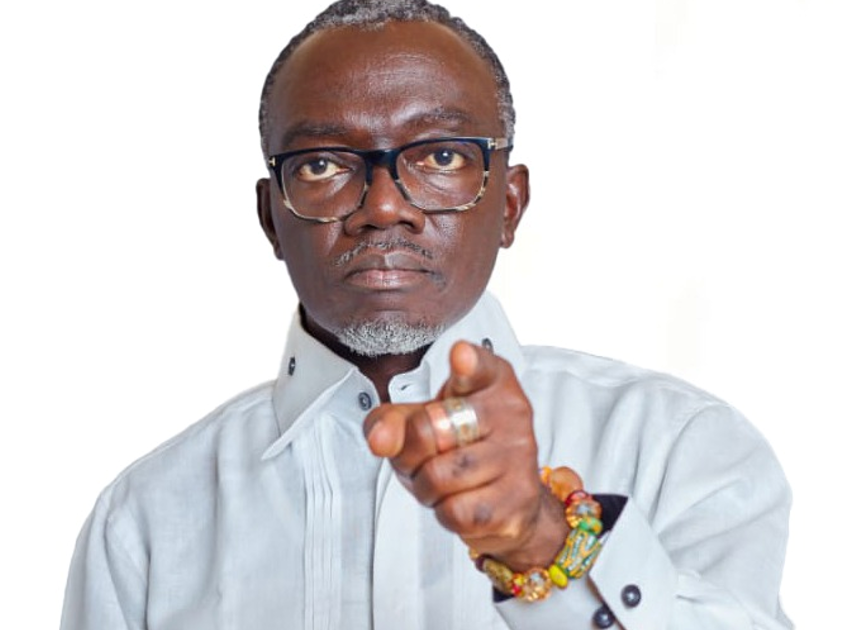
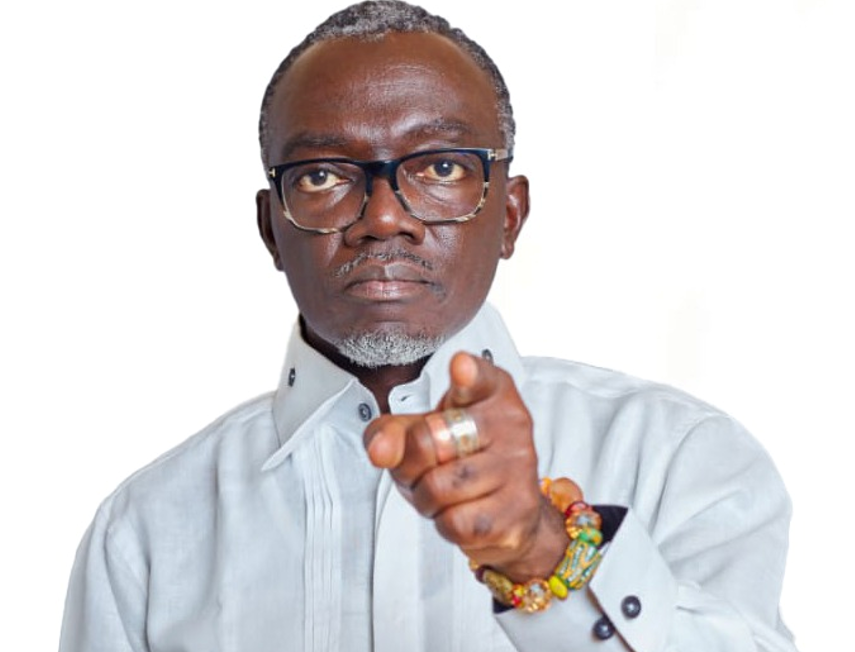
By Ing. Prof. Douglas Boateng, Chartered Director UK | Chartered Engineer UK | Fellow, Institute of Directors UK | Fellow, Ghana Institution of Engineering | Governance, Industrialisation and Supply Chain Strategist | Founder, Boardroom Governance Summit | Founder and Scriber, NyansaKasa (Words of Wisdom)
A doctor will tell you that the most difficult patient to treat is not the one who is unaware of his illness. It is the one who knows exactly what is wrong, understands the consequences, has access to treatment, and still defends the habits that are making him sick. Yet when whole societies behave in the same way, we tend to give it gentler names: politics, culture, loyalty, survival, or simply the way things are done.
This is one of the most uncomfortable truths facing many developing societies, including our own. Our greatest difficulty is not that we fail to see what ails us. It is that we see it clearly, sometimes defend its causes, and still expect our children to inherit a healthy nation.
We complain about corruption while admiring unexplained wealth that happens to benefit us. We condemn indiscipline while seeking exemptions from the rules that inconvenience us.
We denounce environmental destruction while buying from, financing or shielding those responsible. Then we raise our hands and pray for national transformation. Even the most generous rain, however, cannot yield a healthy harvest from soil the farmer insists on poisoning.
NyansaKasa: “A society that protects the causes of its suffering should not expect time alone to deliver the cure.”
When The Abnormal Becomes Normal
Corruption, inequality and weak institutions are not uniquely African conditions. The real danger begins when abnormal behaviour becomes normal and normal behaviour starts to look strange.
Consider the procurement officer who insists on due process and is accused of delaying progress. Consider the board director who raises an uncomfortable question about a doubtful investment, only to be met with the kind of glances usually reserved for someone who has arrived at a funeral carrying a trumpet. And consider the citizen who refuses a dishonest arrangement and is gently advised to “be realistic”.
Since when did being realistic mean making peace with what is wrong? What once shocked us becomes familiar; what is familiar becomes tolerated; what is tolerated becomes defended; and what is defended eventually becomes institutionalised. At that point a society is no longer merely suffering from a problem. It is helping the problem survive.
NyansaKasa(words of wisdom): “When wrongdoing becomes ordinary and integrity becomes exceptional, society has not merely lost its standards; it has reversed its moral compass.”
When Political Colours Decide Right And Wrong
Political competition is healthy and necessary. It becomes unhealthy, however, when party loyalty replaces moral consistency.
Too often, a questionable contract is condemned when linked to opponents and explained away when linked to allies. The evidence stays the same; only the colours change. It is almost as though morality alters its chemical composition whenever a government changes, becoming poisonous in opposition and medicinal in power.
This observation is not aimed at any party, government or country; it describes a human weakness that crosses borders. Its cost, however, is real. When wrongdoing is judged by affiliation, institutions lose authority, citizens lose confidence, and accountability becomes selective. A nation must always be larger than the parties competing to govern it.
The Environment Does Not Accept Our Excuses
Nowhere is the contradiction more visible than in how we treat our land and water. In January 2025, Ghana Water shut its Bonsa headworks, which supplied about 75 per cent of the drinking water for Tarkwa Nsuaem, because illegal mining had so polluted the river that, in the plant manager’s words, it had become “just mud”. Such activity is sustained by a web of financiers, operators, buyers, weak enforcement, economic hardship and social tolerance. At times the same community that demands government action also expects enforcement officers to spare particular relatives, friends or the politically connected. That is rather like a patient demanding treatment while threatening the doctor who tries to remove the infection.
Flooding tells a similar story. On 3 June 2015, floodwaters and a fire at a fuel station near Kwame Nkrumah Circle in Accra claimed more than 150 lives. A decade later, drains remain choked with refuse and structures still sit across waterways, yet whenever the streets flood, rainfall becomes the principal suspect. Polluted water, after all, does not ask for party membership before it enters a household.
NyansaKasa(words of wisdom): “A nation cannot continuously block its waterways with yesterday’s indiscipline and expect tomorrow’s rainfall to negotiate politely.”
Corruption Is Never A Solo Performance
Transparency International’s 2025 Corruption Perceptions Index scored Ghana 43 out of 100, against a sub Saharan average of 32, while UNCTAD estimates that Africa loses about $88.6 billion every year to illicit financial flows, more than the continent receives in development aid. It is convenient, but incomplete, to treat corruption as something that begins and ends with public officials. Corruption usually depends on a chain of participants: someone offers, someone receives, someone prepares the documents, someone approves, someone conceals, and many remain silent in the hope of eventually benefiting.
When communities celebrate wealth without asking where it came from, when families press relatives in office for favours beyond legitimate means, and when businesses treat bribery as an ordinary operating cost, we collectively create the rewards that make misconduct attractive. Change is possible. Singapore, through decades of sustained enforcement, now scores 84 and ranks third in the world, and closer to home Seychelles (68), Cape Verde (62), Botswana and Rwanda (58 each) show that African nations can rise well above the regional average. Africa need not copy any model mechanically, but the lesson is clear: consistent rules and credible consequences matter.
NyansaKasa(words of wisdom): “When society applauds unexplained wealth more loudly than honest achievement, it should not be surprised when integrity struggles to attract investors.”
Governance Begins At Home
We often speak of governance as though it starts in Parliament, the boardroom or the courts. Much of it starts at the family table. Children learn early whether promises are kept, whether rules apply equally and whether dishonesty is excused. A parent who condemns corruption on television but celebrates a favour secured through connections is teaching two lessons at once, and the child may remember the practical one more vividly.
Government carries heavy responsibilities that cannot be delegated, from competent leadership to security, justice and a productive economy. Citizens, equally, carry duties no government can perform on their behalf, from paying legitimate taxes and disposing of waste responsibly to rejecting bribery and demanding evidence. Blaming government for everything is as incomplete as blaming citizens for systemic failure.
NyansaKasa(words of wisdom): “Government may steer the national vehicle, but citizens who continuously remove its wheels should not complain that the journey is slow.”
We must also resist confusing activity with progress. A bridge that is 95 percent complete is of little comfort to the stranded traveller; development must be judged by outcomes, not announcements.
The Path To Recovery
Reversing the trend begins with honest diagnosis, separating symptoms from causes and resisting explanations chosen for political comfort. It requires enforcement that is consistent, lawful and fair, because laws applied selectively lose their moral force. It demands institutional continuity, so that useful policies survive changes of government, as South Korea demonstrates: around 1960 its income per person was broadly similar to Ghana’s, yet decades of patient institution building have since made it many times richer. It calls for incentives that protect whistleblowers and reward competence, and for boards that insist on effective audit and ethics oversight. And it needs schools, traditional authorities, faith communities and professional bodies that cultivate civic responsibility and own the change.
Above all, it requires each of us to stop treating personal responsibility as something meant mainly for other people. This is not an invitation to blame ourselves, but to examine ourselves, which is where lasting change begins.
The Unborn Child Will Inherit Our Choices
The consequences of what we tolerate rarely end with our generation. A polluted river does not run clean because the official who ignored it has retired.
Imagine an African child born 25 years from now who studies the records and discovers that we knew. Experts warned, committees investigated and governments promised, yet too many of us kept protecting the behaviours behind the problems. What would we tell that child? That the offenders belonged to our party? That everyone else was doing the same?
NyansaKasa(words of wisdom): “The unborn child cannot vote against today’s mistakes, yet tomorrow that child may spend a lifetime paying for decisions made before birth.”
A sick society can recover. But no doctor can permanently cure a patient determined to protect the disease. Perhaps, then, our national question should no longer be simply “What is wrong with our country?” but the more courageous one: “Which of the things we know are wrong do we continue to tolerate, excuse, celebrate or personally benefit from?” The honest answer may implicate institutions we belong to, parties we support, customs we inherited and, at times, the person in the mirror.
Africa’s future does not require a continent without problems. It requires a continent increasingly unwilling to defend their causes. Let us stop protecting the disease while praying for the cure, and stop confusing loyalty with complicity. The unborn African child will not inherit our intentions, only the consequences of our choices. The Africa we desire is in our own hands, and so too is the Africa we may one day regret leaving behind.
About the Author
Ing. Professor Douglas K. Boateng is a strategist in governance, industrialisation and supply chains, and serves as a professional chairperson, an international Chartered Director (UK) and a Chartered Engineer (UK). A Pan-Africanist and social entrepreneur at heart, he has spent his career working across public institutions, corporate boards and industrial policy, in Africa and beyond, guided by the conviction that strong institutions are built one honest decision at a time. His contributions to industry and academia have earned him more than six lifetime achievement awards. He is the founder of NyansaKasa (Words of Wisdom), a collection of daily aphorisms he has written and shared since late 2019, distilling decades of experience advising governments, boards, and enterprises on governance, accountability, and institutional resilience into words meant to challenge and endure. He convenes the Boardroom Governance Summit, Africa’s largest boardroom-focused summit, and writes a widely read weekly op-ed series titled “Inconvenient Truth” and “What Is Wrong With Us”, featured on some of the region’s leading digital media platforms. Professor Boateng can be reached via LinkedIn or at info@panavest.com.
DISCLAIMER: The Views, Comments, Opinions, Contributions and Statements made by Readers and Contributors on this platform do not necessarily represent the views or policy of Multimedia Group Limited.
DISCLAIMER: The Views, Comments, Opinions, Contributions and Statements made by Readers and Contributors on this platform do not necessarily represent the views or policy of Multimedia Group Limited.
Source link