By Nana Karikari, Senior Global Affairs Correspondent
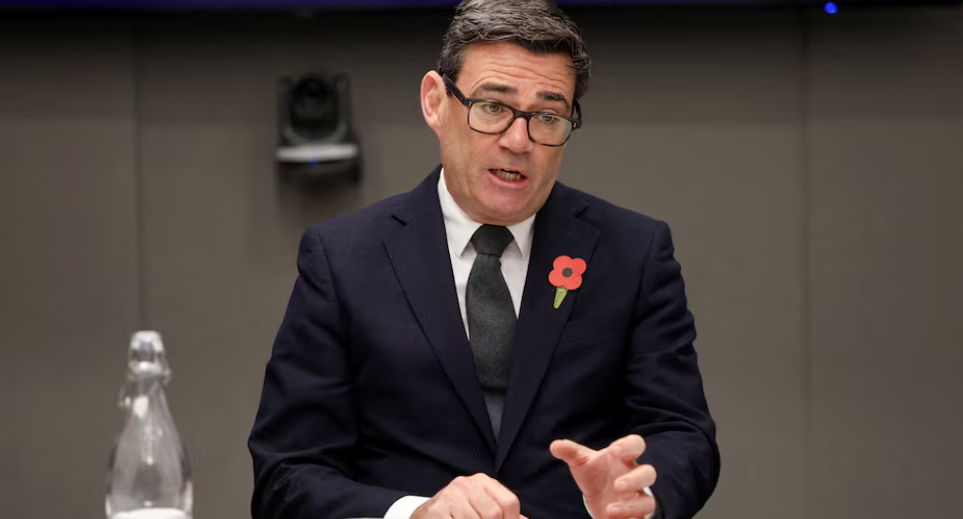
British Prime Minister Andy Burnham has signaled a landmark shift in foreign policy by expressing openness to a formal apology for the United Kingdom’s role in the transatlantic slave trade. Writing in The Guardian on Saturday, Burnham acknowledged that Britain must “face up to the past” and indicated a willingness to consider demands long made by Commonwealth members. He pointed to Britain’s historical duality, citing abolitionist Thomas Clarkson’s 1787 sermon against slavery at Manchester Cathedral alongside the paradox that Manchester’s thriving cotton industry was simultaneously built on the labor of enslaved people.
“For years, those members of the Commonwealth affected by the slave trade have asked for an honest conversation about the legacies of slavery,” Burnham wrote. “By sticking our heads in the sand, we have damaged the ability of the Commonwealth to function.”
While Burnham expressed a desire for a “structured dialogue with those affected,” he firmly ruled out financial compensation, stating that reparations are “not the right answer.”
“I do not think that British people today can be held liable for historical wrongs, however heinous, that happened in a different age under different laws and in which they played no personal part,” Burnham said.
Direct Exclusion of Financial Reparations
The British government has historically avoided making formal state apologies or providing monetary compensation for its colonial legacy. Burnham’s comments maintain this longstanding opposition to financial restitution, even as he signals a willingness to engage on a diplomatic level. A government source told the BBC that opening the door to an apology was “morally the right thing to do.”
“Listening to calls for a formal apology on behalf of the British state will form an important part of this process,” Burnham noted in his op-ed. “I am open to them.”
Instead of direct cash transfers, Burnham proposed tackling modern economic challenges, such as the high levels of sovereign debt burdening developing states. He outlined plans to work alongside wealthy nations and global investors to restructure vulnerable nations’ debts over extended periods at lower interest rates. Former Prime Minister Gordon Brown, a long-standing advocate for international debt relief, will join the British delegation to support the initiative.
Reaction Across the Commonwealth
Burnham’s announcement comes just ahead of the Commonwealth Heads of Government Meeting in St. John’s, Antigua and Barbuda, where King Charles III will join representatives from 56 member nations. The King recently completed the first leg of a Caribbean tour, visiting the Bahamas and Guyana, where he visited the site of an 1823 rebellion by enslaved people against British authorities.
In Nassau, King Charles addressed historic atrocities, saying, “It is only right that we should acknowledge the great suffering and injustices of the past in these islands and beyond, even as we rejoice in the successes of the present.”
Reactions to Burnham’s statement varied across the region. Prime Minister Mia Mottley of Barbados welcomed the prime minister’s openness to a formal apology on social media, stating she would engage in good faith while continuing to advocate for reparatory justice. Prime Minister Andrew Holness of Jamaica noted on X that “Open-minded dialogue is always a good place to start addressing difficult issues.” Jamaica recently brought its case for reparations directly to the Crown, a matter now before the United Kingdom’s highest court of appeal.
Campaigners remained critical. Denis O’Brien, founder of The Repair Campaign, described Burnham’s refusal to address financial compensation as disappointing. “The British Government must stop obfuscating and give a full and formal apology now,” O’Brien said. “This would be a significant and symbolic first step towards reparatory justice.”
African Continental Pressure and West African Leadership
Burnham’s willingness to entertain an apology comes as West African nations, led by Ghana, intensify international legal and diplomatic pressure. Ghana secured a landmark United Nations resolution in March 2026 establishing a global path toward reparatory justice. The African Union has simultaneously backed estimates valuing historical damages from transatlantic slavery at $100 trillion.
West Africa served as the principal embarkation point for millions of enslaved Africans, with historical trading posts along the Gold Coast remaining enduring monuments to
human suffering. While African leaders welcomed the U.K.’s movement on symbolic acknowledgment, regional figures insist that genuine reconciliation requires addressing systemic economic inequalities. Modern challenges, such as debt burdens, trade imbalances, and the restitution of looted cultural artifacts, remain central to continental demands. For citizens across Ghana and the broader African diaspora, words alone cannot substitute for structural economic justice.
Parliamentary and Domestic Perspectives
In London, Bell Ribeiro-Addy, MP for Clapham and Brixton Hill and chair of the All-Party Parliamentary Group for Afrikan Reparations, offered a nuanced view on BBC Radio 4’s Today programme. She stressed that acknowledgment without formal accountability falls short.
“Until we apologise, we are never going to be on equal footing… it’s meant to be a family of nations – a Commonwealth – and it’s simply not the case,” Ribeiro-Addy said. She noted that government concerns over monetary demands miss the central point of the movement. “My worry is the focus on financial reparations, and I think that is deeply problematic and has not quite listened to what people have said.”
Domestic pressure has also been shaped by evolving public debate over Britain’s historical legacy. In 2020, anti-racism protesters in Bristol tore down the statue of slave trader Edward Colston, a deputy governor of the Royal African Company. Furthermore, private institutions and prominent families, including the owners of The Guardian, have previously issued apologies and launched financial funds to address their ancestors’ involvement in slavery.
Geopolitical Realities and Historical Context
Downing Street’s outreach arrives at a moment when global rivals are actively competing for influence in the Global South. Russian President Vladimir Putin recently hosted a Russia-Africa summit in Moscow, highlighting the strategic urgency for London to preserve cohesion within the Commonwealth.
From the 16th century onward, English authorities and the monarchy actively led the transatlantic slave trade, forcibly transporting millions of Africans across the ocean. While British leaders frequently emphasize Parliament’s 1807 abolition of the trade and the 1833 Slavery Abolition Act, the historic transition involved paying millions of pounds to British plantation owners as compensation for losing human property—a debt the UK government only fully paid off in 2015.
Addressing both sides of the nation’s past, Burnham wrote: “We are a country where brave people led the way in abolishing slavery, but we are also a country that
participated in the trade in human lives. The trans-Atlantic slave trade was a brutal and barbaric violation of those people. … I want to express my sorrow and regret for the pain and suffering of so many millions of people, and to recognize the way it still shapes our world today.”
Burnham concluded by emphasizing that confronting history is essential to building an equitable future. He urged member states to renew the Commonwealth’s relevance by jointly tackling the climate crisis, supporting clean energy transitions, expanding educational access for women and girls, and ensuring smaller nations maintain an equal voice on the global stage.