
Africa’s economic future will take centre stage in El Alamein, Egypt, this June as Afreximbank convenes its 33rd Annual Meetings (AAM2026).
The gathering, expected to draw more than 4,000 delegates from across Global Africa and beyond, will focus on how intra-African trade can accelerate industrialisation and strengthen the continent’s economic sovereignty in an era of geopolitical uncertainty.
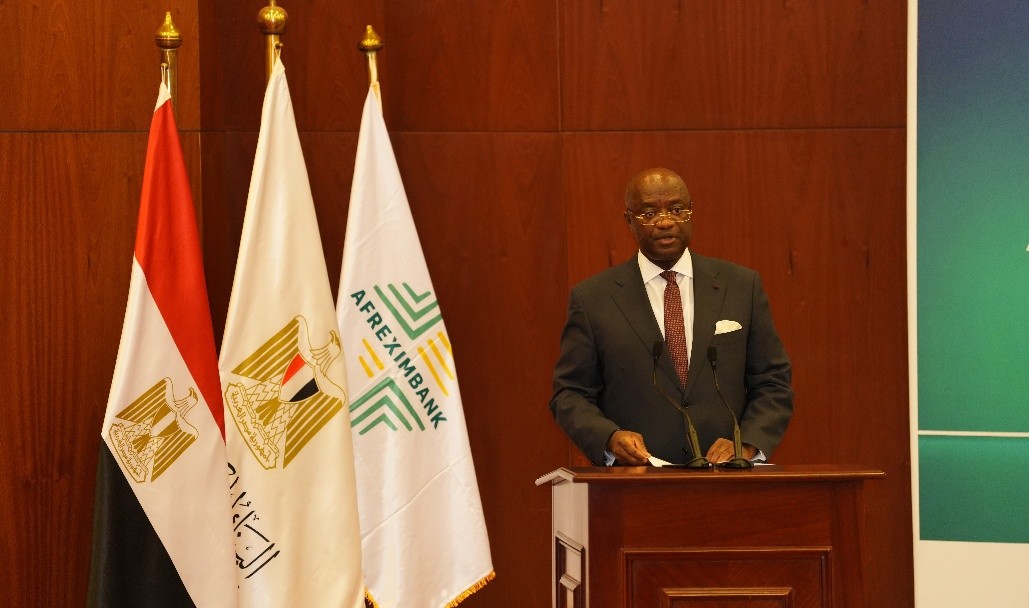
At a media briefing in Cairo ahead of the event, Dr George Elombi, President and Chairman of the Board of Directors of Afreximbank, outlined the central message that Africa must move beyond reliance on commodity exports and external systems by building domestic industrial capacity and retaining more value from its resources.
He emphasised that the continent has already laid the institutional foundations for integration through initiatives such as the African Continental Free Trade Agreement (AfCFTA), the Pan-African Payment and Settlement System (PAPSS), and the Intra-African Trade Fair.
According to him, the challenge now is to translate these platforms into tangible production capacity, resilient supply chains, and investible projects that can transform Africa’s trade structure.

The agenda for AAM2026 is structured around three priority areas: deepening intra-African trade as a foundation for independence, driving industrialisation through value addition, and mobilising African and global capital for sustainable development. These priorities reflect the continent’s need to adapt to a polarised global environment while charting its own path to prosperity.
Preparations for the meetings are well advanced, with Egypt selected as host not only for its infrastructure readiness and connectivity but also for its strategic role as a financial hub. The collaboration between Afreximbank and Egypt underscores the importance of institutional partnerships in delivering successful outcomes for African trade and finance.
Delegates will engage in high-level discussions on how Africa can leverage the AfCFTA to reduce external dependence and strengthen regional supply chains. The deal room, a hallmark of Afreximbank’s Annual Meetings, will connect capital with bankable projects in sectors such as transport, logistics, energy, manufacturing, and digital trade infrastructure.
Flagship interventions already demonstrate this approach, including support for industrial infrastructure like the Dangote Refinery and logistics upgrades such as the Beitbridge Border Post.
The geopolitical context adds urgency to this year’s theme. Recent global shocks have highlighted Africa’s vulnerability to supply chain disruptions and external liquidity pressures. Afreximbank has responded with immediate measures, such as the US$10 billion Gulf Crisis Response Programme, while also investing structurally in trade corridors, industrial platforms, and payment systems that enable greater self-reliance.
Looking ahead, the Bank’s financing priorities over the next 12 to 24 months will centre on sectors that drive industrialisation and transformation. These include manufacturing, agro-processing, strategic minerals beneficiation, energy, healthcare, and digital trade infrastructure. The aim is not only to finance transactions but to build the operating systems that allow African businesses to scale across borders.
By convening leaders, policymakers, financiers, and entrepreneurs, Afreximbank’s Annual Meetings will reaffirm the continent’s commitment to building an integrated, industrialised, and economically sovereign Africa. The focus on intra-African trade as a catalyst for industrialisation signals a decisive shift toward self-determination, resilience, and shared prosperity.
Post Views: 20
Discover more from The Business & Financial Times
Subscribe to get the latest posts sent to your email.