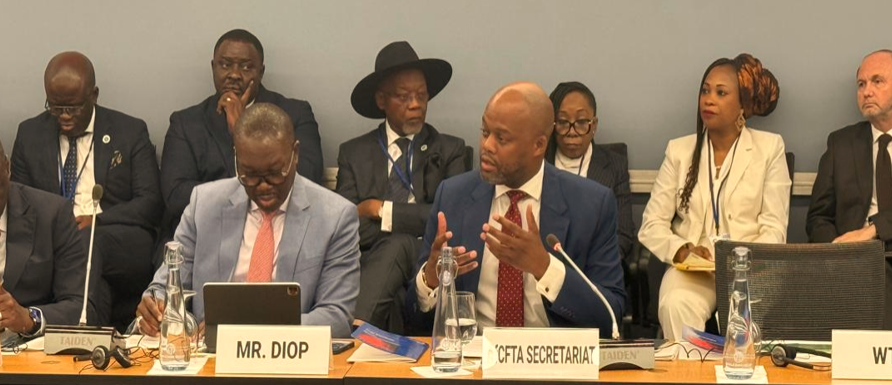

African policymakers and stakeholders have called for urgent action to accelerate the implementation of key continental integration frameworks, warning that progress will depend less on new policies and more on effective execution of existing agreements.
The call was made during a high-level roundtable held on the sidelines of the 2026 Spring Meetings in Washington, D.C., where discussions centred on advancing Africa’s economic integration through coordinated implementation of three major initiatives: the African Continental Free Trade Area (AfCFTA), the Single African Air Transport Market (SAATM), and the African Union Free Movement Protocol.
H.E. Wamkele Mene, Secretary-General of the AfCFTA Secretariat, joined other participants in examining how these frameworks spanning trade, air connectivity and mobility can work in tandem under the theme “Three Pillars, One Integration Agenda.” The discussions highlighted the need for alignment across sectors to unlock the full benefits of a unified African market.
Participants emphasized that while Africa has made significant progress in designing integration frameworks, implementation gaps remain a major obstacle. Persistent challenges such as operational bottlenecks at borders, fragmented air transport systems and limited movement of people continue to slow the pace of integration.
The roundtable stressed that stronger coordination between governments and the private sector is essential to overcoming these barriers. By addressing inefficiencies and improving connectivity, stakeholders noted, Africa can enhance the movement of goods and people, reduce trade costs and strengthen competitiveness across the continent.
A central message emerging from the discussions was that integration remains one of Africa’s most powerful economic multipliers. Participants argued that when trade flows more efficiently, mobility is expanded and systems are better connected, the continent is better positioned to transition from a collection of fragmented economies into a single, dynamic market.
The meeting concluded with a shared recognition that Africa’s next phase of economic transformation will hinge on translating existing commitments into practical outcomes. With key frameworks already in place, stakeholders underscored that the priority now is coordinated, sustained implementation to drive meaningful impact.
Post Views: 1
Discover more from The Business & Financial Times
Subscribe to get the latest posts sent to your email.