
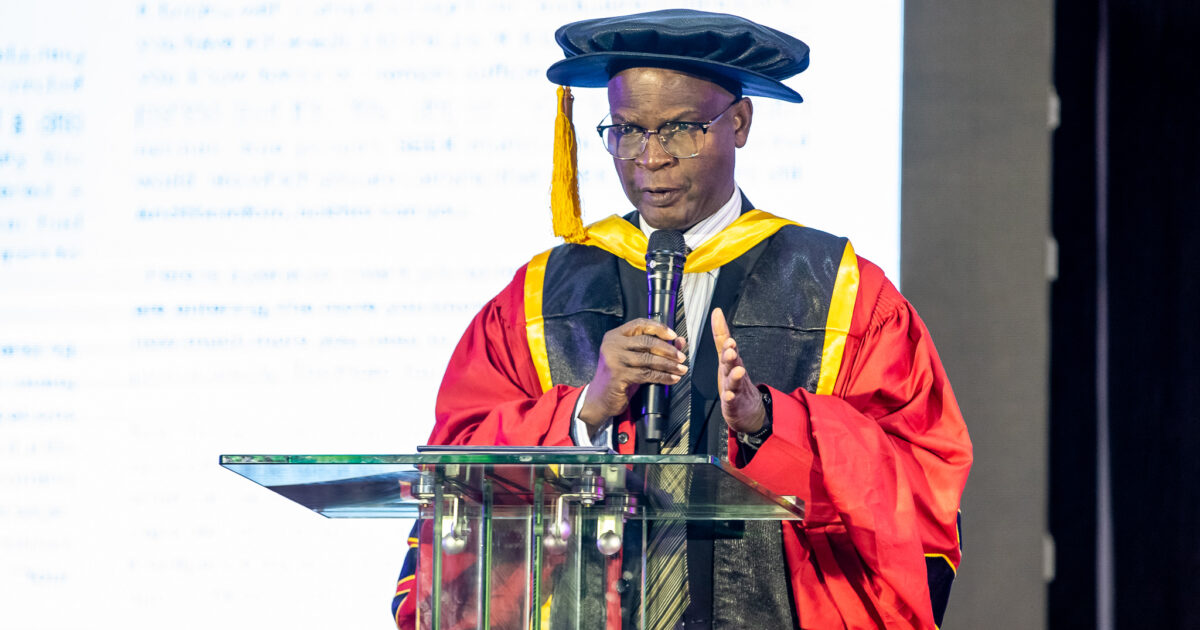
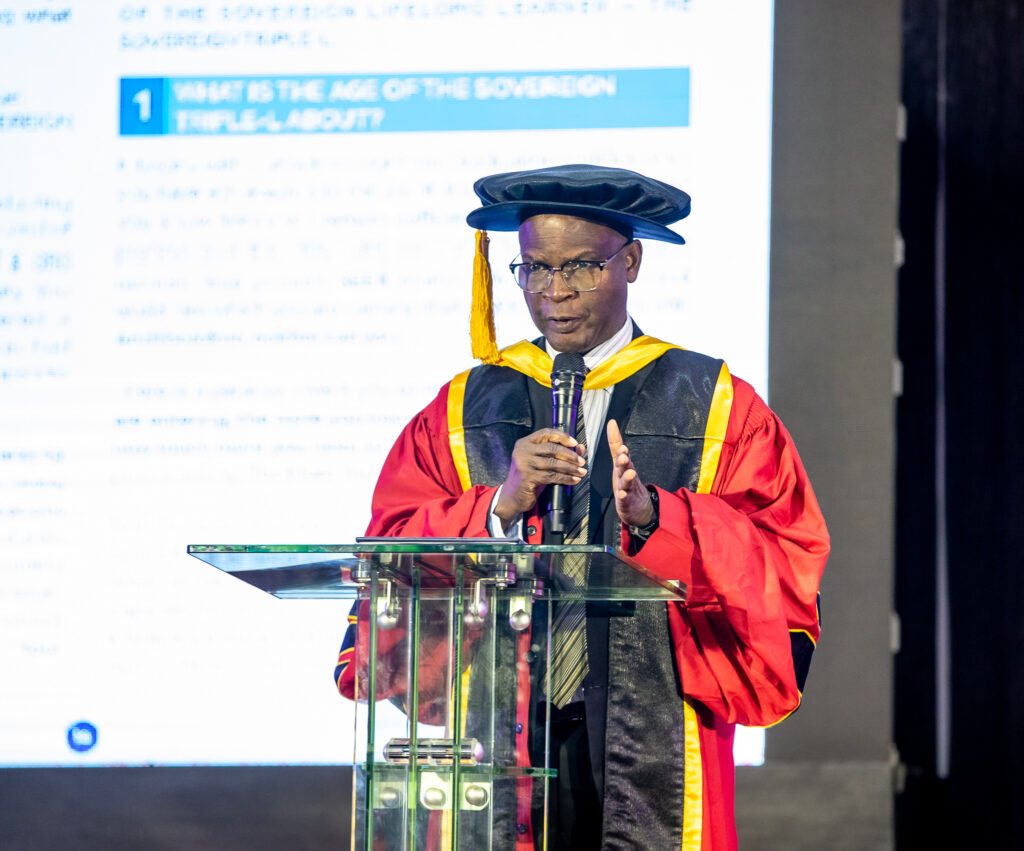
The President of the Accra Institute of Technology (AIT), Professor Clement K. Dzidonu, has called for a fundamental shift in how individuals, educational institutions, and society approach learning in the age of Artificial Intelligence (AI).
He says graduation should no longer be viewed as the end of a person’s learning journey but as the beginning of a continuous process of developing new skills and capabilities.
Professor Dzidonu is advocating what he calls the Sovereign Lifelong Learner, or “Sovereign Triple-L” — an individual who takes personal responsibility for continually renewing, deepening and extending their capabilities throughout their professional and personal life.
He argues that the traditional model in which people complete formal education, graduate, enter a profession and rely for years on knowledge acquired at university is becoming increasingly unsustainable.
“You went to university. You acquired knowledge. You graduated. You entered a profession. And for many years, much of what you had learned remained relevant to what you were called upon to do. That world is disappearing,” he said.
According to Professor Dzidonu, AI, emerging technologies, changing professional practices and the reinvention of industries are rapidly transforming both the nature of work and the capabilities required to remain relevant.
He said while university qualifications remain important as recognition of what an individual has achieved at a particular point, they cannot guarantee that the knowledge and capabilities acquired will remain sufficient throughout a person’s career.
“The Sovereign Triple-L is not simply someone who keeps taking courses, accumulates certificates, or waits until an employer sends them for training. The Sovereign Triple-L is a Sovereign Lifelong Learner — a person who takes ownership of continuing learning,” he stated.
Professor Dzidonu said individuals must increasingly ask themselves what they know, what they can do, what they need to learn and what they may need to unlearn or relearn.
He described an individual’s Skills, Expertise, Experience, Knowledge and Know-how collectively as SEEK.
He said the rapid pace of technological change is creating what he calls the SEEK-Gap — the changing distance between the capabilities individuals currently possess and those increasingly required to remain effective and relevant.
This, he argued, creates a paradox: “The More You Know, the Less You Know.”
Professor Dzidonu explained that the concept does not suggest that learning reduces knowledge. Rather, the frontier of what professionals can know and are expected to do continues to expand as AI, new technologies, professional practices and emerging challenges create new demands.
He therefore urged individuals to focus not only on accumulating knowledge but on transforming their evolving SEEK into professional capabilities that enable them to solve problems, exercise judgement, adapt, innovate, collaborate and create value.
“The future will increasingly belong to those who remain capable of learning what tomorrow requires,” he said.
Professor Dzidonu also urged people not to view AI merely as a threat to the knowledge and skills they already possess.
“The more useful question is not merely, ‘Will AI make what I learned obsolete?’ It is: ‘How will I use AI, technology, experience, reflection and continuous learning to keep renewing what I know and what I am capable of doing?’” he said.
He stressed that becoming a Sovereign Triple-L does not mean surrendering human judgement to AI.
Rather, individuals should learn with AI, question it, challenge it and use it responsibly while strengthening their own capacity to think, create, exercise judgement and adapt.
At the centre of his proposition is what he calls the Opportunity-Possibility-Difference (OPD) Perspective.
He explained this as three stages: See the Opportunity, by recognising that change and disruption can create opportunities for learning; Explore the Possibility, by identifying new skills and capabilities that can emerge from those opportunities; and Create the Difference, by applying those capabilities to solve problems, create value and contribute to society.
Professor Dzidonu said the concept extends beyond university graduates to students, professionals, entrepreneurs, educators, business leaders and institutions seeking to remain relevant in a rapidly changing world.
“What made an individual capable yesterday may not necessarily be sufficient tomorrow,” he said.
His message, he added, is not one of fear or passive dependence on technology but of continuous learning, capability development and personal growth.
“Do not allow graduation to become the end of your learning journey. Let it become the beginning of a new one,” Professor Dzidonu stated.
DISCLAIMER: The Views, Comments, Opinions, Contributions and Statements made by Readers and Contributors on this platform do not necessarily represent the views or policy of Multimedia Group Limited.
DISCLAIMER: The Views, Comments, Opinions, Contributions and Statements made by Readers and Contributors on this platform do not necessarily represent the views or policy of Multimedia Group Limited.
Source link