
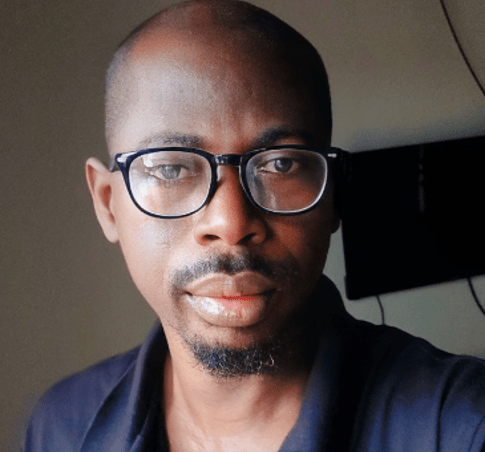
By Emmanuel Adu-Mensah
.Beposo, Ashanti Region – If you stand amidst the vibrant, solemn grandeur of a Beposo funeral or the rhythmic thrum of a royal durbar, you will witness a sight that shatters modern, Western-centric assumptions about disability.
Moving gracefully alongside the Paramount Chief (Nana Boamah Kwabi) and his elders is a successfully socialized orphan with Down Syndrome known affectionately in the town as “Toba” (full name – Amidu Kodua).
Down Syndrome is a naturally occurring genetic chromosomal arrangement caused by the presence of an extra copy of chromosome 21, which typically results in distinct physical traits, characteristic developmental patterns, and unique learning styles.
In the dominant global discourse, a child like Toba is routinely viewed through a clinical, deficit-based lens – defined by what he cannot do, managed by clinical interventions, or isolated by urban social stigma.
But here in the heart of Ghana, Toba does not walk behind society; he rolls with royalty. His shoulders are back, his head is held high, and his uninhibited laughter echoes across the palace courtyard. He is not an anomaly to be hidden; he is treated as a sacred presence to be elevated. He attends regular school and he is able to execute tasks that most down syndrome children struggle such as bathing, washing, running errands, conceptualization of money and so on.
Toba’s fierce confidence is not an accident of nature. This article argues that the successful socialization of Toba is not accidental, but a beautiful product of African indigenous culture – a socio-technical and spiritual ecosystem that, for centuries, has known exactly how to weave “special children” into the very fabric of communal life.


Figure: Sampled Pictures of Toba Posing Confidently for Camera
The Therapeutic Value of African Culture
To truly grasp the roots of Toba’s confidence, one must step outside Western metaphysical frameworks and enter the indigenous worldview. In Akan cosmology, a human being is not merely a biological product of Mogya (bloodline) and Ntoro (paternal spirit); they are a unique soul (Kra) sent directly from the divine realm with a distinct, unrepeatable destiny (Nkrabea). Historically, children with intellectual or developmental variances were often recognized as Nsuoba (children of the deities).
While early Eurocentric anthropologists misconstrued this as mere superstition, the deeper sociological reality is profound: indigenous African culture assigns a divine origin to the special child. By viewing Toba through a lens of spiritual significance rather than biological failure, the community approaches him with reverence instead of pity.
You do not marginalize a soul that carries a message from the ancestors; you create space for it to speak. This philosophy of inclusive humanism is not unique to the Akan. It resonates across the African continent. For instance:
- The Yoruba (Whan) Paradigm: In southwestern Nigeria, children born with unique developmental paths are traditionally viewed as protected by specific Orishas (deities). They are treated as conduits of good fortune, demanding exceptional familial and communal tenderness.
- The Ubuntu Framework: In Southern Africa, the concept of Ubuntu (“I am because we are”) dictates that a child’s vulnerability is never an isolated family burden. The community absorbs the vulnerability, transforming disability into a collective responsibility. A child with Down syndrome belongs to the entire village ecosystem.
It is this precise cultural safety net that allowed Toba to thrive. Toba was never locked away in a dark room to shield his family from shame. He was carried on the backs of multiple aunts, fed at the tables of neighbors, and fully integrated into every festival, funeral, and communal durbar. This sustained communal embrace culminated in an extraordinary social reality.
The Paramount Chief of Beposo, acting as the custodian of the community’s soul, recognized Toba’s pure spirit and brought the boy into his inner circle. In traditional African governance, the chief’s court is a space of ultimate validation. By allowing Toba to move freely within his entourage, the Chief issued a powerful, non-verbal decree to his people: This child is central to our humanity.
Today, Toba stands near the palace linguist (Okyeame), occasionally holding an auxiliary staff or mimicking the stately, poetic gestures of royal dances with a confidence that moves onlookers to both joy and tears. He is, in essence, bridging the gap between the unspoken vulnerabilities of our society and the ancient wisdom of our leaders. His self-esteem is unbreakable because his culture told him, from his first breath, that he belongs in the presence of kings.
The table below compares African Indigenous Model for handling children like Toba with Western Clinical Model.
Table: Comparison of African Indigenous Model with Western Clinical Model.
| Conceptual Dimension | Western Clinical Model | African Indigenous Model |
| Primary Lens | Deficit-based & pathologized | Spiritually significant & purposeful |
| Responsibility | Individualized / Nuclear family | Collective / Communal ecosystem |
| Social Space | Institutional isolation / Managed care | Active integration into ritual & governance |
The Modern Crisis: Saving the African Dream of Inclusion
As rapid urbanization, Westernization, and a rigid transition to the isolated nuclear family model sweep across contemporary Africa, this indigenous safety net is fraying. The loss of our cultural anchor has created a dangerous vacuum. In many urban centers, distorted interpretations of faith have replaced ancient reverence with fear, leading to the stigmatization of special children.
When we abandon our cultural truths, children like Toba are the first to be pushed to the margins. We are faced with a profound responsibility. We must urgently bridge the divide between modern therapeutic practices and the deep, restorative reservoirs of our indigenous knowledge systems.
“A society is ultimately judged by how it treats its most vulnerable. Our ancestors did not require modern psychological textbooks to understand that love, structural inclusion, and proximity to royalty are the ultimate therapeutic interventions for a special child like Toba.”
Recommendations for a Culturally-Mediated Future
To ensure that every special child across our nation experiences the dignity that Toba finds in Beposo, we must operationalize our heritage through deliberate policy:
Decolonize Disability Advocacy: Non-governmental organizations (NGOs) and state policymakers must stop viewing rural African communities as spaces of absolute ignorance. Disability advocacy must be decolonized by partnering with traditional authorities and utilizing indigenous proverbs, stories, and frameworks to articulate human rights.
Empower Traditional Leadership Frameworks: Queen mothers (Ohemaa) and traditional rulers should be formally integrated into national social protection frameworks, serving as funded, frontline guardians and advocates for special needs children within their jurisdictions. The National and Regional Houses of Chiefs must institutionalize a “Palace Sanctuary Decree” – a sacred, formal protocol inspired by Nana Boamah Kwabi where traditional rulers across the country actively identify, protect, and publicly elevate special needs children within their entourages during royal durbars and festivals, thereby using the ultimate weapon of royal validation to permanently banish the spiritual fears and witchcraft narratives birthed by modern urban isolation
Blend the Clinical with the Communal: Modern special education centers should move away from clinical isolation. They must mimic the communal village structure, anchoring learning in local mentorship, apprenticeship within traditional crafts, and active participation in community life.
Documenting and Broadcasting the Living Sovereignty of Special Children – Academic institutions, local filmmakers, and state media must deliberately capture images of children Toba rolling with royalty – not as an object of charity, but as a symbol of our collective African humanity. The world must see that in Africa, an extra chromosome does not mean a diminished life; it can mean a life wrapped in kente, walking hand-in-hand with a king.
Conclusion
As the sun sets over the beautiful hills of Beposo, Toba walks back from the palace, waving cheerfully to market women who call out his name with genuine affection. Africa does not need to import external philosophies to learn how to love and elevate its special children.
We only need to look inward, back to our roots, and into the vibrant palace courtyard of Beposo. There, a boy with an extra chromosome walks hand-in-hand with a king, completely healed and made whole by the timeless magic of true cultural belonging.
The writer is a lecturer and researcher who explores the intersection of technology, culture, and human agency
Post Views: 101
Discover more from The Business & Financial Times
Subscribe to get the latest posts sent to your email.