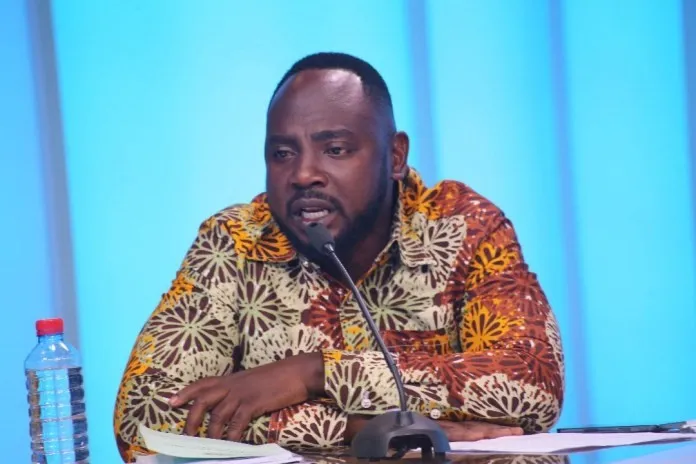
By Sandra Agyeiwaa OTOO
Executive Director of the Centre for International Maritime Affairs, Ghana (CIMAG), Albert Derrick Fiatui, has commended Ghana’s successful exit from the International Monetary Fund-supported programme, describing it as a major step toward economic stability and growth within the maritime and port sectors.
According to him, the country’s completion of the Extended Credit Facility programme reflects improved fiscal discipline, renewed investor confidence, and a more stable macroeconomic environment that will positively impact trade, logistics and port operations across the country.
“The Centre for International Maritime Affairs, Ghana [CIMAG] congratulates the Government of Ghana and all stakeholders on the successful completion of Ghana’s IMF-supported programme and the country’s formal exit from the Extended Credit Facility arrangement,” he stated.
“This milestone reflects renewed macroeconomic stability, improved fiscal discipline, and restored investor confidence. For the maritime industry, ports and the wider business community, this development presents tangible opportunities for growth, efficiency, and competitiveness,” he added.
Mr. Fiatui explained that easing inflation and reduced exchange rate volatility would help importers, exporters and freight forwarders operate with greater certainty and lower costs, ultimately strengthening Ghana’s position as a preferred trade gateway within the West African sub-region.
He further noted that the economic stability created after the IMF programme could encourage increased investments in critical infrastructure at the Tema Port and Takoradi Port, as well as improve logistics systems and reduce vessel turnaround times.
“Fiscal space created by reduced debt servicing pressures allows government and private partners to accelerate investments in Tema and Takoradi ports, as well as dry port and logistics infrastructure. This is critical for reducing vessel turnaround times and handling costs,” he mentioned.
He also projected stronger private sector confidence and increased public-private partnerships within the shipping and logistics industry. He explained that improved credit ratings and lower borrowing costs would enable shipping lines, logistics firms and small businesses within the port ecosystem to access financing for expansion, equipment acquisition and digitalisation initiatives.
Mr. Fiatui, however, urged the government to sustain prudent fiscal management and focus on reforms within the maritime and transport sectors to fully maximise the gains from the IMF programme.
“CIMAG urges the government to sustain prudent fiscal management and channel the dividends of this stability into targeted reforms within the maritime and transport sectors,” he reiterated.
He identified reducing non-tariff barriers, improving port clearance processes, supporting local content development and deepening digitisation of customs and port systems as critical areas requiring attention.
He added that deliberate reforms within the maritime sector could lead to lower trade costs, increased job creation and stronger regional trade integration under the African Continental Free Trade Area (AFCFTA).
“If matched with deliberate reforms in the maritime sector, it can translate into lower cost of trade, more jobs, and stronger regional trade integration under AfCFTA,” he noted.
He concluded by reaffirming his outfit’s commitment to providing evidence-based policy support to ensure that Ghana’s maritime sector fully leverages this renewed economic stability for national development.
Post Views: 64
Discover more from The Business & Financial Times
Subscribe to get the latest posts sent to your email.