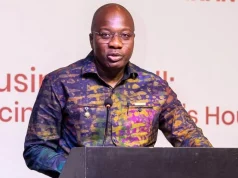

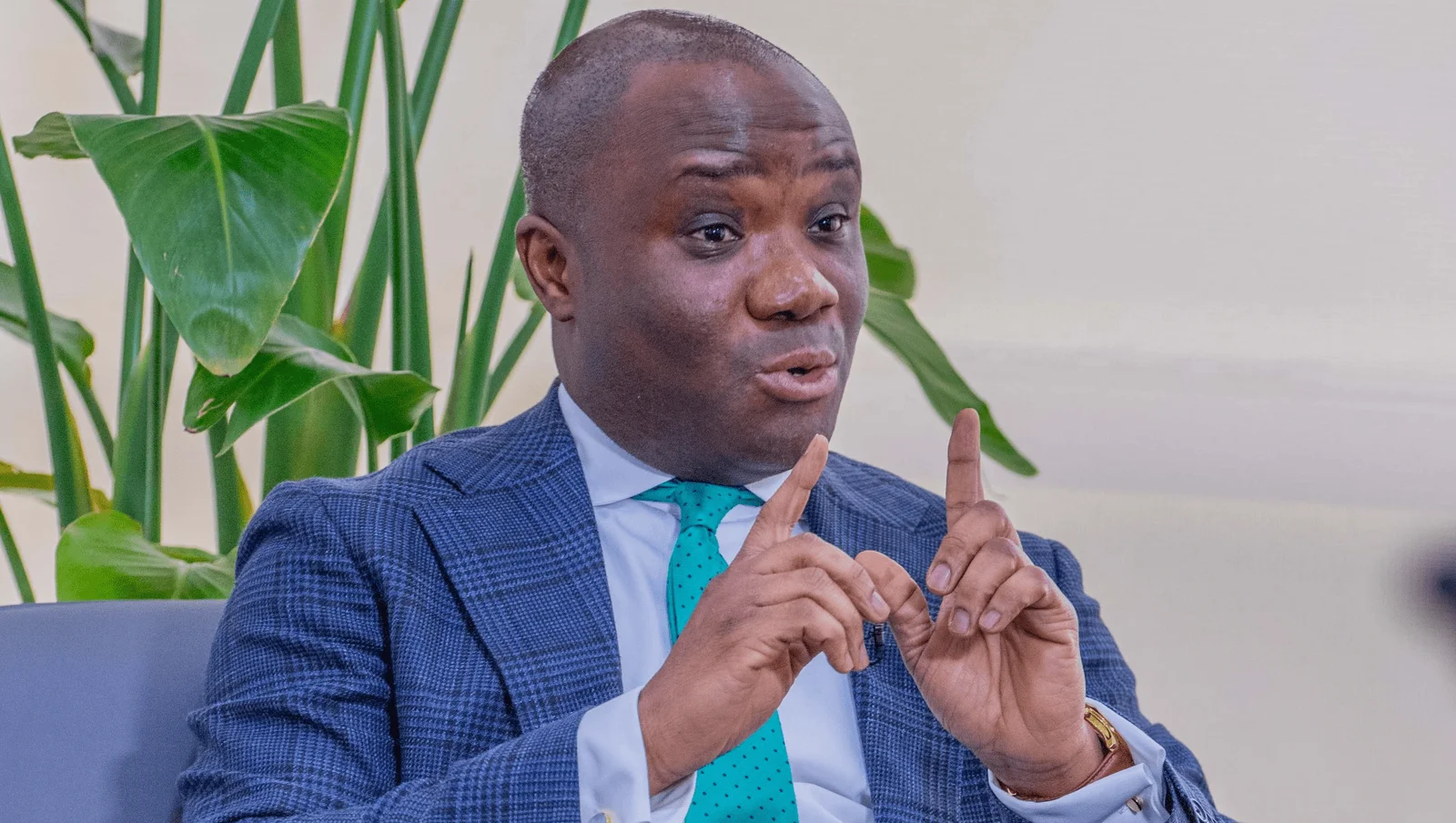
Government Spokesperson Felix Kwakye Ofosu has warned that the spread of disinformation and fake news poses a serious threat to Ghana’s democracy, national security, and public health.
Speaking at an event hosted at the residence of the British High Commissioner to mark World Press Freedom Day on Wednesday, May 6, 2026, Mr Kwakye Ofosu described the situation as an “information integrity” crisis driven by fake news, manipulated content, and politically motivated misinformation.
“We now live in an age where a single falsehood can travel around the world in seconds while the truth is still putting on its shoes,” he said.
He noted that coordinated disinformation campaigns, deepfakes, and clickbait content are being used as dangerous tools that can inflame political and ethnic tensions.
“This is not just a media problem. It is a national security problem. It is a public health problem, and it is a democratic problem,” the Abura Asebu Kwamankese MP warned.
Mr Kwakye Ofosu explained that the erosion of public trust caused by false information weakens state institutions and endangers democratic stability.
“When citizens cannot tell what is true and what is false, trust erodes. And when institutions become weak, democracy becomes fragile,” he added.
While acknowledging the dangers of disinformation, he rejected censorship as a solution, stating that it breeds suspicion and drives information underground. He instead called for faster and better dissemination of accurate information, alongside lawful action against criminal misuse of digital platforms.
“As a government, we remain acutely aware of the need to act swiftly to stem the tide of misinformation,” he stated.
The government spokesperson highlighted efforts by his office to counter falsehoods through timely and accurate official communication. He also reaffirmed the government’s commitment to press freedom.
“Journalism is not the enemy of governments. Good journalism is actually an ally,” he said.
He pledged that no journalist would be harassed, detained, or threatened for doing lawful work and defended the Right to Information Act, describing transparency as a right, not a favour.
Mr Kwakye Ofosu, however, urged journalists and media houses to uphold high ethical standards.
“Publishing unverified allegations, amplifying disinformation for engagement, that is not dramatic, that is harm,” he cautioned.
He called on the Ghana Journalists Association and the National Media Commission to strengthen self-regulation and enforce professional standards, warning that “public trust is your greatest capital. Do not spend it for a headline.”
He further urged government institutions to embrace openness and avoid secrecy.
“The Ghanaian public deserves straight talk,” he declared.