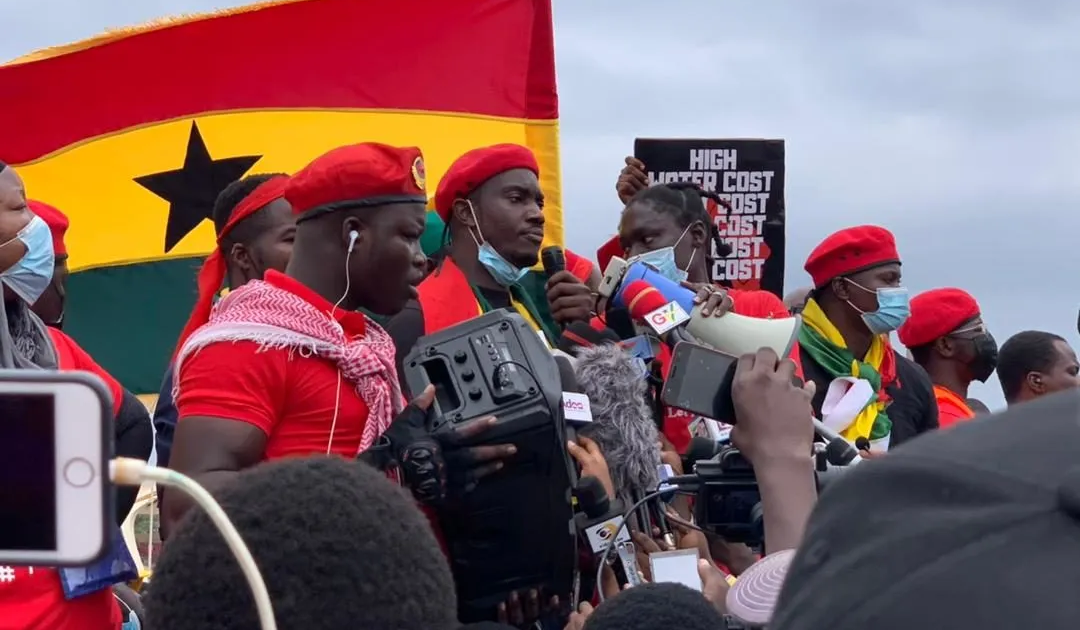
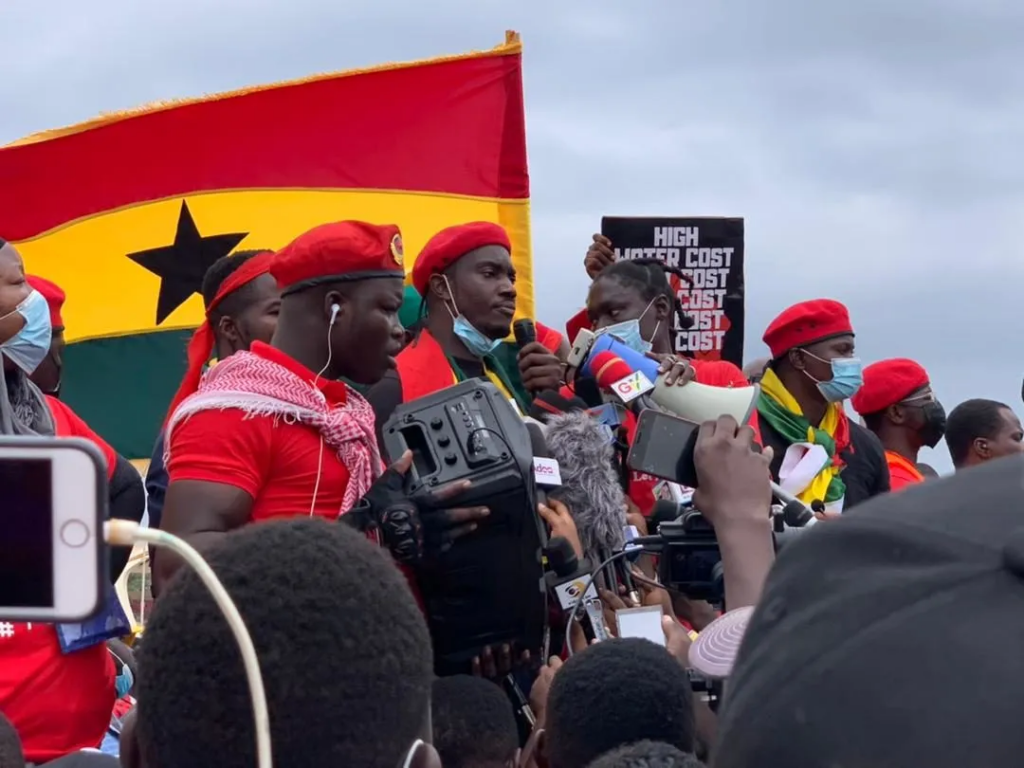
The Economic Fighters League (EFL) has criticised Parliament’s ratification of six mining leases, accusing the government of handing over Ghana’s mineral wealth to private companies while failing to secure greater benefits for the country.
In a statement issued on August 5, after Parliament approved the leases, the pressure group claimed the agreements would allow mining companies to extract gold from more than 300 square kilometres of land for up to 25 years without delivering sufficient returns to the Ghanaian people.
“Parliament has just signed away Ghana’s gold for another quarter of a century. Six mining leases. Over 300 square kilometres of Ghanaian land. Up to 25 years of extraction.”
The group questioned the government’s assurances that the mining agreements would generate significant economic benefits, arguing that previous deals had failed to improve the lives of communities affected by mining.
“We have heard this story before,” the statement said. “Communities are left with polluted rivers, degraded forests, abandoned pits, broken promises and poverty, while billions of dollars in gold leave our shores.”
A key concern raised by the EFL was the government’s decision not to renegotiate the State’s equity in the Damang Mine.
The group argued that increasing the State’s stake from 10 per cent to at least 50 per cent would have ensured that more of the country’s mineral wealth remained in Ghana.
“Most shocking of all is Government’s refusal to renegotiate the State’s equity in the Damang Mine from 10% to at least 50%,” the statement said. “That single decision represents a colossal transfer of wealth from the Ghanaian people to private interests.”
According to the EFL, Ghana continues to negotiate mining agreements from a position of weakness despite being one of Africa’s leading gold producers.
“A nation rich in gold continues to negotiate like a poor tenant on its own land,” the group stated.
The EFL also rejected arguments that greater national ownership of large-scale mining operations is unrealistic because of the high cost of mining equipment and limited technical expertise.
“Whenever we demand national ownership or, at the very least, a controlling stake, we are told the machinery is too expensive, and the expertise is beyond us,” it said.
The group questioned why Ghana could not invest in building its own mining capacity.
“Exactly how expensive are these machines that a sovereign nation of over 35 million people cannot buy anywhere in the world?” the statement asked.
It proposed a four-year moratorium on new large-scale mining concessions to allow the country to develop local expertise through specialised mining and mineral engineering programmes.
“If the obstacle is technical know-how, why not declare a four-year moratorium on new large-scale concessions, establish specialised mining and mineral engineering programmes, and train the brilliant young Ghanaians who every year demonstrate extraordinary talent in our schools and national science and quiz competitions?” the group said.
“Nations are not built by importing competence forever. They are built by creating it.”
The EFL also expressed concern that some of the newly approved leases affect forest reserves.
It criticised Parliament for approving the agreements despite acknowledging the environmental concerns.
“Even Parliament’s own committee admits that some of these leases affect forest reserves, yet proceeds to ratify them while merely asking regulators to ‘strictly enforce’ safeguards,” the statement said.
“Ghanaians have seen how that movie ends.”
The group reiterated its opposition to what it described as Ghana’s extractive model of development, arguing that the country’s mineral resources should be used to drive industrialisation rather than exporting raw materials.
“The Economic Fighters League rejects this extractive model of development,” it said. “Our minerals must finance industrialisation, not perpetual dependency.”
The EFL called for future mining agreements to guarantee majority national ownership, local value addition, transparent contracts, legally binding community benefit agreements and stronger environmental safeguards.
“Ghana does not need more mining leases. Ghana needs ownership, beneficiation and economic sovereignty. Our gold belongs to the people, not to corporations with 25-year licences to export our future.”
DISCLAIMER: The Views, Comments, Opinions, Contributions and Statements made by Readers and Contributors on this platform do not necessarily represent the views or policy of Multimedia Group Limited.
DISCLAIMER: The Views, Comments, Opinions, Contributions and Statements made by Readers and Contributors on this platform do not necessarily represent the views or policy of Multimedia Group Limited.
Source link