

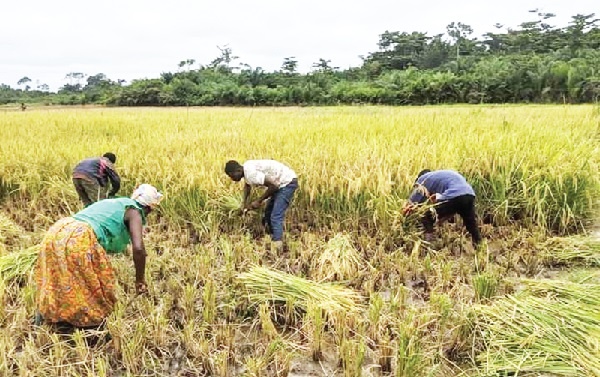

As thousands of local farmers are struggling with large volumes of unsold rice, the Peasant Farmers Association of Ghana (PFAG) is calling for an immediate six-month ban on rice imports.
In a statement issued on June 4 and signed by its president, Douglas Annor, PFAG noted that the continued influx of imported rice has made it difficult for domestic producers to sell their harvests.
The statement further adds that nearly 90 percent of local rice farmers are currently holding unsold stock; a situation they partly attribute to the National Food Buffer Stock Company’s (NAFCO) inability to purchase surplus rice as directed by President Mahama.
PFAG believes a temporary suspension of rice imports will create room for locally produced rice to reach the market, improve demand for domestic produce and help stabilise farm-gate prices.
It is recalled that in April this year the Association of Ghana Rice Producers and Processors expressed worry over an estimated one million metric tonnes of unsold paddy rice on the local market.
The glut, valued at GH¢5billion according to producers, is due to severe shortages of buyers for the commodity.
PFAG is also calling for a comprehensive review of NAFCO’s operations, including its procurement systems, financing arrangements and institutional capacity to support farmers effectively.
Strengthening the buffer stock system is critical to preventing future market gluts and ensuring that farmers have a reliable outlet for their produce during bumper harvest seasons.
The farmer-based group suggests the introduction of a legal framework requiring public institutions to prioritise the purchase of locally produced rice and other agricultural commodities.
The proposed policy should apply to government ministries, departments and agencies, as well as state-owned enterprises, public schools, hospitals, prisons and the security services.
Such a measure would create a guaranteed market for local farmers while reducing the country’s dependence on imported food products.
PFAG further called for full implementation of Ghana’s rice import quota policy, arguing that stricter regulation of imports will support the domestic rice industry’s development and encourage investment across the value chain.
Long-term growth in the sector will also require significant investment in post-harvest infrastructure including storage facilities, modern milling centres and market linkage platforms.
Inadequate storage and processing capacity continues to contribute in post-harvest losses and weakens the competitiveness of locally produced rice against imported varieties.
Failure to address the current challenges could discourage rice production and threaten the gains made in recent years to boost domestic food output.
Post Views: 1
Discover more from The Business & Financial Times
Subscribe to get the latest posts sent to your email.