

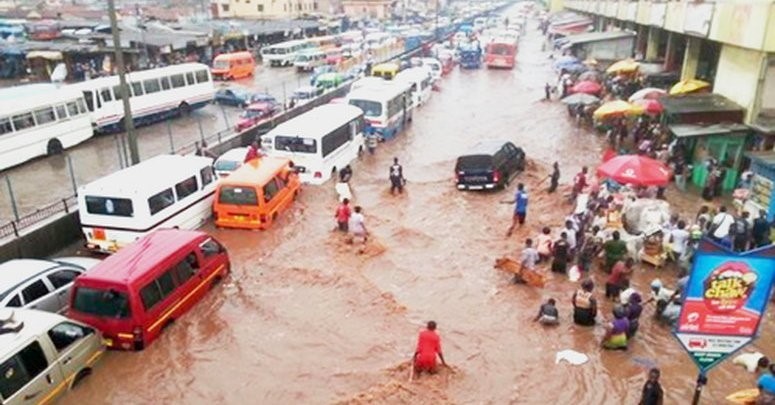
The question has never been whether Accra will flood at the peak of the rainy season every year between June and July, the question has always been to what extent or degree the damage will be. But as with all things, we could never have prepared enough for effects of the impact, especially as this year’s level of flooding hasn’t been one seen in over 30 years.
This year, it isn’t a few houses or roads flooded, it’s been whole communities submerged under water. Roads became rivers, shops closed their doors, families abandoned flooded homes, vehicles stalled in submerged streets while businesses counted losses by the hour.
Beyond the dramatic television images and social media videos lies a far more disturbing reality: flooding is one of the biggest hidden taxes on Ghana’s economy.The financial losses stretch far beyond damaged buildings. Flooding destroys livelihoods, discourages investment, increases insurance costs, overwhelms public budgets and quietly chips away at national productivity.
A $3.2 Billion loss!
According to the World Bank, approximately US$3.2 billion worth of economic assets in the Greater Accra Region are currently exposed to flood risk, with that figure projected to quadruple by 2050 if effective mitigation measures are not implemented.
This reflects the concentration of businesses, industries, transport infrastructure and residential developments in flood-prone areas. The Greater Accra Region alone contributes more than 40% of Ghana’s non-oil GDP, making flood resilience a national economic priority rather than merely a municipal issue.
THE CAUSE
Yes, I know it’s almost a broken record but stay with me, it is important to put the cause of the perennial flooding into context before counting the cost and then proffering a solution.
According to the Ghana Meteorological Agency (GMet), June is expected to be one of the wettest months of the year, with predominantly wet conditions forecast for the coastal belt. Long-term climate data indicate that Accra typically receives about 200 millimetres (mm) of rainfall in June alone, making it one of the city’s highest rainfall months.
In recent years, weather experts have also warned that climate change is increasing the likelihood of short-duration but extremely intense rainfall events.Even a rainfall event of 25–50 mm within a few hours can trigger flash flooding when drains are already clogged or water channels have been obstructed.
It evident that it isn’t really the great volume of rainfall that is the issue but other mostly man-made causes as follows.
Inadequate and Choked Drainage Systems- Perhaps the most visible contributor is the widespread blockage of gutters and drains by plastic waste, silt, and debris. When drainage channels cannot carry stormwater to rivers or the sea, water backs up into roads and residential areas.
Building on Waterways and Wetlands – Rapid urbanisation has resulted in homes, shops, and offices being constructed on natural flood plains and wetlands that historically stored excess water. As these natural buffers disappear, rainwater has nowhere to go except into surrounding communities.
Poor Urban Planning – In many parts of the city, roads, drainage infrastructure, and housing developments have not expanded at the same pace. Some neighbourhoods simply lack sufficient stormwater infrastructure for today’s population.
Climate Change – Meteorologists increasingly point to changing weather patterns that produce heavier bursts of rainfall over shorter periods. Even if total seasonal rainfall remains near average, its concentration into fewer but more intense storms significantly increases flood risk.
The Geography of Accra – Neighbourhoods along the Odaw River basin and other low-lying coastal areas naturally collect runoff from higher elevations. When rivers exceed capacity or tides restrict drainage into the sea, flooding intensifies.
COUNTING THE COST
Direct Property Damage –The devastating June 2015 floods caused an estimated US$100 million in direct damages, affecting approximately 53,000 people and killing more than 150 individuals in one of Ghana’s worst urban disasters.
These figures only capture insured and measurable losses; many informal businesses and households suffer damages that are never officially recorded.
In addition to the above there is business Interruption as markets close, offices suspend operations, factories halt production, banks operate below capacity.
Assuming only 5% of Accra’s economic activity slows for one working day during severe flooding, productivity losses can easily amount to tens of millions of dollars. For thousands of informal traders, a single flooded day means losing an entire week’s income.
Healthcare Costs – Floods contribute to outbreak of diseases like cholera, malaria, typhoid, water-borne infections, and skin diseases etc. Hospitals experience surges in patient numbers while households incur medical expenses and lose working days caring for sick relatives.
Although comprehensive annual national accounting remains limited, combining direct damages with indirect productivity losses suggests that severe flood years in Greater Accra can generate economic impacts comfortably exceeding US$100 million, while the value of assets continuously exposed to flooding remains around US$3.2 billion.
THE SOLUTION
Upgrade Stormwater Infrastructure – Large-scale investment in modern drains, detention basins and retention ponds can significantly reduce peak flood volumes.
Protect Wetlands – Natural wetlands act as giant sponges that absorb excess rainfall. Preventing encroachment offers one of the cheapest flood-control measures available.
Strict Enforcement of Building Regulations – No new developments should be permitted within designated floodways or waterways.
Improve Solid Waste Management – Plastic waste remains one of the biggest causes of blocked drains. Better waste collection, recycling and enforcement against indiscriminate dumping are essential.
Deploy Smart Flood Early Warning Systems – Modern weather forecasting, digital alerts and community warning systems can save lives and reduce economic losses.
Community-Based Flood Preparedness – Residents should receive flood education covering evacuation routes, emergency kits and household mitigation measures.
At the end of the day, it is crucial that no single actor or stakeholder be it homeowner, Assembly or the state can ensure flood prevention and management all be themselves and it takes a coordinated and community effort to achieve the desired results. Are you willing to be the solution?
The writer is the Executive Director of Yecham Property Consult
& Founder of Green Building Alliance, Ghana, convenor of Ghana Green Building Summit
Email: [email protected]
Linkedin: Cyril Nii Ayitey Tetteh
Post Views: 3
Discover more from The Business & Financial Times
Subscribe to get the latest posts sent to your email.