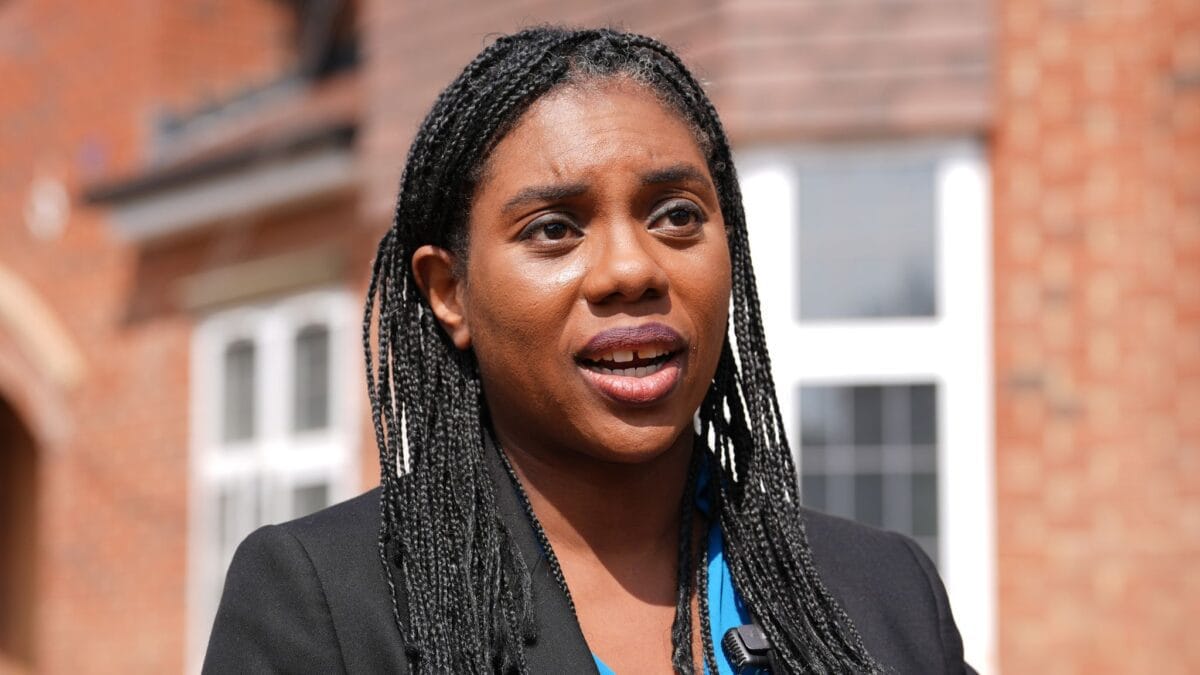
The resignation of UK Prime Minister Keir Starmer has sparked excitement among some Nigerians, with many expressing hope that Conservative Party leader Kemi Badenoch could become the next Prime Minister of the United Kingdom.
However, under the UK’s parliamentary system, Badenoch is highly unlikely to become Prime Minister as a direct result of Starmer’s resignation.
The key reason is that Starmer’s Labour Party remains the governing party with a majority in the House of Commons.
In the UK, the Prime Minister is typically the leader of the party that commands a majority in Parliament. Since Labour remains in power, the party will choose a new leader internally, and that person is expected to become Prime Minister.
This means the leadership transition is taking place within Labour, not between Labour and the opposition Conservatives.
Badenoch currently leads the Conservative Party, which serves as the official opposition and does not have the parliamentary numbers required to form a government.
For Badenoch to become Prime Minister, one of two things would generally need to happen.
First, the Conservatives would need to win power at the next general election.
Second, an early general election would need to be called, creating an opportunity for voters to choose a new government.
The next scheduled UK general election is expected in 2029.
In the meantime, Badenoch and the Conservatives are increasing pressure on Labour to call an early election, although the governing party is under no obligation to do so.
Attention has instead shifted to Labour’s leadership contest.
Manchester Mayor Andy Burnham has emerged as one of the leading names being discussed as a possible successor to Starmer.
Political analysts point to Burnham’s ability to unite different factions within Labour, his strong public profile, and broad support within sections of the party.
However, Burnham faces his own constitutional and political hurdles.
At present, he serves as Mayor of Greater Manchester and is not a sitting Member of Parliament.
Conventionally, a Prime Minister is expected to sit in the House of Commons while also serving as leader of the governing party.
As a result, Burnham would need to secure a route back into Parliament while simultaneously winning Labour’s leadership contest if he is to become Prime Minister.
Other figures being mentioned as potential contenders include Wes Streeting, Angela Rayner and Shabana Mahmood.
Although there is widespread interest in Badenoch’s political future, Starmer’s resignation does not automatically place her in contention for the premiership.
Instead, the immediate battle is within Labour, which retains control of government and will select the individual who succeeds Starmer as both party leader and Prime Minister.
Meanwhile, Badenoch remains the leader of the opposition and is expected to focus on positioning the Conservatives for the next national election while continuing to challenge the Labour government from the opposition benches.
The renewed attention on Badenoch has also revived debate over her policy positions, particularly on immigration and border control, with supporters and critics speculating about how a future Conservative government under her leadership might approach those issues.
For now, however, the path to Downing Street remains firmly tied to Labour’s internal leadership contest rather than the Conservative opposition.