
A CAF technical inspection report has identified significant infrastructure deficiencies at four of the five stadiums proposed by Ghana to host the 2027 Africa U20 Cup of Nations, with Baba Yara Sports Stadium declared non-compliant with the continent’s Category 4 standards.
Ghana’s ambition to host the 2027 Africa U20 Cup of Nations faces a major infrastructure challenge after a Confederation of African Football (CAF) inspection identified widespread deficiencies at proposed competition venues and training facilities.
A 26-page technical inspection report, following a mission to Ghana from 12 to 16 January 2026, highlights concerns over stadium maintenance, pitch quality, security systems, spectator safety and media facilities.
The report, which assesses five proposed stadiums across Accra, Kumasi and Cape Coast, identifies the Baba Yara Sports Stadium as the only venue classified as non-compliant with CAF Category 4 requirements.
The 40,528-capacity facility in Kumasi requires comprehensive rehabilitation, with the inspection identifying a poor playing surface, defective irrigation, obsolete and partially blocked drainage systems and inadequate maintenance equipment.
It also raises concerns about the stadium’s security arrangements, including the absence of a functional CCTV surveillance system, automated access control and electronic spectator counting.
The report further states that the stadium’s dressing rooms are undersized and inadequately equipped, while its media facilities are significantly underdeveloped.
CAF says the stadium cannot be used for the competition without major technical, operational and safety interventions, followed by another inspection and certification.
The Accra Sports Stadium, Ghana’s principal national sporting facility, has also been flagged for extensive rehabilitation.
Despite its historical significance and 40,000-seat capacity, the report describes advanced deterioration, particularly affecting metallic structures, which are heavily corroded and rusted.
It identifies shortcomings in crowd management, emergency evacuation arrangements, media facilities and security systems.
The inspection also found that the stadium lacks electronic turnstiles and automated access control systems, making effective spectator management difficult.
CAF has classified the facility as partially compliant, requiring major improvements before it can host the tournament.
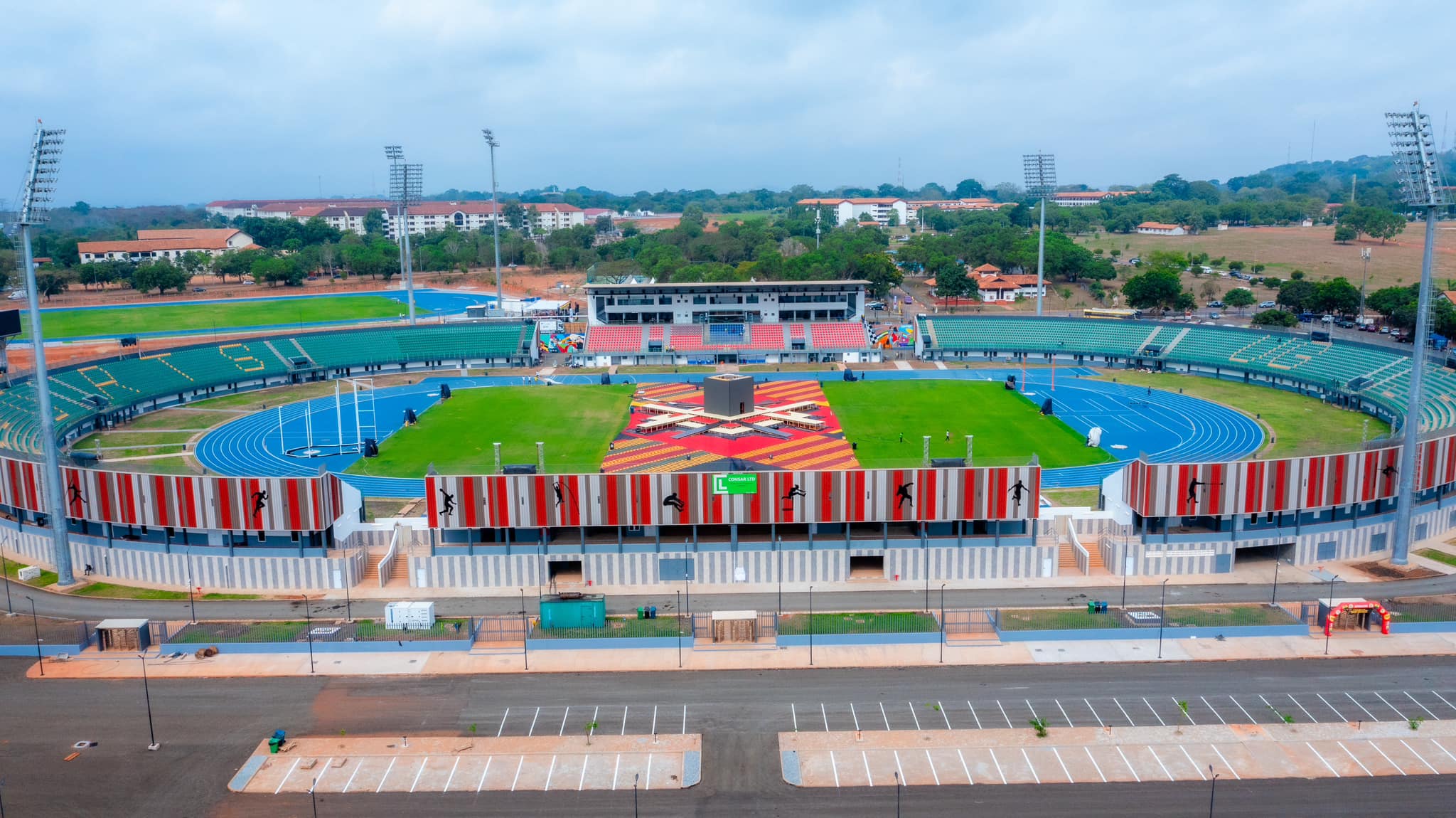
The University of Ghana Sports Stadium emerged as the strongest of the five proposed venues.
The 10,000-capacity facility, commissioned in 2024 for the African Games, was classified as compliant with conditions, requiring minor to moderate improvements.
However, the report identifies limitations with its VIP and VVIP facilities, media infrastructure and security systems.
The Nduom Sports Complex in Cape Coast, with a capacity of approximately 15,000, also received a compliant-with-conditions assessment in the executive summary.
Its main deficiencies include pitch maintenance, dressing-room facilities, medical provision, media infrastructure and security arrangements.
The access road to the privately owned facility was also under construction at the time of inspection, with CAF stressing the need for its completion to ensure reliable access for teams, officials and emergency services.
The Cape Coast Sports Stadium, which accommodates approximately 17,000 spectators, was classified as partially compliant.
Although its structural condition was considered generally sound, the report identified a poor playing surface, defective irrigation, inadequate media facilities and insufficient spectator safety arrangements.
Beyond the competition venues, CAF identified significant shortcomings at the 10 training facilities proposed by Ghana across the three host cities.
The report highlights poor pitch quality, inadequate drainage and irrigation systems, insufficient floodlighting and poorly equipped dressing rooms.
Some facilities also lack proper perimeter fencing, access control systems and dedicated technical maintenance personnel.
CAF requires training grounds to meet a minimum floodlighting standard of 500 lux, but several of the proposed facilities were found to have inadequate lighting or none at all.
The report classifies the overall training facilities as partially compliant, with major improvements required.
Their use for the tournament will depend on the completion of the necessary works and subsequent CAF inspections.
Despite the challenges, CAF believes Ghana has a credible opportunity to host the tournament, provided the required infrastructure investments are made within strict timelines.
Its recommendations include prioritising the University of Ghana Sports Stadium and Nduom Sports Complex for early confirmation because they require comparatively lower investment.
It also calls for immediate rehabilitation programmes at the Accra Sports Stadium and Baba Yara Sports Stadium, subject to firm government and financial commitments.
The Cape Coast Sports Stadium is recommended as a conditional venue pending targeted improvements.
CAF has further called for a phased infrastructure action plan with clearly defined budgets, milestones and follow-up inspections.
A technical coordination mechanism involving CAF and the Local Organising Committee has also been recommended to monitor progress.
The report warns that delays in rehabilitation could result in schedule slippage and damage the competition’s reputation.
It concludes that Ghana’s hosting bid is viable but makes final venue approval dependent on confirmed funding, delivery timelines and successful compliance inspections.
Three important findings stand out:
Ghana’s infrastructure problem is broader than stadium renovation. CAF’s concerns extend to training pitches, drainage, floodlighting, security, emergency evacuation and broadcast infrastructure.
The African Games legacy faces questions. The University of Ghana Stadium, built for the 2023 African Games, is the only proposed competition venue assessed as compliant with conditions at the relatively lower end of required improvements. Even that facility needs further work.
The financial commitment is now central to the bid. CAF has explicitly linked the feasibility of Ghana’s candidacy to confirmed funding and strict implementation timelines.
Important editorial qualification: This is a January 2026 inspection report. It records the conditions observed between 12 and 16 January 2026. It does not establish the current condition of the facilities, the amount required for rehabilitation, or whether Ghana has subsequently completed any of the recommended works. It also does not say Ghana’s bid has been rejected.
DISCLAIMER: The Views, Comments, Opinions, Contributions and Statements made by Readers and Contributors on this platform do not necessarily represent the views or policy of Multimedia Group Limited.
DISCLAIMER: The Views, Comments, Opinions, Contributions and Statements made by Readers and Contributors on this platform do not necessarily represent the views or policy of Multimedia Group Limited.
Source link