

The government has officially ruled out the possibility of major, across-the-board renegotiations of conditions of service for public sector workers throughout the 2026 fiscal year.
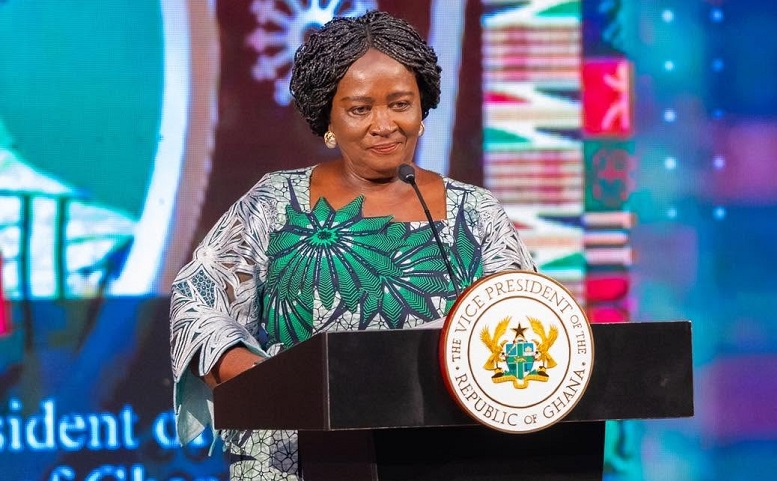
The Vice President, Professor Jane Naana Opoku-Agyemang, announced this firm policy stance during her keynote address at the 2026 Annual National Labour Conference held in Ho.
While acknowledging that the current public sector compensation structure is under significant strain, the Vice President explained that the government is prioritising long-term structural integrity over short-term inflationary wage hikes.
Addressing a gathering of key stakeholders, including representatives from organised labour and employer associations, Prof. Opoku-Agyemang revealed that the government is actively finalising a comprehensive reform of the national emoluments framework.
To bridge the gap until these foundational changes are ready for full implementation, the administration intends to introduce “targeted and modest adjustments” to a select few allowances.
According to the Vice President, this temporary approach is designed to provide the necessary fiscal “space” required to stabilise the national compensation system without triggering economic volatility.
“The establishment of the Independent Emolument Commission is a deliberate intervention to address the issue. It allows the government to stabilise the compensation system and build strong institutional conventions, while ensuring continuity and industrial harmony,” the Vice President stated.
She further clarified the government’s timeline for the coming months:
“The government has also proposed that 2026 will not be a year for major renegotiation of conditions of service across the public sector. Instead, targeted and modest improvement to selected allowances will be implemented as an interim measure while the foundational reforms to our emolument system are completed”.
The Vice President’s remarks at the conference come amid heightened expectations from labour unions regarding salary adjustments in the face of evolving economic pressures.
During the same conference, she also highlighted the government’s commitment to the informal sector, noting that over 70 percent of Ghana’s workforce requires better social protection and representation within national economic planning.
By opting for this controlled approach to public sector wages, the government hopes to foster a more predictable industrial environment while the newly established Independent Emolument Commission works to standardise pay structures across the public service.
DISCLAIMER: The Views, Comments, Opinions, Contributions and Statements made by Readers and Contributors on this platform do not necessarily represent the views or policy of Multimedia Group Limited.
DISCLAIMER: The Views, Comments, Opinions, Contributions and Statements made by Readers and Contributors on this platform do not necessarily represent the views or policy of Multimedia Group Limited.