

By Kingsley Webora TANKEH
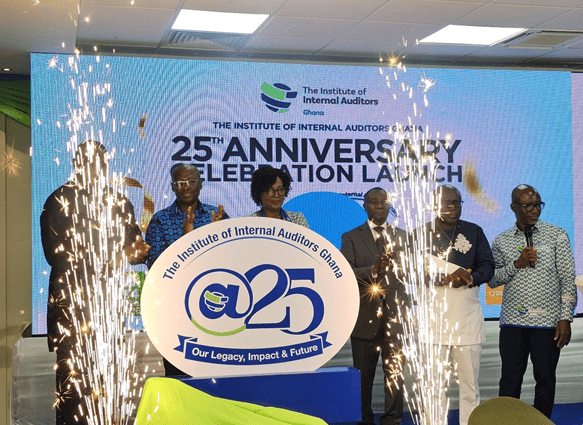
The Institute of Internal Auditors (IIA) Ghana has officially launched its 25th anniversary celebrations, pledging to deepen the profession’s footprint through expansion into northern Ghana.
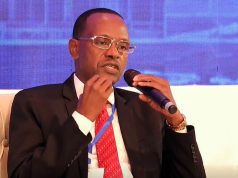
Speaking at the anniversary launch in Accra, IIA Ghana president Ebenezer Omari-Mireku described the anniversary as both a celebration of legacy and a call to accelerate action that will elevate the institute across the country.
“Looking ahead, our institute will continue to invest in professional development, innovation and global best practices – ensuring that Ghanaian internal auditors are well equipped to address emerging risks, technological changes and evolving regulatory expectations,” he said.

IIA Ghana was started in March 2000, when a meeting of about 30 internal auditors led to the professional body’s formation. By the time its constitution was prepared in April 2001, membership had grown to 63. These founding members were drawn from several institutions including the Bank of Ghana and Volta River Authority (VRA), which provided the first office and budget for the young organisation’s operations.
VRA housed the institute and provided operational resources until 2008, when it rented its own office. Today, IIA Ghana boasts more than 176 globally recognised Certified Internal Auditors (CIA), with a total membership approaching 300.
Mr. Omari-Mireku pledged to push those numbers higher by intensifying support for certification, arguing this will translate into tangible governance gains. “We believe once we are making impact in the various organisations, that impact is reflected where the economy is concerned,” he noted.
He pledged the institute’s commitment in equipping members to deal with emerging corporate risks, including cybersecurity threats, artificial intelligence and environmental, social and governance (ESG) issues.
Mr. Omari-Mireku said IIA Ghana will “deepen collaboration with government, industry, fellow professional bodies, academia and international affiliates” to provide the necessary technical resources. He indicated that the global body has been supplying materials to guide local training.
A VRA board member, Awulae Attibrukusu, noted that with the increasing use of data analytics and digital technologies in audit processes, internal auditors must continuously “build new competency, embrace innovation and maintain the highest ethical standards”.
Mr. Omari-Mireku noted the profession’s future is in the youth, revealing that IIA Ghana is forming a students and young talents chapter at the University of Professional Studies, Accra (UPSA), to introduce internal audit as a career path early and provide mentorship and a smooth path to professional certification.
According to him, this will later be rolled out at various tertiary institutions across the country. “We think the future depends on the younger generation. Once we open our doors for them and we guide them, they could be interested in the internal audit profession,” Mr. Omari-Mireku said.
After several years of concentrating activities in Accra, though there is an existing chapter in Kumasi, Mr. Omari-Mireku announced that a chapter will be established in Tamale this year to serve members and deliver competency training in the northern belt.
He said the institute’s medium- to long-term ambition is to have a chapter in every region of Ghana, decentralising the institute’s programmes to broaden the profession’s reach.
“We are going to deepen collaboration with our stakeholders, because once we get their support we think we can achieve results,” he said.
Post Views: 58
Discover more from The Business & Financial Times
Subscribe to get the latest posts sent to your email.