

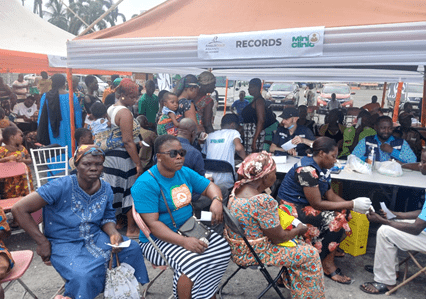
Malaria prevalence among schoolchildren in Obuasi has dropped sharply from 46 percent in 2006 to just 0.9 percent, following sustained interventions by AngloGold Ashanti Malaria Limited (AGAMaL) and its partners.

The achievement was highlighted during this year’s World Malaria Day celebration in Obuasi, where health officials, community leaders and stakeholders renewed calls for stronger collaboration to eliminate malaria completely.
Speaking on behalf of the Community Relations Manager-AngloGold Ashanti Obuasi Mine, Superintendent for Social Development and Gender Mavis Nana Yaa Kyei described the progress as a major public health success.
She explained that when AGAMaL was launched in 2006, malaria posed a serious threat to children and families in Obuasi with nearly half of all schoolchildren affected by the disease. Today, however, prevalence has fallen to below one percent, significantly improving school attendance, household welfare and overall community health.
According to her, the programme now protects approximately 1.4 million people across 16 districts while creating more than 1,450 direct jobs – making it both a health and economic intervention.
Ms. Kyei attributed the programme’s success to innovation, strong partnerships and the dedication of health workers, spray operators, community leaders and residents.
Referencing this year’s World Malaria Day theme, ‘Driven to End Malaria: Now we can. Now we must’, she stressed that the tools and knowledge needed to eliminate malaria already exist but collective action remains critical.
She encouraged residents to support interventions such as Indoor Residual Spraying (IRS) by allowing health team’s access to their homes during spraying exercises.
The Municipal Chief Executive for Obuasi, Faustilove Appiah-Kanin, praised AngloGold Ashanti and its partners for their continued commitment to improving community healthcare.
She noted that although significant progress had been made, malaria remains a public health concern – particularly among children, pregnant women and workers.
She further expressed government and development partners’ commitment to continue strengthening interventions such as distribution of insecticide-treated nets, indoor residual spraying, improved diagnostics and access to effective treatment, while sanitation campaigns are also being intensified to reduce mosquito breeding sites.
The Obuasi Municipal Director of Health, Charity Afrifaa-Adjei, also acknowledged the positive impact of the interventions in curbing malaria’s prevalence, but stressed the need to sustain momentum toward eliminating it entirely.
Post Views: 59
Discover more from The Business & Financial Times
Subscribe to get the latest posts sent to your email.