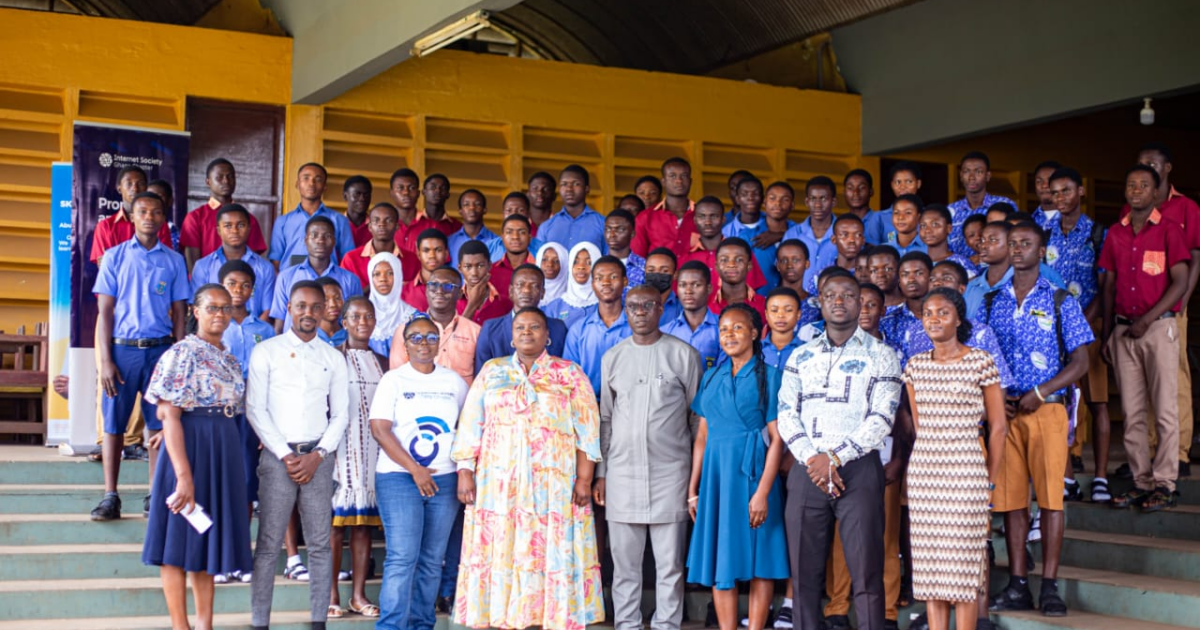
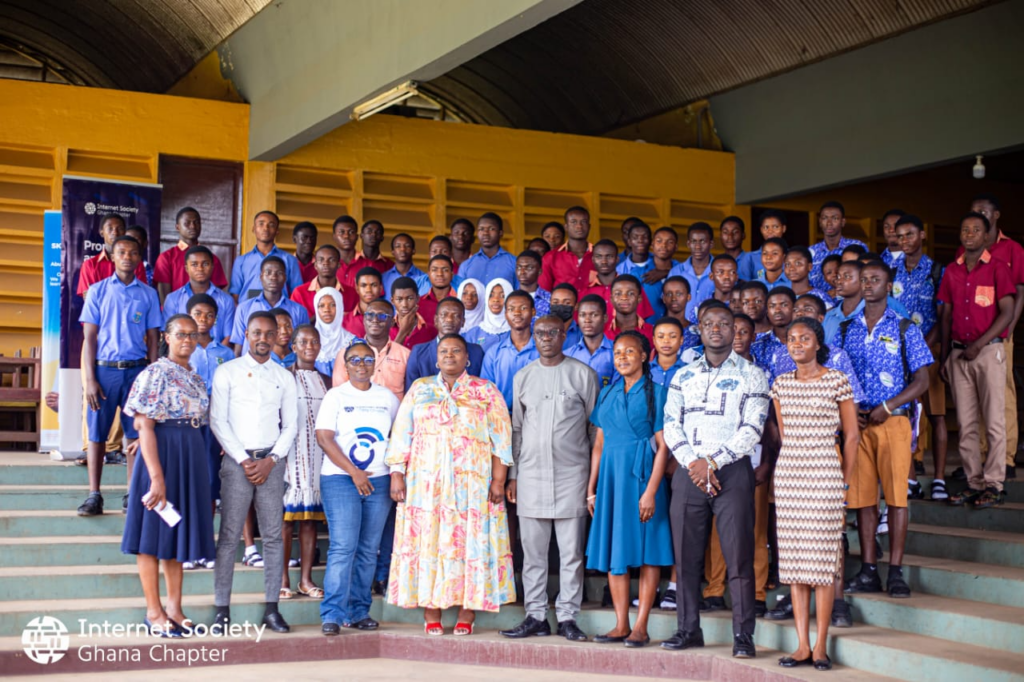
The Internet Society Ghana Chapter (ISOC Ghana) has officially launched its National Online Safety Outreach in the Ashanti Region, marking the beginning of a nationwide campaign to promote responsible internet use among young people and vulnerable groups.
The campaign, themed “Building Digital Trust, Safety and Resilience for Everyone”, seeks to equip students, teachers, and community members with practical skills to navigate the digital space safely, identify online threats, and protect their personal information.
The first phase of the outreach was launched on the campus of Kumasi Technical Institute, targeting all 22 Technical and Vocational Education and Training (TVET) institutions across the Ashanti Region.
As part of the outreach, ISOC Ghana facilitators took students through key topics including phishing, online fraud, cyberbullying, digital footprint, and data privacy.
Speaking at the launch, the President of ISOC Ghana, Maud Adjeley Ashong-Elliott, said the decision to begin with TVET institutions was deliberate because technical students are among the most active users of digital tools for learning and entrepreneurship.
“TVET students are the future technicians, artisans, and innovators of this country. If we don’t equip them with digital safety skills now, they will be the most vulnerable to online fraud and misinformation,” she stated.
Madam Ashong-Elliott expressed concern about the increasing rate of social media addiction among Ghanaian youth and its mixed effects.
“We have taken note of how a lot of Ghanaian youth have become addicted to social media. Some of the influence has been positive in terms of learning and business. But a lot of it has also been negative misinformation, cyberbullying, scams, and exposure to harmful content,” she said.
She explained that many Ghanaians especially the young people consume and share information online without verifying its source or considering the impact.
She said in today’s digital environment, a single post, comment, or click can spread quickly and shape both personal reputation and public perception. She encouraged students to pause, question what they see, and be responsible digital citizens who contribute positively rather than amplify harm.
According to her, students must treat every link and forwarded message with caution, protect their passwords, and avoid sharing sensitive information that could be used against them.
“Do not just click on any link or share anything you see in the digital space. Doing so can lead to serious problems, including fraud, identity theft, and even legal issues”, she warned
Madam Ashong-Elliott stressed that digital content is permanent and can resurface years later, affecting admissions, employment, and social relationships.
She advised young women to value their privacy, set boundaries online, and seek support from trusted adults or authorities if they experience pressure, blackmail, or cyberbullying.
“The internet does not forget. What you post today especially nude pictures or videos can have serious consequences for your future education, job opportunities, and reputation. Think before you post.”
She also threw her weight behind proposals to restrict internet access for minors. She argued that introducing and enforcing an age limit would help shield children from inappropriate content and ensure they engage with the digital space in a safe and responsible manner
In her closing remarks, Madam Ashong-Elliott called on parents and guardians to take an active role in monitoring how their children use digital devices at home, with particular attention to social media platforms.
“Online safety is a shared responsibility. We cannot leave it to the schools alone. Parents must also monitor and guide their children on what they do online,” Ashong-Elliott added.
The Ashanti Regional Director of the Ghana TVET Service (GTVETS), Engr. Richard Addo-Gyamfi, who graced the occasion, commended ISOC Ghana for the initiative and described it as timely.
He said the outreach provides a platform to sensitise students that while the digital space presents numerous opportunities, it also comes with challenges they must be aware of.
Engr. Addo-Gyamfi further disclosed that GTVETS, in partnership with the Internet Society Ghana Chapter, has integrated online safety education into its orientation programs for TVET students.
“Our students use the internet daily for research, design, and even marketing their products. But many of them are not aware of the dangers online. This partnership with ISOC Ghana will help us build a generation of TVET graduates who are not only skilled but also digitally responsible,” he said.
ISOC Ghana said the campaign will go beyond lectures. It will include interactive workshops, digital literacy training, peer-to-peer education, and community durbars to create a culture of online safety.
A nationwide digital safety outreach empowering students, girls, persons with disabilities, TVET learners and young digital citizens to use the internet safely, responsibly and confidently.
The outreach is expected to reach 3,600 direct beneficiaries through 11 events across the country. The program also seeks to train 40 TVET champions, 20 university ambassadors, 20 inclusive safety champions, and a network of student digital safety leaders who will promote online safety in their schools and communities.
The Society Chapter is calling on school authorities, stakeholders, parents, and traditional leaders to support the campaign under the rallying call: “Learn. Protect. Verify. Report. Lead.”
DISCLAIMER: The Views, Comments, Opinions, Contributions and Statements made by Readers and Contributors on this platform do not necessarily represent the views or policy of Multimedia Group Limited.
DISCLAIMER: The Views, Comments, Opinions, Contributions and Statements made by Readers and Contributors on this platform do not necessarily represent the views or policy of Multimedia Group Limited.