

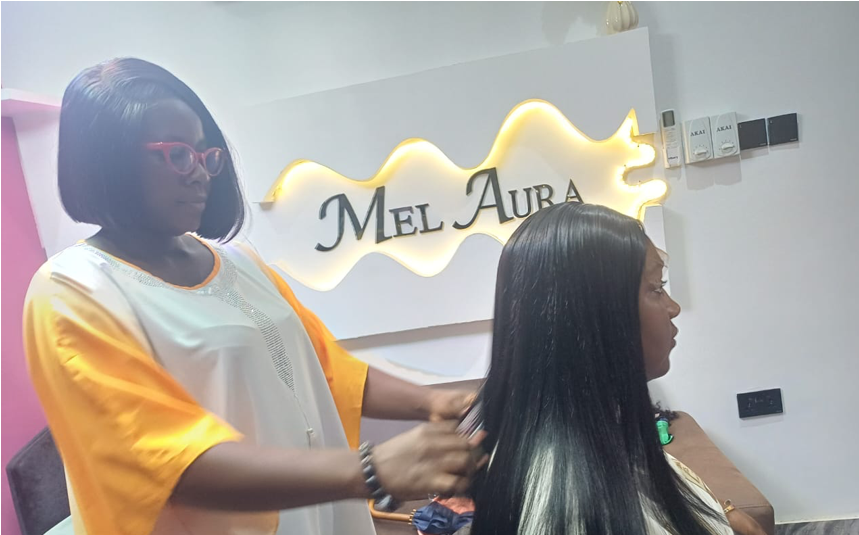

Modern salons are being reshaped to meet the demands of time-pressed corporate women, evolving from purely aesthetic spaces into hubs that combine efficiency, wellness and community.
At the opening of Mel Aura in Accra, founder Mabel Kono Darko said the shift reflects changing lifestyles and expectations among professional clients. “It’s no longer just about hair and nails,” she noted. “Women are looking for spaces that help them unwind, recharge and still fit into a busy schedule.”
The model is increasingly centred on speed and flexibility. Express treatments, dry-styling bars, and on-demand services are becoming standard, allowing clients to fit appointments between meetings or outside conventional hours. Mobile salons—gaining traction in Ghana—are also extending services directly to offices and homes, reducing the need for long salon visits.
Alongside convenience, operators are placing greater emphasis on wellness. Services such as scalp therapy, aromatherapy and stress-relief treatments are being integrated into offerings, positioning salons as informal sanctuaries from workplace pressures.
For Mel, the concept is also personal. What began four years ago as a tentative shift away from a career in broadcasting has developed into a business built on both craft and connection. “You realise quickly that this is more than a service industry,” she said. “It’s a space where women talk, share, and feel comfortable expressing themselves.”
That sense of community is central to Mel Aura’s proposition. Beyond styling—including wigs, closures and general hair care—the salon aims to foster an environment where clients feel a sense of belonging rather than a transactional experience.
The business also reflects a broader economic role emerging within the sector. Salons are increasingly serving as training grounds, offering apprenticeships that provide young women with employable skills and a pathway to financial independence. As demand grows, vocational trades such as hairdressing are becoming more viable income streams within the urban economy.
“Handiwork is evolving,” Mel said. “It’s creating real opportunities for young women to build sustainable livelihoods.”
As the lines blur between beauty, wellness and lifestyle services, salons such as Mel Aura are positioning themselves not just as service providers, but as community spaces aligned with the rhythms of modern professional life.
Post Views: 40
Discover more from The Business & Financial Times
Subscribe to get the latest posts sent to your email.