
…we have a development challenge that is rooted not in a lack of ideas, but in an institutional architecture that separates planning from power, execution, and money…
There is a certain kind of frustration that repeats itself in Ghana’s development story. It is the frustration of watching intelligent plans dissolve into institutional fog. The country does not lack analysis. It does not lack ambition. What it lacks is continuity between intention and outcome.
This week’s Re-Imagine Ghana is, in many ways, a transition from first principles to machinery. If social order is the foundation of progress, then institutions are the engines that convert that order into results. And when those institutions are poorly designed, even the best intentions are quietly neutralised.
I want to begin with a simple but revealing observation. Ghana has a persistent habit of mistaking partial imitation for institutional learning. When oil was discovered, policymakers spoke confidently about learning from Norway. But learning, in this context, requires completeness. Norway built a coherent system anchored by a sovereign wealth framework with clear fiscal rules and governance. Ghana did not replicate that system. Instead, it assembled fragments, often pointing to vehicles like the Minerals Income Investment Fund as evidence of equivalence. But equivalence requires structure, not aspiration. What exists is not the same thing.
This tendency toward incompleteness brings us, unavoidably, to the National Development Planning Commission.
I want to be careful here, because this is not an argument that planning does not matter. It does, profoundly. The National Development Planning Commission (NDPC) was established under Articles 86 and 87 of the 1992 Constitution with a genuine mandate: to advise the President on development planning policy, to prepare medium and long-term development plans, and to coordinate and monitor their implementation. That mandate was serious and well-intentioned. But here is the problem. Knowing what to do and having the institutional machinery to actually do it are two entirely different things. And Ghana, for more than three decades, has been confusing the two.
We have drafted Vision 2020. We have produced the Ghana Poverty Reduction Strategy, the Ghana Shared Growth and Development Agenda, and most recently, the ambitious 30-year Ghana Infrastructure Plan launched in October 2025. Each of these documents represented genuine analytical work. Each was, at the time of its launch, described as a transformative framework. And each was, in due course, quietly set aside when a new administration arrived with its own manifesto priorities and its own flagship projects. 1D1F, one-this-one-that has given way to 24Hr and 24Hr+. And yet I cannot point to a fundamental restructuring of the basics that gives me comfort that this will be the last iteration of ideas.
This is not a failure of imagination. It is a failure of institutional design.
The advisory trap
There is, in fact, a deeper structural flaw at work — something I would describe as the advisory trap. The NDPC exists in a space where it can recommend but not compel, design but not enforce, evaluate but not correct. It is, in effect, a planning institution detached from consequences.
The NDPC’s enabling legislation does not empower it to compel ministries to align their budgets with its strategies. It cannot reject a ministry’s capital project on the grounds that it conflicts with the national plan. It cannot enforce the execution of frameworks it has spent years developing. In a 2012 assessment conducted under the Ghana-Korea Knowledge Sharing Project, visiting Korean officials found that “Ghana does not have sufficient legal grounds to support monitoring and evaluation of public policy; the existing laws are too vague and broad.”
[2] Twelve years later, in May 2024, the NDPC’s own Chairman acknowledged that “rigid plans prescribing project programs and actions will not survive under the current political dispensation.” [3] That is a remarkable admission from the head of the country’s planning body — and it reveals the depth of the structural problem.
The consequences of that detachment are now visible everywhere. Ghana spends over GHS 300 million annually on overlapping development agencies, yet uncompleted and abandoned projects remain scattered across the country. A Ministry of Finance assessment found that roughly 40 percent of government projects are delayed or abandoned due to poor planning and weak oversight. [4] In 2023, twelve out of forty-eight Ministries, Departments, and Agencies failed to submit development plans to the NDPC at all. [5] These are not isolated failures. They are systemic outcomes of a structure that allows projects to be conceived outside a disciplined, centralised framework.
This is no longer acceptable. Not in a world where capital is scarce, competition is intense, and execution — not intention — is what separates advancing economies from stagnant ones.
So the question is not whether reform is needed. It is what kind.
I would suggest that incremental adjustments will not suffice. What is required is a structural reset. The NDPC, as currently constituted, has not lived up to expectations. Its inefficiencies and outdated architecture reflect a different era, one in which advisory bodies were seen as sufficient. That era is over.
What Malaysia Built — And Why Ghana Should Pay Attention
Let me give you a concrete example of what a different institutional design looks like in practice. In 1961, Malaysia established the Economic Planning Unit (EPU). The institution became decisive after the 1969 ethnic riots, when the government recognized that a fragmented bureaucracy could not hold the nation together. [6] What was needed was not another advisory body. What was needed was a single brain to craft national strategy, a single referee to align ministries, and a single guarantor to ensure implementation.
The EPU was placed directly under the Prime Minister’s Department — a deliberate positioning that gave it prestige, authority, and insulation from partisan ministries. Unlike Ghana’s NDPC, the EPU was an executive institution. Ministries had to justify projects through it. Budgets were aligned with its strategies. No major policy passed without the EPU’s analytical endorsement.
The EPU was divided into specialised divisions staffed by economists, engineers, statisticians, planners, and policy specialists — many trained abroad under national scholarships. These divisions covered macroeconomic analysis, human resource planning, industrial development, infrastructure coordination, energy and natural resources, poverty eradication, and monitoring and evaluation. This division of labor allowed Malaysia to plan at multiple levels simultaneously — macro, sectoral, spatial, and social.
Every five years, the EPU produced a national development blueprint — not a symbolic document, but a binding operational framework. Ministries had to implement it. Budgets were allocated according to it. State-linked companies were evaluated against it. Halfway through each plan, the EPU conducted a rolling mid-term review, using data to assess performance, correct deviations, reallocate resources, and revise targets based on economic shocks. This was Malaysia’s way of preventing policies from drifting into irrelevance.
The EPU also vetted all major public investments — highways, industrial zones, power plants, airports, technology parks. A ministry could not simply propose a project. It had to demonstrate economic returns, social impact, consistency with the Malaysia Plan, and future fiscal implications. This single discipline — the requirement to justify before committing — prevented the “projects without strategy” phenomenon that has become normalized in Ghana.
The EPU did not operate alone. It sat at the center of a wider technocratic ecosystem. Permodalan Nasional Berhad (PNB) handled corporate restructuring and broad-based ownership, while Khazanah Nasional acted as the commercial arm of national strategy, managing stakes in key firms. The EPU provided the strategic logic; these institutions provided the financial and commercial execution. Together, they made Malaysia’s state capitalism competent.
The results speak for themselves. Malaysia’s GDP grew at an average rate of 6.1 percent per year from 1970 to 2018. The country reduced poverty from approximately 50 percent to under 1 percent. It transformed from a commodity exporter into a diversified, industrialized economy. The EPU was not the only factor in that transformation, but it was the institutional spine that gave coherence to everything else.
The comparison should be instructive, not paralysing. Malaysia was not a more sophisticated country in 1969. It was a country that made a deliberate choice about institutional design.
What New York built — and why it matters for Ghana’s Regions
The second model worth studying is the New York City Economic Development Corporation (NYCEDC) where I was a Senior Vice President and led restructuring of the organisation. NYCEDC operates as a mission-driven organisation that manages properties and projects on behalf of the City, channels capital budget investments into design and construction, and supports initiatives across all five boroughs. Its mandate integrates planning with execution: it does not merely recommend that neighborhoods be revitalised; it manages the projects that revitalise them.
What is instructive about the NYCEDC model for Ghana is not its scale but its logic. It demonstrates that a development institution can simultaneously hold the strategic planning function and the project execution function within a single organisational architecture. It demonstrates that regional development — across boroughs with distinct economic profiles and needs — can be managed coherently from a single platform with consistent standards, shared services, and unified accountability.
Ghana’s regional development challenge is acute. The Northern Development Authority, the Middle Belt Development Authority, the Coastal Development Authority, and their counterparts were created with genuine intent. But they operate with separate boards, separate systems, separate overheads, and no unified performance framework. The result is triple overhead, fragmented reporting, and no single dashboard against which regional progress can be measured. A development corporation model — with regional operating arms following one national playbook — would preserve local identity while eliminating the inefficiencies of parallel structures.
The NEDC: Ghana’s new engine for execution
What Ghana needs is a National Economic Development Corporation, or NEDC. Not an advisory commission, but an executive platform. Not a producer of plans, but a driver of outcomes. Operating under a public brand of DEEP — Development and Economic Execution in Partnership — this institution would embody a simple but powerful principle: that development is not a sequence of plans, but a system of delivery.
The idea is straightforward, though its implications are profound. Replace fragmentation with integration. Replace advisory authority with executive discipline. Replace institutional ambiguity with clarity of mandate.
The NEDC would consolidate scattered development functions into a single, coherent entity. It would not merely coordinate. It would decide, vet, monitor, and enforce. It would serve three core and non-negotiable functions.
The first is economic planning and policy formulation. The NDPC’s analytical capability is genuine and should be preserved. But it must be repositioned so that plans are tested for feasibility, affordability, and risk before they are scheduled for funding. This reverses the old pattern in which budgets were allocated on incomplete information and projects were approved without being incorporated into broader development objectives.
The planning function must sit inside the same house as execution, so that feedback loops are short and planning standards are tightened in response to what implementation actually reveals. The NEDC would produce binding medium-term plans — not wish lists, but operational frameworks that ministries must justify their budgets against.
The second is oversight of implementation and project management for all government projects. Every major government project must pass through a rigorous stage-gate process — from concept and feasibility through investment decision to execution and handover. Each gate forces evidence and discipline before major commitments are made.
At the concept stage, a project must demonstrate a clear problem statement and preferred option with outline scope and costs. At feasibility, it must show demand analysis, engineering viability, environmental and social impact, and affordability. Only after passing the investment decision gate — with a final business case and procurement strategy — can a project proceed to contract award. This is not bureaucracy for its own sake.
It is a checklist against wishful thinking. Each project would have one baseline schedule and one baseline budget. Changes would be governed by a single change board with quantified impacts. Risks would have named owners and due dates. The largest financial gain from this discipline is not overhead savings — it is fewer delays and fewer overruns on large assets, which is where Ghana’s development money is currently being consumed.
The third is management of all regional development efforts. Structurally, the NEDC would operate through five regional divisions, each aligned with the economic realities of the country. A Sahel division would focus on the northern regions, addressing climate adaptation and agricultural transformation. A southern division would concentrate on coastal infrastructure, fisheries, and tourism. Western Ghana would be organised around mining, energy, and industrial development.
The eastern corridor would emphasize trade and agro-processing. And at the center, a headquarters would coordinate strategy, enforce standards, and track performance across the system. These regional arms — NEDC-Sahel, NEDC-South, NEDC-West, NEDC-East — would adopt accessible public identities while following one national playbook, preserving local ownership without the inefficiencies of separate boards and systems.
The following table captures the essential difference between the architecture Ghana has and the architecture Ghana needs:
| Dimension | Current NDPC | Proposed NEDC / DEEP |
| Legal status | Advisory body under the Constitution | Executive corporation established by Act of Parliament |
| Relationship to projects | Receives plans from ministries; cannot reject them | Vets and approves all major public investments through stage-gate process |
| Budget alignment | No formal link to national budget | Ministries must justify capital projects against NEDC frameworks |
| Execution authority | None | Manages implementation from concept to handover |
| Regional development | Coordinates with separate, fragmented regional authorities | Manages regional arms directly under one national playbook |
| Accountability | Reports to President in advisory capacity | Performance-based board with majority-independent directors |
| Institutional position | Separate from Ministry of Finance and line ministries | Positioned at the center of government, analogous to Malaysia’s EPU under PM’s Department |
| Staffing model | Civil service appointments | Global CEO search; private-sector expertise in project finance and operations |
The DEEP Principles: What execution actually requires
The public brand of DEEP — Development and Economic Execution in Partnership — is not merely a name. It encodes a set of principles that distinguish the NEDC from every advisory body that has preceded it.
Development means that every decision is anchored in a long-term national framework, not in the electoral cycle. It means that projects are evaluated against their contribution to Ghana’s structural transformation — not their political visibility. It means that the 30-year Ghana Infrastructure Plan, launched in October 2025, becomes a binding operational covenant rather than an aspirational document.
Economic means that every Cedi spent must be justified in terms of returns. The NEDC would conduct feasibility studies and convert ideas into actionable, fundable projects. It would analyze and score government projects for value-for-money before they enter the pipeline. It would benchmark Ghana against peer nations, identifying gaps and opportunities to improve. This is how Rwanda’s Development Board helped the country climb to second place in Africa on the World Bank’s Ease of Doing Business ranking — not through rhetoric, but through rigorous economic discipline applied to every investment decision.
Execution means that planning and doing are the same function, housed in the same institution. The NEDC would monitor government projects to ensure they are completed on time and within budget, with regular reports and recommendations. It would identify overlaps and inefficiencies in ministries and agencies to save costs. It would eliminate the gap between the institution that plans and the institution that delivers — a gap that has cost Ghana billions in delayed projects and abandoned infrastructure.
Partnership means that the NEDC operates not as a bureaucratic overlord but as a convener of public and private capability. Its investment and investor services function would provide a single front door for investors — one entry point that follows through, from origination to execution to aftercare. No more hand-offs to unrelated bodies that cannot control delivery. No more investors discovering, mid-process, that the agency that approved their project has no authority over the agency that must implement it.
None of this works without the right people. One of the quiet failures of public institutions is the tendency to prioritise administrative continuity over technical excellence. The NEDC must invert that logic. Its chief executive should be hired through a global search process, with candidates required to have C-suite experience and proven international success. Its staff should be drawn primarily from the private sector, with expertise in project management, finance, and innovation. Recruitment must prioritise skills over politics, ensuring the NEDC operates with professionalism and efficiency.
This is not a technocratic indulgence. It is a prerequisite for credibility.
The Benefits Are Tangible — And the Path Is Clear
The benefits of this transformation, if implemented properly, would be concrete and measurable. Consolidation alone could save between GHS 100 and 150 million annually in overhead costs currently spread across fragmented agencies. More importantly, improved planning and oversight would reduce the far larger losses associated with delayed and abandoned projects. Accountability would improve through regular, transparent reporting on project performance and spending. And competitiveness would increase as Ghana begins to measure itself rigorously against countries competing for the same investment and opportunities.
The path forward is not mysterious. It requires a legislative instrument to dissolve the NDPC and establish the NEDC with a clear mandate and governance structure. It requires the consolidation of overlapping agencies into a unified platform. And it requires a transparent process to recruit leadership capable of executing the vision.
This is not a bureaucratic adjustment. It is a redefinition of how the state functions.
Because at its core, this argument is about something larger than the NDPC. It is about whether Ghana is prepared to move from a culture of aspiration to a culture of execution. Whether it is willing to build institutions that endure beyond political cycles. Whether it can create a system where every Cedi invested works for the benefit of all Ghanaians.
For too long, development in Ghana has been treated as a sequence of plans. It is time to treat it as a system of delivery.
Blowing up the NDPC is not an act of impatience. It is an acknowledgment of reality.
And the reality is simple: countries do not develop because they know what to do. They develop because they build institutions that ensure it gets done.
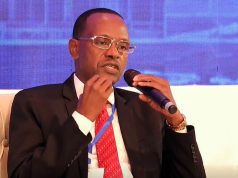
Hene Aku Kwapong, PhD, is a CDD Ghana Fellow, Ecobank Ghana Board Member, and former Head of Management for Royal Bank of Scotland EMEA Credit Markets. He is a graduate of the Massachusetts Institute of Technology and Columbia University. He writes the “Re-Imagine Ghana” column for the B&FT
Post Views: 1
Discover more from The Business & Financial Times
Subscribe to get the latest posts sent to your email.