By Abigail Kyeremah Owusu
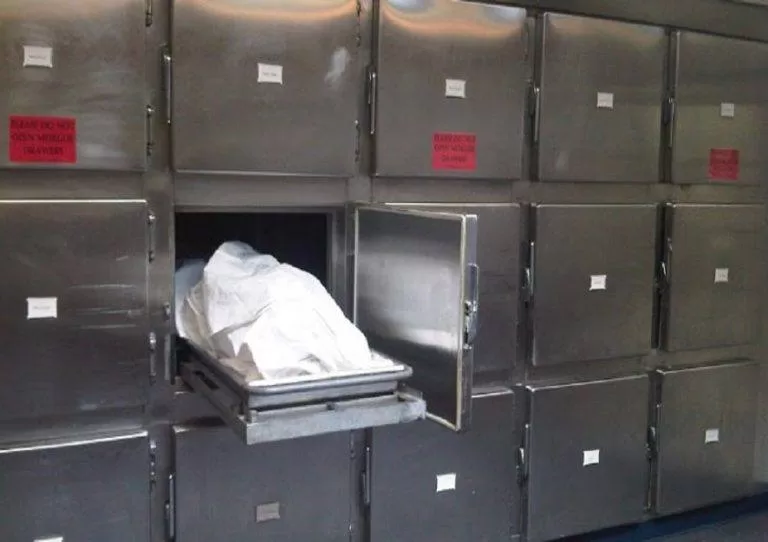
It is no secret that some public hospital morgues in Ghana are operating beyond their storage capacity. A phenomenon which raises concerns about the safe and dignified handling of dead bodies in the country’s mortuaries.
The issue was subject for discussion at the a Public Accounts Committee hearing on Friday, October 9, 2026, when the Auditor-General’s Performance Audit of the management of mortuary facilities in public hospitals was considered .
The Acting Deputy Registrar of the Mortuaries and Funeral Facilities Agency (MoFFA) Dr. Philip Sarpong, in responding to an issue raised in the Auditor-General’s Performance Audit Report confirmed that indeed, some hospital mortuaries operate beyond the capacity.
Mr. Sarpong however said, the Agency had developed special assessment tools based on international standards and protocols to regulate public and private mortuaries following the 2024 audit. He said about 200 mortuary facilities had since been licensed, adding that five of the eight facilities cited in the audit report had obtained licences after meeting the required standards.
He however disclosed that three facilities, including the one at Effia Nkwanta Regional Hospital and two in the northern part of the country, were yet to be licensed because they had not fully met the required standards.
“We’ve given them a period to correct these infractions before we come back to inspect them based on standards, then we can issue them with the licences,” he said.
Mr. Sarpong admitted that the unlicensed facilities were still operating, explaining that the Agency had directed them to implement corrective measures and operate within certain limits. He added that some of the facilities had national security implications, making it necessary for their operations to continue under restrictions while the Agency monitored their compliance.
The disclosure followed concerns raised by members of the Public Accounts Committee over overcrowding, unsafe conditions and reports of bodies being stored on floors in some mortuaries.
During the hearing, the Committee examined figures from the audit report showing that some facilities had exceeded their stated storage capacities at the time of the audit.
Korle Bu Teaching Hospital, for instance, had a reported storage capacity of 457 bodies but was found to be holding 826 bodies. The figures presented to the Committee also showed that Amankyi Hospital had a capacity of eight bodies but was holding 45, while Piami Hospital, with a capacity of 84, had 179 bodies.
Effia Nkwanta Regional Hospital was also reported to have a capacity of 60 bodies but was holding 129, exceeding its capacity by 69 bodies.
Other facilities examined included Pantang Hospital, and Komfo Anokye Teaching Hospital.
Responding to questions about how the excess bodies are managed, Mr. Sarpong said the responsibility for the day-to-day management of bodies rested primarily with the individual institutions.
“The management of the body, typically, is more of an institutional management level. We have 24 facilities. We are a regulator. So we regulate them to make sure that they abide by their standards,” he said.
He maintained that the Agency’s role is to regulate and monitor compliance, rather than directly manage the operations of individual mortuaries.
The Committee stressed the need for improved mortuary conditions and urged the Agency to go beyond licensing, and ensure that mortuaries operate under safe and acceptable conditions noting that proper facilities, adequate capacity and effective management were necessary to ensure that the dead were treated with dignity.