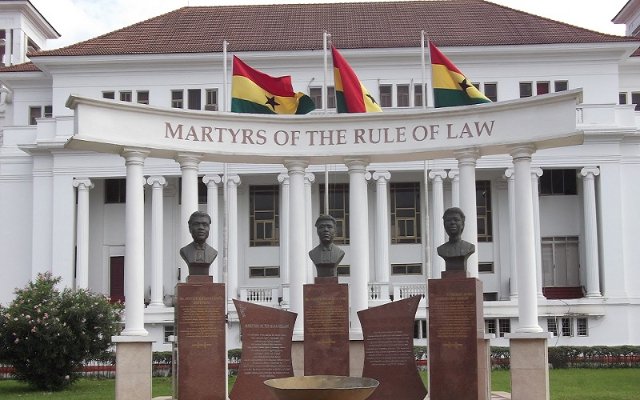
The Supreme Court is expected to deliver its ruling today, Friday, August 21, on a suit challenging the constitutionality of administrative warrants issued by Chief Justice Paul Baffoe-Bonnie directing selected High Court judges to continue sitting during the legal vacation.
The case was filed by the Member of Parliament for Ofoase-Ayirebi, Kojo Oppong Nkrumah, who is challenging the decision to allow selected criminal cases to proceed during the vacation.
The application raised concerns about whether the arrangement is consistent with the constitutional rights of accused persons, particularly their right to fair representation and legal counsel of their choice.
The legal team for Mr Oppong Nkrumah has also challenged the Attorney General’s representation of the Chief Justice, who has been named as a defendant in the suit. Lawyer Frank Davies argued that the Chief Justice, as head of an independent arm of government, should have separate legal representation from the Executive.
“The Chief Justice heads an independent organ of the state, the judiciary. We have the judiciary, the legislature, and the executive. They are supposed to be independent organs of the state,” he said.
At the centre of the substantive challenge is the argument that continuing criminal trials during the legal vacation could interfere with the accused persons’ right to fair representation and their choice of lawyers.
Mr Davies stressed that the applicants were not seeking to halt the trials, but were challenging the decision to proceed during a period when the lawyers involved had indicated they were unavailable.
“We are not saying that they should not be tried. What we are saying is that the continued trial of the cases in the legal vacation offends their right to fair representation and lawyers of their own choice,” he said.
Mr Davies further argued that the practice of conducting trials during the legal vacation traditionally depends on the availability and agreement of the lawyers involved before a warrant is obtained from the Chief Justice.
He questioned the decision to select particular criminal cases for hearing while other matters before the courts were not similarly prioritised.
“If it is the case that there can be trials during the vacation, why is it that it is only those selected cases which are being tried?” he asked.
The Supreme Court’s ruling today is expected to determine whether the administrative warrants issued by the Chief Justice can stand and whether the selected criminal cases can continue during the legal vacation.
DISCLAIMER: The Views, Comments, Opinions, Contributions and Statements made by Readers and Contributors on this platform do not necessarily represent the views or policy of Multimedia Group Limited.
DISCLAIMER: The Views, Comments, Opinions, Contributions and Statements made by Readers and Contributors on this platform do not necessarily represent the views or policy of Multimedia Group Limited.
Source link