

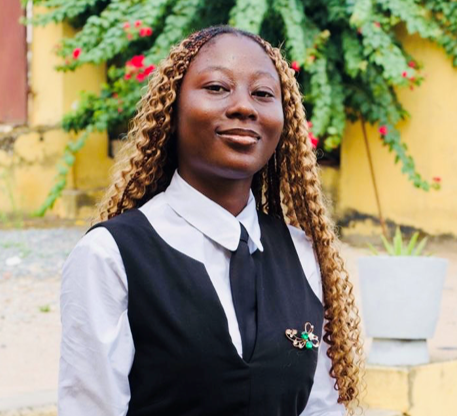
By Maame Efua Adom Nyame Quansah
When Phyllis Adoley Buckman first felt a small, painless lump in her breast in 2014, she did what many women under financial strain do: she hoped it would go away. A doctor friend advised a biopsy, but the private hospital quoted a price of 1,800 Cedis.
“The money was huge,” Phyllis recalls. “This lump was small. It wasn’t painful. All I said to myself was, ‘Ah, I don’t have this money, and this lump is not paining me.’ So I just left it.”
It was a decision driven by economics, but it nearly cost her her life. By late 2018, her breast had visibly altered, hardening, swelling, and mimicking the texture of an orange peel. By the time she was officially diagnosed with breast cancer at the Achimota Hospital and referred to the Korle-Bu Teaching Hospital, years of critical intervention time had slipped away.
Phyllis’s story is not an isolated tragedy; it is the standard reality for thousands of Ghanaian women fighting a disease where late detection remains the primary executioner.
The Data Deficit and Missed Cases
Public health experts warn that the true scale of breast cancer in Ghana remains obscured. According to a medical expert interviewed regarding the current healthcare landscape, Ghana lacks a centralized national cancer registry. Instead, data is fractured across institutional registries within localized teaching hospitals.
“Based on estimates from 2022, we are supposed to be seeing about 5,000 new cases of breast cancer in Ghana every year,” the expert explains. “Obviously, when we look at what the major hospitals are seeing across the country, it doesn’t add up to this number. It is very likely that we are missing some cases.”
This gap is acutely felt in rural communities, where physical distance and structural poverty keep women entirely cut off from diagnostic tools.
The High Cost of Surviving
While the National Health Insurance Scheme (NHIS) provides partial relief for surgeries and select medications, major financial hurdles persist.
“The money is the problem,” Phyllis emphasizes. “Somebody’s chemo is like 13,000 Cedis (per cycle). Even the minimum is around 2,500. An NGO cannot do it on their own.”
Furthermore, essential treatments like radiotherapy require direct out-of-pocket cash payments. This financial burden is compounded by extreme centralization. Across the entirety of Ghana, there are only three operational radiotherapy centers: two located in Accra and one in Kumasi.
For patients living in regions far from these urban centers, seeking daily radiation for weeks at a time demands an agonizing choice between abandoning treatment or uprooting their lives and families at an immense financial deficit.
Piercing the Veil of Social Stigma
Beyond the physical toll of chemotherapy and radiation, patients face a severe social undercurrent intense stigmatization. In many Ghanaian communities, cancer is heavily misunderstood as either an immediate death sentence or an infectious curse.
Phyllis, who ran a successful home hair salon, kept her diagnosis entirely hidden from her own household and neighbors out of fear. She secretly cut off her long hair ahead of chemotherapy, fashioned her own wig caps, and lied to her family, telling them she was traveling out of town for a beauty training workshop when she was actually undergoing major surgery.
“I didn’t want any drama, especially stigmatization,” Phyllis admits. It took her two full years after finishing treatment before she finally felt safe enough to share her survival story publicly.
Other women face even harsher exclusions. The medical expert noted instances where survivors had to abandon their neighborhoods or watch their businesses collapse because clients refused to interact with them.
Phyllis vividly recalls the heartbreak of a fellow survivor whose lifelong friend cut all ties upon hearing the diagnosis: “The friend told her, ‘Don’t come to my house again. Don’t call me again.’ Breast cancer is not infectious. You won’t get it because you are eating or talking with a patient. The stigma is killing us.”
The Power of the Survivor Network
As Ghana works to scale up its public health infrastructure, the immediate lifeline for newly diagnosed patients has emerged from the survivors themselves.
Medical professionals acknowledge that clinical charts and doctors’ assurances can only do so much to calm a terrified patient. “Patients don’t accept it as much as they would if they see somebody who has gone through the same thing,” the medical expert notes.
This realization turned Phyllis from a silent survivor into a vocal advocate. Today, she belongs to a network of 10 to 15 survivors who voluntarily visit Korle-Bu Teaching Hospital on designated clinic days to counsel and offer peer-to-peer support.
“We show them pictures. We show them our scars,” Phyllis says, explaining how they clarify life after a mastectomy or chemotherapy. “In my time, I didn’t see any survivor. But us coming out to share our story is helping a lot of people.”
A Call for National Action
The consensus between survivors and medical experts is clear: saving Ghanaian women requires shifting from ‘opportunistic screening’ where women only get checked during high-profile awareness months like October to a structured, universally accessible national screening program.
Until mammograms are decentralized to rural districts, treatment costs are fully absorbed, and public education systematically dismantles ancient stigmas, thousands of women will continue to suffer in silence.
Yet, through the efforts of advocates like Phyllis, the narrative is beginning to turn. A breast cancer diagnosis in Ghana is gradually changing from a hidden death sentence into a rallying cry for structural reform, community solidarity, and ultimately, survival.
Post Views: 36
Discover more from The Business & Financial Times
Subscribe to get the latest posts sent to your email.