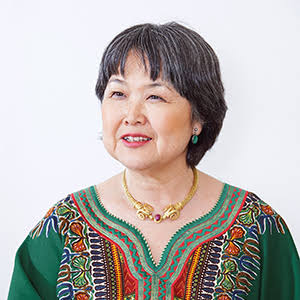
The world will increasingly depend on Africa’s resources and young population, Professor Mieko Ikegame, a former United Nations Lead and Focal Point for the Tokyo International Conference of African Development (TICAD), has said.
She said Africa’s natural resources were critical to the development of the global economy, making it important for the continent to strategically manage them and strengthen its bargaining position.
Prof Ikegame said this at the TICAD Youth Drive 2026 in Accra, dubbed: “Youth Agenda 2055: From Vision to Action”.
She said the central issue for Africa was how it managed its natural resources and used them to advance its development interests.
Prof Ikegame said the future of global peace, food security and economic growth would increasingly run through Africa, given its expanding population and abundant resources.
She described the period as an opportunity for Africa to renegotiate its relationship with international partners.
“Now we have this great opportunity to break the traditional relationship with partners and the international community,” she said.
Prof Ikegame said Africa was projected to account for nearly half of the world’s population by 2050, with a significant proportion being young people.
“According to the UN, when the world population becomes 10 billion, 4.8 billion people will be in Africa. That is almost half of global population. And 70 per cent of that is a dynamic, young population,” she stated.
Prof Ikegame urged African countries to move away from the traditional donor-recipient model and promote cooperation based on mutual interests.
“International community’s peace and development is only possible when Africa cooperates with the international community. Africa doesn’t need to be depending on anybody,” she said.
Prof Ikegame also asked African governments and young people to protect the flow of information to the continent and guard against external interference.
“You must not allow any country to sabotage or block information coming to Africa. Information Technology gives you freedom to get the information you want. This is going to be a big change,” she said.
Mr George Opare Addo, Minister of Youth Development and Empowerment, said although general unemployment had declined over the past year, youth unemployment had increased due to the growing youth population.
He said the government was scaling up programmes to provide employment and skills opportunities for young people, including the “Ejumawura” programme, with 10,000 beneficiaries, and the National Apprenticeship Programme, which had trained 14,000 people.
Mr Opare Addo said the Youth Employment Agency (YEA) had also trained 30,000 people, although not all had graduated.
He said the “Domestic Care Economy” programme under the YEA, expected to create employment for close to 100,000 young people, would be launched next year.
“The challenge confronting the average African is not determination. It’s the enabling environment. That is why President Mahama created the Ministry for Youth Development — to nurture talents and position young Ghanaians to meet global challenges,” he said.
Mr Opare Addo urged young people to take advantage of government programmes designed to improve their employment and skills prospects.
“Young people are not just the future. The future is already here. Government sees you and hears you. When we roll out the programs, please take advantage of them,” he added.
Mr David Kpondehou, President and Founder of the Africa Diaspora Network Japan (ADNJ), said the Youth Drive rotated between Japan and Africa.
“This year we are launching officially the Africa Japan Youth Alliance in Accra. The Alliance will be the secretariat to coordinate policy activities and connect resources to youth opportunities and needs,” he said.
Mr Kpondehou said the Accra conference was intended to move young people beyond dialogue towards implementation.
“From today we are giving tools to young people to take action, to change their own life, to change the life of their community, and to change the life of many in the world,” Mr Kpondehou said.
TICAD was launched in 1993 by the Government of Japan to promote Africa’s development, peace and security through strengthened multilateral cooperation and partnerships.
Source: GNA