
By Melissa Sackey
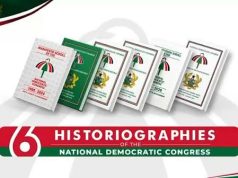
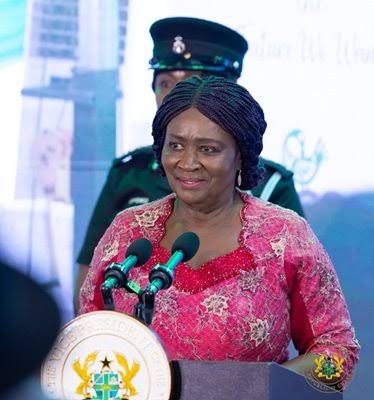
The Vice President Professor Jane Naana Opoku-Agyemang has underscored the importance of preserving the National Democratic Congress (NDC)’s institutional memory, describing the publication of six historiographies as a significant effort to document the party’s development and key periods in its history.
The Vice President was speaking at the event to launch the six historiographies documenting the party’s historical development and key periods, in an initiative aimed at preserving the party’s institutional memory and provide a record of its political evolution. She commended the party’s Chairman, Johnson Asiedu Nketia for his role in the initiative, stressing that institutional memory does not preserve itself.
The launch brought together prominent NDC figures and political commentators, including Kwesi Pratt Jnr, Dr Zanetor Agyemang-Rawlings and Betty Mould-Iddrisu, who reflected on the party’s political philosophy, leadership and democratic accountability.
In a panel discussion, member of the Council of State, Betty Mould-Iddrisu, reflecting on the experiences that contributed to the party’s development, said the NDC is about political philosophy rather than personal gain. The Minister for Environment Science and Technology and Member of Parliament for Klottey-Korley Constituency, Dr Zanetor Agyemang-Rawlings called on the party to pay attention, not only to ethical leadership, but also to conscious followership, which she said should empower citizens to hold leaders accountable.
She cautioned that democracy could not be meaningfully celebrated if the voices of the masses did not matter in decision-making.
Adding to the discussion, Journalist and political commentator Kwesi Pratt Jnr, stressed that, no single political party could shape Ghana’s future alone. According to Kwesi Pratt, the task of nation building is a collective responsibility. He also called for the political, economic and military unification of the African continent, arguing that Ghana and other African countries, including Nigeria, Togo and Burkina Faso, could not move forward without greater continental unity.