

The Volta River Authority (VRA) Academy has opened a specialised two-week regional training programme on clean “Mini-Grid Design, Installation and Inspection,” to accelerate rural electrification and bridge the energy access gap for millions of people across West Africa.

The initiative aims to establish a highly skilled, certified workforce capable of deploying sustainable, decentralised solar energy systems across the ECOWAS sub-region.
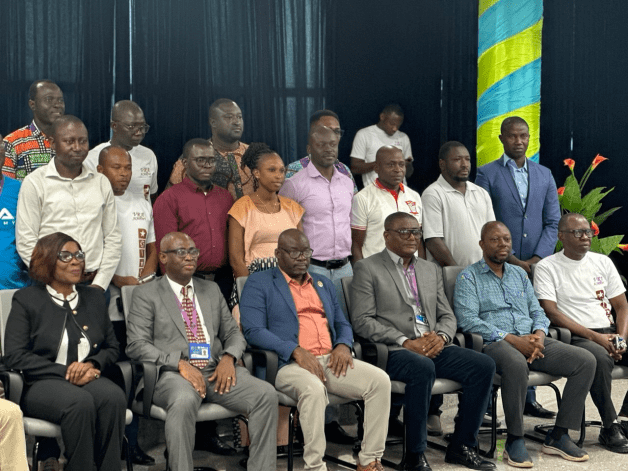
The ‘training of trainers’ (ToT) programme, launched at the VRA Academy in Akuse, draws 20 engineers and technical practitioners from across the Economic Community of West African States (ECOWAS) and is being delivered by a coalition of key regional partners, including the ECOWAS Centre for Renewable Energy and Energy Efficiency (ECREEE) as the accreditation body, the Academy and Takoradi Technical University (TTU). The majority of participants hail from The Gambia and Ho Technical University.
The curriculum will cover the full spectrum of competencies, from system design and installation to inspection, maintenance and the pedagogical skills needed to effectively transfer knowledge back in participants’ home countries.
Delivering the keynote address, VRA Deputy Chief Executive for Services, Samuel Fletcher, in a speech read on his behalf, described the training as a strategic investment in the region’s socio-economic future.
“Mini-grids have emerged as a practical and scalable solution, particularly for rural and peri-urban communities where conventional grid extension is not economically viable. By harnessing renewable resources, we reduce dependence on fossil fuels, mitigate environmental impacts and foster resilience against climate change,” he stated.
Mr. Fletcher stressed that the expertise required to design, install and inspect these systems is critical to ensuring their long-term effectiveness.
He highlighted the deliberate effort to make the programme gender-responsive, noting that the energy transition offers an opportunity to build a more diverse workforce where women are fully included in technical roles.
The deployment of solar photovoltaic mini-grids has emerged as a critical strategy for West African nations striving to achieve universal electricity access. These systems directly transform livelihoods by powering homes, local businesses, schools and healthcare facilities without relying on traditional grid infrastructure.
VRA Academy Chief Learning Officer, Kingsley Gyamfi, traced the initiative back to a rigorous accreditation process in which the Academy was assessed by ECREEE inspectors over a year ago, following an application prompted by the West African Power Pool (WAPP).
“We are privileged to be chosen to host this programme, the first of its kind under our new status,” Mr. Gyamfi said.
He underscored that the training is designed as a ToT course, meaning that the skills transferred will not end with the current cohort.
“Every participant in this room carries the potential to shape perhaps hundreds of future energy practitioners. That is the power of a ‘Training the Trainer’ approach, and it is a responsibility we must not take lightly,” he stressed.
Universal Electrification
Ing. Abdul Noor Wahab, VRA’s Director of Water Resources and Renewable Energy, brought the technical focus into sharp relief, explaining that the programme addresses the specific challenge of powering remote settlements that are too far from the national grid.
“With this initiative, we are developing special solar power generation stations that produce power which is transmitted directly to homes, just like what those in the cities get from the grid, but off-grid,” he said.
He noted that around 20 million people in the West African sub-region currently do not have access to power and the ToT model is intended to equip engineers to go out and expand the technology, sharing experiences across Ghana and participating nations.
Guei Guillaume Kouhie, Interim Coordinator of the Desert to Power initiative, who spoke on behalf of ECREEE Executive Director Gibson Obasi, explained that the training falls under the West Africa Regional Energy Programme, an AfDB-funded initiative coordinated by ECREEE and WAPP to accelerate solar power generation, transmission and decentralised mini-grids across ECOWAS member states.
He revealed that the programme’s first phase has focused on feasibility and mini-grid studies in countries including Guinea-Bissau, Benin, Burkina Faso, Liberia, Mali, Niger and Ghana.
“ECREEE is actively validating clean mini-grid study findings and running capacity-building workshops across the region,” Kouhie said.
He added that the Akuse training represents a critical step in turning studies into installed systems on the ground.
Expected Impact
As the training gets underway, organisers and participants alike expressed confidence that the programme will not only equip individual engineers but will also accelerate the deployment of clean mini-grids across the region, bringing reliable electricity to health clinics, schools and small enterprises that have long operated in the dark, and laying the groundwork for a sustainable, inclusive and electrified West Africa.
Post Views: 1
Discover more from The Business & Financial Times
Subscribe to get the latest posts sent to your email.