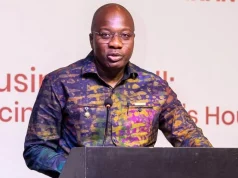
The General Secretary of the Christian Council of Ghana, Rev. Cyril Fayose, has defended the involvement of religious leaders in national conversations, stressing that the Church has a responsibility to speak on governance without being perceived as partisan.
Speaking to Joynews on Tuesday, April 28, 2026, Rev. Fayose stated that the Council remains deliberate in maintaining neutrality despite its significant influence in society.
“The Christian Council member churches are careful to be non-partisan. They are non-partisan in their dealings with members of their congregations, because the members of our congregations belong to all the parties,” he said.
His remarks come amid ongoing debate about the role of clergy in Ghana’s political landscape, where churches wield considerable moral authority and command large followings.
While critics argue that public commentary by religious leaders can shape political opinion and influence public sentiment, Rev. Fayose insisted that such concerns should not silence the Church.
“As a leader of people from diverse party affiliations, you must respect their sensibilities, so you should not make certain statements. But that is not to say that we should not make comments on political happenings in our country without the fear that we will be branded as belonging to one party or the other,” he noted.
He emphasised that neutrality does not equate to silence, adding, “No, we have to say it as it is.”
Rev. Fayose grounded his argument in Ghana’s democratic principles, referencing the popular expression “Kabi na menka bi” — meaning everyone has the freedom of speech.
He also cited a well-known remark by former President Nana Akufo-Addo, who urged citizens to be active participants in governance.
“Our former president is famously quoted as saying that we should be ‘citizens and not spectators’, and that’s all we are doing,” he said.
He clarified that the Christian Council’s position is not to endorse any political party or actor, but rather to contribute to national development through constructive engagement.
“We are not going out to declare our support for a particular party or a particular party’s position,” he stated.
Instead, he noted, the Church seeks to hold leaders accountable in the interest of building a better country.
“We are out there to help comment on the actions of our leaders so that together, we’ll have a better country,” he added.