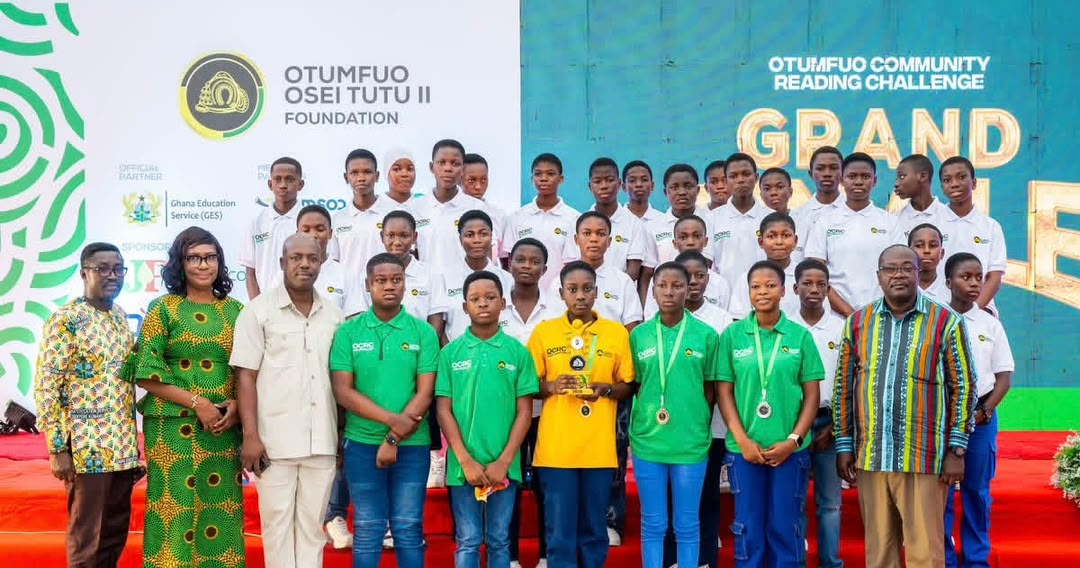
A pupil of Weweso M/A JHS, Joycelyn Akosua Manu Duah, has emerged as the winner of the 5th edition of the Otumfuo Community Reading Challenge.
Originally the Oduom champion of the competition, Joycelyn Akosua Manu Duah placed first ahead of four other finalists who competed for the ultimate prize in the annual reading competition.
Joycelyn secured 95.2 points at the grand finale held at the Manhyia Palace in Kumasi.
Stephanie Agyiewaa, who is the Duayaw Nkwanta champion from Yamfo Methodist School, lost the title by a slimmer margin, placing second with 95.1 points.
Twedie champion, Magdalene Duodu Akwabeng from Manuel International School, finished third with 94.3 points, while Obuasi champion, Randy Boakye Yiadom, from Bodomase St. Stephen R/C JHS followed the pack with 92.9 points.
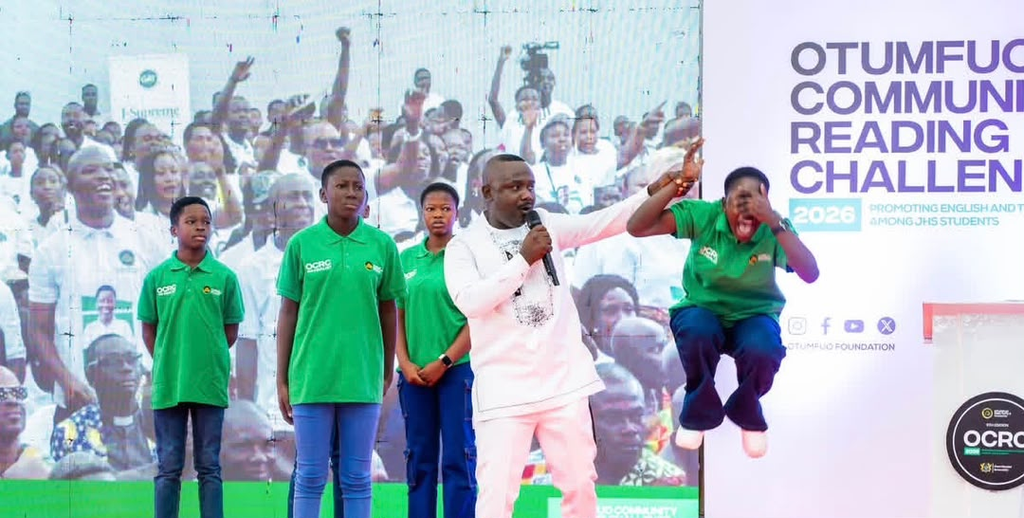
Meanwhile, Samuel Opoku Kyeremah, the Barekese champion from Adankwame D/A JHS, trailed the contest with 91.0 points.
The Otumfuo Community Reading Challenge was established by the Otumfuo Foundation to promote reading, improve literacy and encourage students to develop their reading and comprehension skills.
The 2026 competition marked its fifth edition, bringing together outstanding student readers from different communities to compete at the grand finale.
As part of her prize package, Joycelyn will receive an Otumfuo Foundation scholarship to university, a GH¢10,000 cash prize, as well as souvenirs from sponsors.
Joycelyn expressed her profound gratitude to her school and supporters for the achievement and a special appreciation to the Asantehene for the initiative.
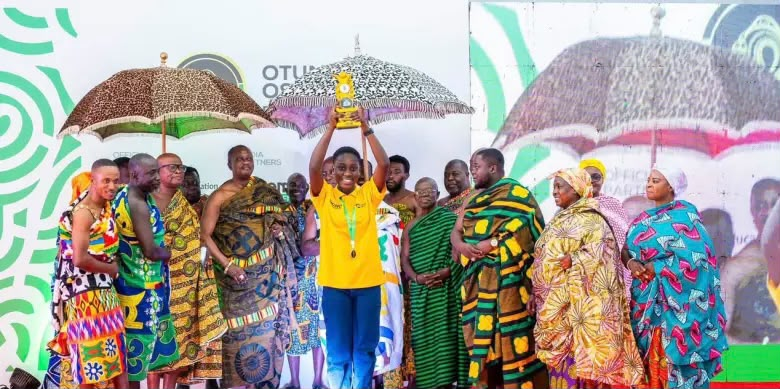
She encouraged her peers to leverage the opportunity to excel in academics.
“I urged all fellow students to take their studies seriously and remain focused on their education,” she added.
Otumfuo Hiahene, Nana Prof. Oheneba Baochie-Adjei, commended the initiative and called for continued investment in reading and education among young people.
He said initiatives such as the Otumfuo Community Reading Challenge are important in nurturing a strong reading culture and developing the intellectual abilities of young people.
Nana Prof. Oheneba further highlighted how articulating one’s thoughts in both the local dialect, Asante Twi, and English is helpful in bridging the gap between indigenous and modern culture.
“The students do not just read in our local dialect, but it helps them to know more about the history and culture of the Asantes,” he said.
DISCLAIMER: The Views, Comments, Opinions, Contributions and Statements made by Readers and Contributors on this platform do not necessarily represent the views or policy of Multimedia Group Limited.
DISCLAIMER: The Views, Comments, Opinions, Contributions and Statements made by Readers and Contributors on this platform do not necessarily represent the views or policy of Multimedia Group Limited.
Source link