
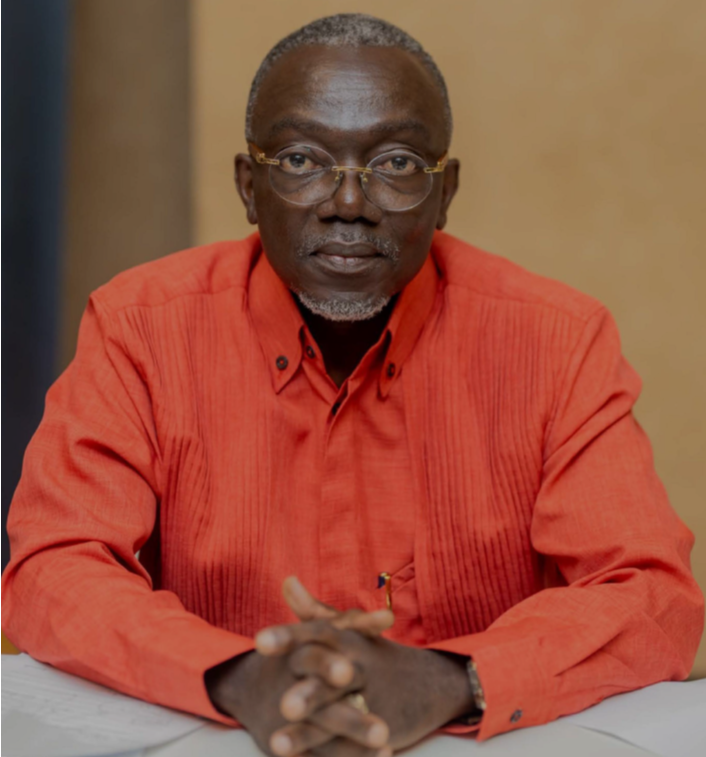
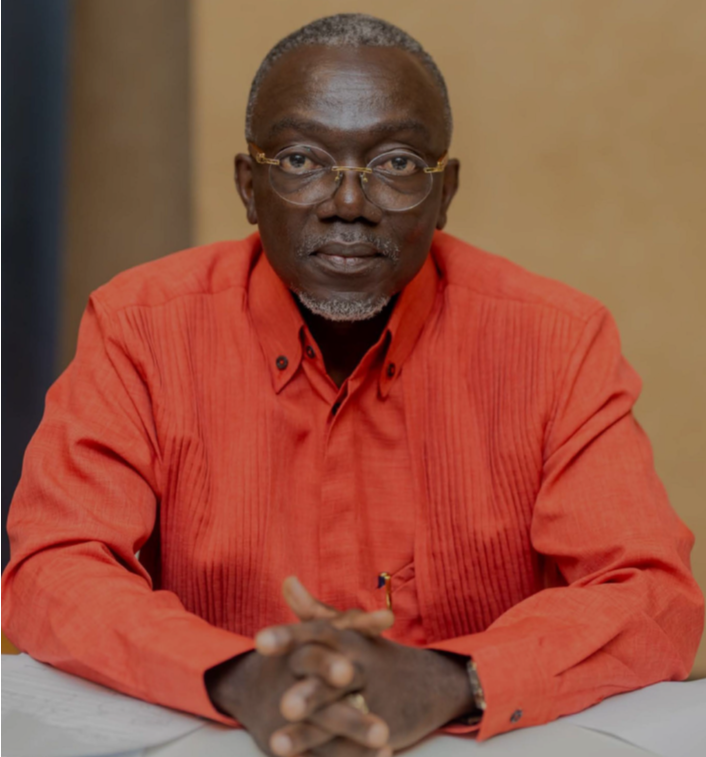
Ing. Professor Douglas Boateng Chartered Director (UK) • Chartered Engineer (UK) • Fellow Institute of Directors (UK) • Fellow Ghana Institution of Engineering
Africa does not need a miracle to end its road carnage. It needs citizens brave enough to obey, policymakers wise enough to fund, and politicians honest enough to choose courage over convenience.
The Grief We Have Learned to Call Ordinary
There are statistics that ought never to be merely read. They ought to be felt, the way a mother feels the empty chair at a Sunday table. The World Health Organisation estimates that road crashes kill approximately one point one nine million people every year and injure between twenty million and fifty million more. Road traffic injuries remain the leading cause of death among young people between the ages of five and twenty-nine, and more than half of those killed are pedestrians, cyclists and motorcyclists, the most defenceless travellers on any street.
Africa’s position within this global tragedy is especially sobering. The World Health Organisation’s African Region recorded an estimated two hundred and twenty-five thousand road deaths in a single recent year and now carries the world’s highest road traffic fatality rate. The continent accounts for close to a fifth of global road deaths while owning barely three per cent of the world’s vehicles, and while fatalities were falling in most regions, they continued climbing across Africa.
Sit with that arithmetic for a moment. Three per cent of the vehicles. Nearly a fifth of the funerals. As NyansaKasa (words of wisdom) reminds us, when the same stretch of road keeps collecting bodies year after year, wisdom must eventually ask whether we have quietly agreed to call tragedy normal. Crashes will always occur, but death on this scale should never be accepted as an ordinary toll of mobility.
The Cure Was Never Expensive; Only Our Will Was
There is a comforting myth in public policy that grave problems demand extraordinarily sophisticated cures. Yet a great many road deaths could be prevented through interventions so modest they rarely earn a ribbon cutting ceremony, among them a visible road sign, a functioning traffic light, a properly marked pedestrian crossing, thoughtfully designed junctions, a helmet worn without complaint and a seat belt fastened without persuasion. None of these sounds heroic. Together, they save multitudes.
The World Health Organisation reports that over a hundred countries reduced road deaths between two thousand and ten and two thousand and twenty one, several by more than half, Denmark, Japan and Norway among them, which rather elegantly destroys the fatalistic argument that rising road deaths must inevitably accompany rising motorisation. Countries make choices, and roads remember every one of them. The lesson is not that Africa should photocopy Europe or Asia, for our circumstances differ. It is simply that road deaths respond to deliberate intervention. As NyansaKasa (words of wisdom) observes, a road sign costing very little can protect a life that no national budget could ever replace.
The Law That Bends at the Roadside Breaks Somewhere Else
Engineering alone will not rescue us. A traffic light can instruct a driver to stop, yet it cannot manufacture respect, and a pedestrian crossing can be beautifully drawn, yet it becomes decorative artwork the moment motorists decline to yield. This is where the conversation must turn uncomfortable, and perhaps a little wry. Speeding kills, driving under the influence kills, and reckless overtaking, mobile telephones behind the wheel, and unfastened seat belts kill in equal measure. Weak enforcement quietly, almost politely, encourages every one of these habits.
There is a curious contradiction in demanding stricter enforcement for the other motorist while feeling personally aggrieved when the law catches up with us, for our own transgression always arrives with an excellent explanation. I was only speeding a little. I know somebody rather important. The cemetery, sadly, keeps no separate section reserved for those with the most persuasive excuses.
As NyansaKasa (words of wisdom) gently warns, a law repeatedly negotiated at the roadside eventually degrades into advice, and advice rarely frightens a reckless driver. Enforcement must therefore become predictable rather than occasional. Rwanda offers one instructive example, deploying camera-detected speeding and red light systems that issue notices specifying the offence, the location and the fine. The principle matters more than the particular technology. A driver should reasonably expect that breaking the law carries a high probability of consequence.
A Fine That Buys Forgiveness Cannot Buy Back a Life
Punitive fines deserve thoughtful design, not blunt imposition. A penalty so small that a wealthy or commercial driver simply budgets for it becomes little more than an operating expense, while a sanction that appears severe on paper yet is rarely enforced becomes theatre. Effective enforcement requires certainty, proportionality and escalation, and technology can reduce roadside discretion through cameras and transparent digital payment, curbing bribery while generating reliable intelligence about dangerous locations. Enforcement must nonetheless remain fair, for punitive should never mean arbitrary. As NyansaKasa (words of wisdom) puts it, the purpose of the fine is not to empty a driver’s pocket, but to place enough memory inside that pocket to change the next journey.
The Road Itself Stands Accused, and the Verdict Is Overdue
We must resist the convenient habit of blaming drivers for everything. Some roads are themselves poorly designed, with confusing junctions, missing signage, and streetlights that fail and remain unrepaired for months, while pedestrians are expected to cross wide, fast highways almost by faith alone. That is not mere inconvenience. It is institutional negligence wearing the polite disguise of an oversight.
Modern road safety philosophy increasingly accepts that human beings will make mistakes, and that road systems should be engineered so those mistakes do not automatically become death sentences. Africa therefore needs systematic safety audits around schools, hospitals, markets and known crash hotspots, and every serious crash should yield more than a police report. It should generate learning about speed, visibility, road geometry, signage and enforcement. When ten people repeatedly crash at the same junction, investigating only the drivers while leaving the junction untouched is not accountability. It is stubbornness dressed in an official jacket.
The Arithmetic of Mourning That Policymakers Refuse to Balance
Behind every fatality sits a quiet economic story. A breadwinner disappears, children lose their school fees, and a family inherits medical bills it never budgeted for. The World Health Organisation estimates that road crashes cost many countries roughly three per cent of gross domestic product, while the World Bank places the economic toll of fatalities and injuries in low- and middle-income countries at between two and six per cent. Consider that figure against Africa’s development priorities, as we search tirelessly for resources for education and healthcare even while road crashes quietly consume the human and economic capital we can scarcely spare. Road safety is therefore not merely a transport matter. It is economic policy, health policy and education policy, all wearing the same borrowed uniform, and ultimately, it is a moral policy.
Every policymaker who has ever weighed a road safety budget against a more visible, more photogenic priority has performed this arithmetic, whether consciously or not. A repaved junction rarely earns a headline the way a new stadium does. A functioning streetlight rarely earns applause the way a ribbon does. Yet the streetlight, unglamorous as it is, may be the only thing standing between a schoolchild and a hospital bed tonight. The honest question for every ministry, every budget committee and every development plan is not whether resources are scarce, for they always are, but whether road safety has ever once been allowed to compete fairly for them.
The Politician Who Cuts the Ribbon Rarely Signs the Maintenance Budget
There is a particular kind of political theatre that Africa knows intimately. A new road is commissioned with fanfare, a ribbon is cut before cameras, and a minister’s name is engraved somewhere near the entrance. Five years later, the streetlights along that same road have failed, the signage has faded into illegibility, and the maintenance budget that should have kept it safe was quietly reallocated, deferred or simply never approved. The politician who opens a road is remembered. The politician who keeps it safe rarely is, and perhaps that asymmetry explains more about our road carnage than any single engineering failure ever could.
This is not an argument against new infrastructure. It is a plea for the unglamorous discipline of maintaining what already exists. A nation’s road safety record is not written primarily in its inauguration ceremonies. It is written in its maintenance ledgers, its enforcement budgets and its willingness to fund the boring, recurring, non photogenic work of keeping citizens alive between elections. Any politician prepared to stand beside a ribbon should be equally prepared to stand beside the maintenance schedule, the enforcement statistics and the crash data, particularly the years when none of those figures flatter them.
Every Steering Wheel Was Once a Child’s Back Seat
Perhaps the most demanding solution begins nowhere near the road at all. It begins at home. The child who watches a parent drive through a red light, or an adult toss rubbish from a moving vehicle, is receiving a lesson far more durable than any classroom instruction. We cannot spend eighteen years quietly teaching children that rules are negotiable, and then express surprise when a driving licence fails to instil discipline overnight. Road safety must become part of education from early childhood, and parents must model the discipline they hope to see repeated. As NyansaKasa (words of wisdom) reminds us, the first driving school is often nothing grander than the back seat of the family car.
The Mirror Waiting in Every Windscreen
It would be convenient, and profoundly dishonest, to leave this reflection entirely at the feet of engineers, regulators and politicians. Every citizen who has ever paid a bribe to make a traffic offence disappear has purchased, quite literally, a small piece of somebody else’s future funeral. Every citizen who has ever driven past a stalled vehicle, a broken streetlight or a missing road sign without reporting it has decided, in that instant, that it was somebody else’s problem to notice. Every citizen who has ever excused a friend’s dangerous driving with a nervous laugh rather than an honest word has helped write the excuse that outlives the crash.
None of this diminishes the responsibility of those who design roads, enforce laws or allocate budgets. It simply insists that citizenship itself carries a duty of vigilance, one we too often surrender the moment it becomes inconvenient. The next generation will not primarily learn road discipline from a curriculum. They will learn it from watching whether we, their parents, neighbours and fellow citizens, treated the rules as sacred or as merely suggested. The mirror waiting in every windscreen does not only show the road ahead. On a clear day, it shows the driver too.
What Is Wrong With Us? History Is Already Taking Notes
Here the question becomes painfully personal, and perhaps that is precisely where it belongs. What is wrong with us if we know that speeding kills, yet continue speeding regardless? What is wrong with us if a broken traffic light can remain unrepaired for weeks while thousands pass anxiously through the same junction? What is wrong with us if a driver can commit offence after offence and still remain comfortably behind the wheel? What is wrong with us if a pedestrian must gamble with life merely to cross a street that was, in principle, built for their safety?
Africa need not wait for autonomous vehicles or futuristic highways before reversing this quiet carnage. We might simply start with what already works: signage impossible to miss, traffic lights that function without excuse, junctions honestly audited, speed limits enforced without favour, crash data published openly, and road agencies held accountable with the same seriousness we reserve for financial audits. Most importantly, we might finally stop treating road deaths as inevitable, for the evidence insists otherwise. Seventeen countries within the World Health Organization’s African Region reduced fatalities between two thousand and ten and two thousand and twenty one, some by nearly half. If some African nations can achieve such progress, improvement is clearly not foreign to our continent. It merely requires the discipline to choose it.
Every journey should end in arrival rather than mourning, every parent leaving home should reasonably expect to return to it, and every child crossing a road should be protected by more than prayer, however sincerely offered. Every government must understand that a citizen killed unnecessarily on a preventably dangerous road represents not merely another statistic, but a quiet indictment of systems and collective responsibility that could have chosen otherwise. Every citizen, equally, must understand that the same indictment does not stop at the minister’s office door. It follows us home.
As NyansaKasa (words of wisdom) reflects in closing, a road does not wake each morning wishing to harm anybody. Somewhere between its design, its maintenance, the vehicle, the law and our own behaviour, human choices quietly turn mobility into mourning. Change those choices, and in time, we change the obituary. Perhaps that is the truth that should prick our conscience most, citizen, policymaker and politician alike. Africa’s road carnage is not irreversible. We already possess most of the solutions we claim to be searching for. The question history will eventually ask is considerably more uncomfortable than any engineering diagram: how many more funerals did we quietly attend after we already knew precisely what needed to be done, and precisely whose responsibility it was to act?
About the Author
Ing. Professor Douglas K. Boateng is a strategist in governance, industrialisation and supply chains, and serves as a professional chairperson, an international Chartered Director (UK) and a Chartered Engineer (UK). A Pan-Africanist and social entrepreneur at heart, he has spent his career working across public institutions, corporate boards and industrial policy, in Africa and beyond, guided by the conviction that strong institutions are built one honest decision at a time. His contributions to industry and academia have earned him more than six lifetime achievement awards throughout his career. He is the founder of NyansaKasa, Words of Wisdom, a collection of daily aphorisms he has written and shared since late 2019, distilling decades of experience advising governments, boards and enterprises on governance, accountability and institutional resilience into words meant to challenge and to endure. He convenes the Boardroom Governance Summit, Africa’s largest boardroom-focused summit, and writes a widely read op-ed series titled “Inconvenient Truth” and “What Is Wrong With Us,” featured on some of the region’s leading digital media platforms. Professor Boateng can be reached via LinkedIn or at info@panavest.com.
DISCLAIMER: The Views, Comments, Opinions, Contributions and Statements made by Readers and Contributors on this platform do not necessarily represent the views or policy of Multimedia Group Limited.
DISCLAIMER: The Views, Comments, Opinions, Contributions and Statements made by Readers and Contributors on this platform do not necessarily represent the views or policy of Multimedia Group Limited.
Source link