By Rachel Kakraba
Kerian Turner, Partnerships and Development Officer, Public Media Alliance, PMA, has encouraged journalists, particularly women to prioritize their safety at all times, as the job comes with physical and digital risks. She said practitioners must be confident in speaking up about gaps in workplace safety arrangements, to help improve protection while carrying out professional duties.
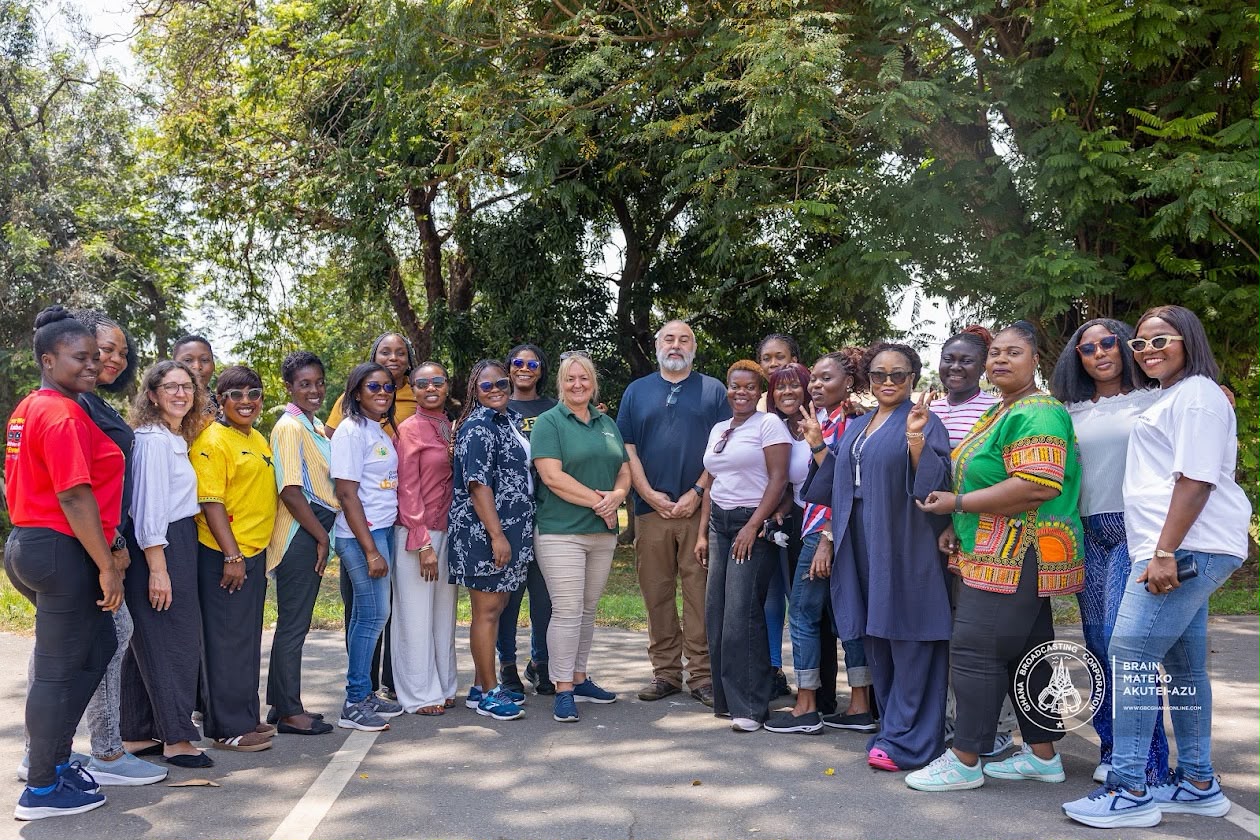
Madam Turner made the point during a two-day capacity-building workshop, organized by the Public Media Alliance, for women journalists from Ghana and Nigeria, in Accra.
The session was hosted by the Ghana Broadcasting Corporation, GBC, at its Kanda headquarters, from October 14th to 15th. It was facilitated by Lazarus Training Ltd, a UK based first aid training organization.
The Public Media Alliance, PMA, is the world’s largest group of public service media, supporting media work through advocacy, training, research and networking.
Twenty-one women journalists selected from PMA’s partner media institutions in Ghana and Nigeria, benefited from physical and digital safety training aimed at strengthening their capacity in responding to threats in the course of their work.
Participants were taken through topics including personal security, situational awareness, digital safety, managing hostile environments and psychological resilience.
Madam Turner, said the training follows the realization of deepening safety concerns of journalists across the world, with women facing peculiar circumstances.
“We realized that safety for journalists is a problem for men and for women in all areas of the world. But we were noticing small gaps where women needed a slightly different training due to the environment”
Seek support
Madam Turner, said practitioners who find it difficult to approach management directly with safety concerns should seek the support of colleagues.
“Safety is important and I understand that people are working and they don’t want to lose jobs, and they don’t want to upset managers or peers if they say something. However, there are ways of saying my safety is important please. If you cannot go to a manager, go to a peer who may have a bigger stronger voice, you can go together as a group”
She noted participants have been equipped to develop a safety toolbox, which will be a guide to ensure safety at all times. She also challenged media organizations to strengthen reporting structures and systems that ensure seamless reporting of safety concerns and incidents.
“We cannot control every environment, we cannot help every person, but what we can do is look at where the risks are, where the gaps are, and pull together a toolbox. Each woman journalist will come out with a toolbox of things that they know can make a difference”
Network of women journalists
Madam Turner was hopeful the training was the beginning of instituting a network of women journalists who will continue to be on the lookout for each other.
“Ultimately we’ve created a network that we can help each other not just today”
“We need to keep this going, the momentum of safety needs to go, not just for women journalists, but for all journalists,” she added.
About project
Madam Turner, said with funding from the United Nations Educational Scientific and Cultural Organization, UNESCO, the Public Media Alliance, launched the project – “COVID’s Legacy: The Role of African Media in Keeping Women Journalists Safe”.
The initiative she said follows concerns about gaps in safety training for journalists, particularly in the aftermath of the COVID-19 pandemic, which affected media budgets and changed working arrangements in newsrooms.
“Covid had a profound effect on budgets, a lot of journalists were working alone, people were working at home, and they were isolated. So we decided to come up with this project looking at what is needed in African media, specifically Ghana and Nigeria, to help women journalists do their job and feel empowered to do their job because that’s what they should feel”
Providing further detail about the project she said;
“It has been a four-part project, with the first part based on research, interviews, focus groups with managers and women journalists from universities in Accra and Lagos, with a research report expected to be published later in the year.
Part two, is a training of managers on reporting incidents when things go wrong or putting together risk assessments into place.
Part three, was the mental health training for women journalists which was conducted online by Reuters and final phase being the physical and digital safety with Lazarus Training Ltd”
Conduct vulnerability assessment
A safety trainer with Lazarus Safety Training, Alistair Hollington, acknowledged heightened risk involved in the work of journalists, as they are perceived as contributing to societal challenges, hence easily targeted.
“All journalists face risks now because you are not seen as being impartial, you’re seen as part of the problem, but women journalists face a whole line of risks as compared to male colleagues”
He therefore encouraged the adoption of a comprehensive approach to personal safety before, during and after field assignments.
According to him conducting individual vulnerability, assessment is key to minimizing risks while carrying out professional assignments.
“We broke it down to three parts, planning before assignment, and a vulnerability assessment. What risks is this person facing, what is their previous background, risk perception and so on”
Digital safety
Mr. Hollington, emphasized the need for journalists to protect their devices and remain aware of the personal information about them available online. He also encouraged vigilance with digital footprints, stressing that proactive steps must be taken to safeguard privacy and security, particularly in an increasingly connected media environment.
Avoid predictive routine
Laura Sullivan, First-aid instructor with Lazarus Safety Training, also advised women journalists to remain alert of their surroundings, work in teams whenever possible and avoid predictable routines that could expose them to security threats.
“Be aware of your surroundings; always try to work in pairs or threes so you always have someone there to back you up. Just make sure that you are not doing the same pattern every day. If you feel unsafe then do not go into that environment, do not put yourself in harm’s way, although you are a journalist”
She commended participants for their enthusiasm throughout the sessions.
“Everyone was very engaging, they asked the right questions, got involved and I absolutely enjoyed the course with you”
Madam Sullivan, emphasized the importance of building strong professional networks and using them to spread knowledge beyond the training room. She said participants could leverage their connections in the media to educate and encourage other women, not only in journalism but also across various professions, where women continue to face similar challenges.
Conclusion
The Capacity-building workshop ultimately empowered beneficiary journalists and institutions to create lasting solutions, protecting journalists and fostering press freedom and democracy, in Ghana and Nigeria.
Participants expressed appreciation to organizers for the investment, aimed at improving their professional competencies.
The Public Media Alliance, PMA, has since held a learning review where participants reflected on the training and how to apply lessons.