

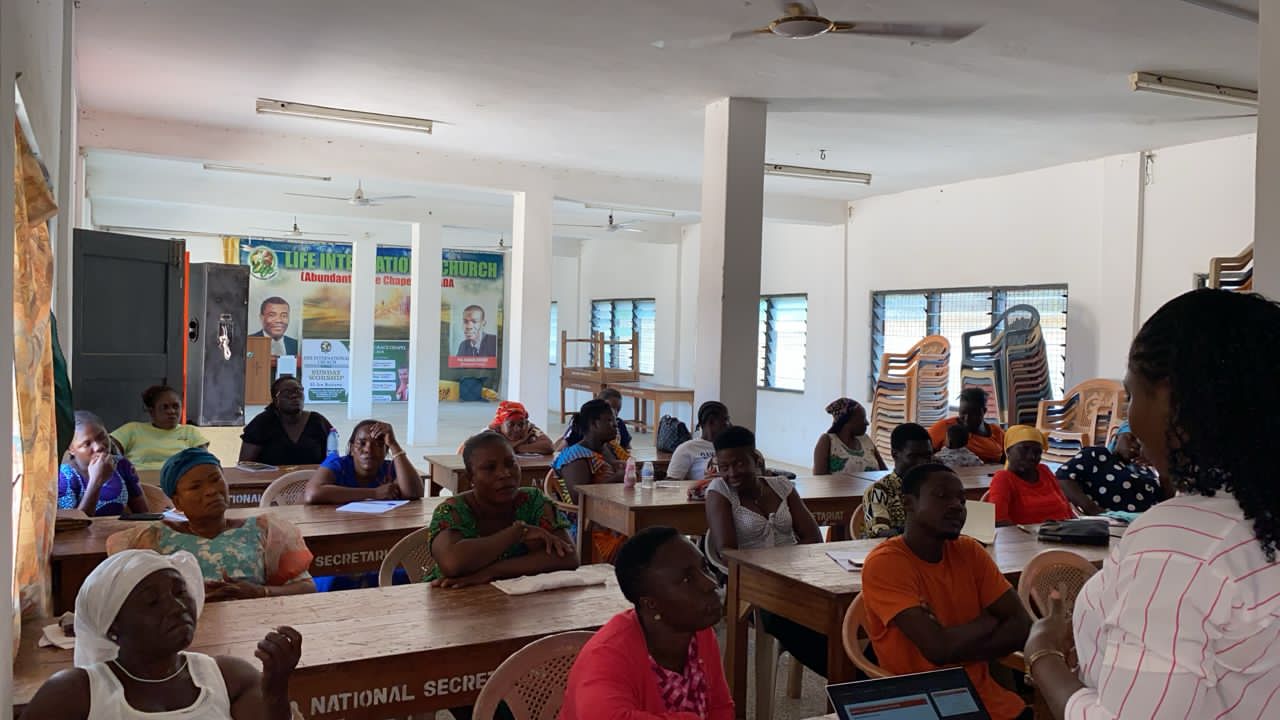
Women cross-border traders have been equipped with knowledge and tools to better navigate opportunities under the African Continental Free Trade Area (AfCFTA), amid persistent harassment, illegal charges and procedural bottlenecks at border posts.
The training formed part of a virtual “train-the-trainers” session organised by DevCraft Africa and the Network of Women in Growth (NEWIG), in partnership with the National Cross-Border Women in Trade Association (NCBWTA), with support from the Africa Capacity Building Foundation and ESAMI/TRAPCA under the CADAST Project.
The training sought to deepen participants’ understanding of AfCFTA provisions, trade compliance procedures and gender-responsive approaches to trade facilitation, while also clarifying the role of task force members in supporting women engaged in informal cross-border trade.
Facilitators, including National Coordinator of NCBWTA, Oscar Akaba, and Director of DevCraft Africa, Veronica Dzeagu, highlighted that AfCFTA presents significant opportunities for women traders, including zero tariffs on selected perishable goods such as vegetables, onions and tomatoes, as well as faster and simplified border processes.
According to the facilitators, improved systems could reduce border crossing time from about 30 minutes to as little as five minutes, while also opening access to larger regional markets such as those in Togo, Benin, Nigeria and Equatorial Guinea. The agreement also seeks to formalise informal trade through identification systems and enhance legal protection for traders.
However, participants noted that these benefits remain largely underutilised due to persistent barriers, including harassment, illegal charges, limited knowledge of procedures and documentation challenges.
Discussions during the session revealed that many traders struggle with proper classification of goods using Harmonised System (HS) codes, preparation of key documents such as invoices and packing lists, and navigating declaration processes, often resulting in reliance on third-party agents and increased costs.
Other challenges identified include product damage during inspection and language barriers, which frequently lead to misunderstandings and disputes at border posts.
To address these issues, the training outlined seven key steps required for trade compliance: classification of goods, understanding applicable regulations, preparation of documentation, declaration through the Integrated Customs Management System, payment of duties through official government platforms, inspection and clearance, and post-clearance record keeping.
Participants were advised to keep transaction records for at least four years to ensure compliance and facilitate audits.
The role of the Cross-Border Women Traders Task Force was also emphasised, with members expected to educate traders, support documentation and declaration processes, intervene in cases of illegal charges and serve as a link between traders and border authorities.
They are further required to demand official receipts for all payments and escalate cases of harassment or extortion to national coordinators and relevant regional bodies, including ECOWAS and AfCFTA country offices.
A key component of the training focused on gender-responsive trade facilitation. Participants were encouraged to advocate for the establishment of gender desks and safe reporting mechanisms at border posts, increased deployment of female officials, improved infrastructure such as storage and sanitation facilities, and the use of digital payment platforms to reduce opportunities for extortion.
However, a notable discussion challenged the assumption that increasing the number of female border officials would automatically improve conditions for women traders. Participants observed that competence, professionalism and empathy are more critical than gender, noting instances where female officers were perceived as stricter than their male counterparts.
Participants also noted that gender champions within border agencies often face hierarchical constraints, limiting their ability to advocate, as they are required to prioritise institutional authority over complaints.
The training also highlighted structural constraints limiting the effectiveness of “gender champions” within border agencies, as hierarchical systems often restrict their ability to advocate independently. As a result, stakeholders proposed the establishment of an independent task force structure outside customs systems to strengthen advocacy for traders’ rights.
Additionally, the simplified trade regime – designed for small-scale traders transporting goods of up to 3,000 kilogrammes – was identified as a key opportunity that remains underutilised. The regime allows traders to bypass complex procedures and avoid engaging agents, but participants stressed the need for proper enforcement to ensure its benefits are realised.
An escalation framework was outlined to support traders facing challenges, starting with task force members at border posts, followed by national coordinators in respective countries, and ultimately regional bodies for more complex disputes.
Participants were also urged to intensify awareness creation, promote uptake of trader identification systems and document evidence of abuses to support enforcement of existing protocols.
Organisers indicated that follow-up in-person engagements will be held to translate the knowledge gained into practical action and strengthen coordination among stakeholders.
The training underscored that while AfCFTA offers a pathway to expanded market access and trade facilitation, its success for women traders will depend on improved awareness, strict adherence to procedures and sustained efforts to address systemic barriers at the borders.
Post Views: 86
Discover more from The Business & Financial Times
Subscribe to get the latest posts sent to your email.