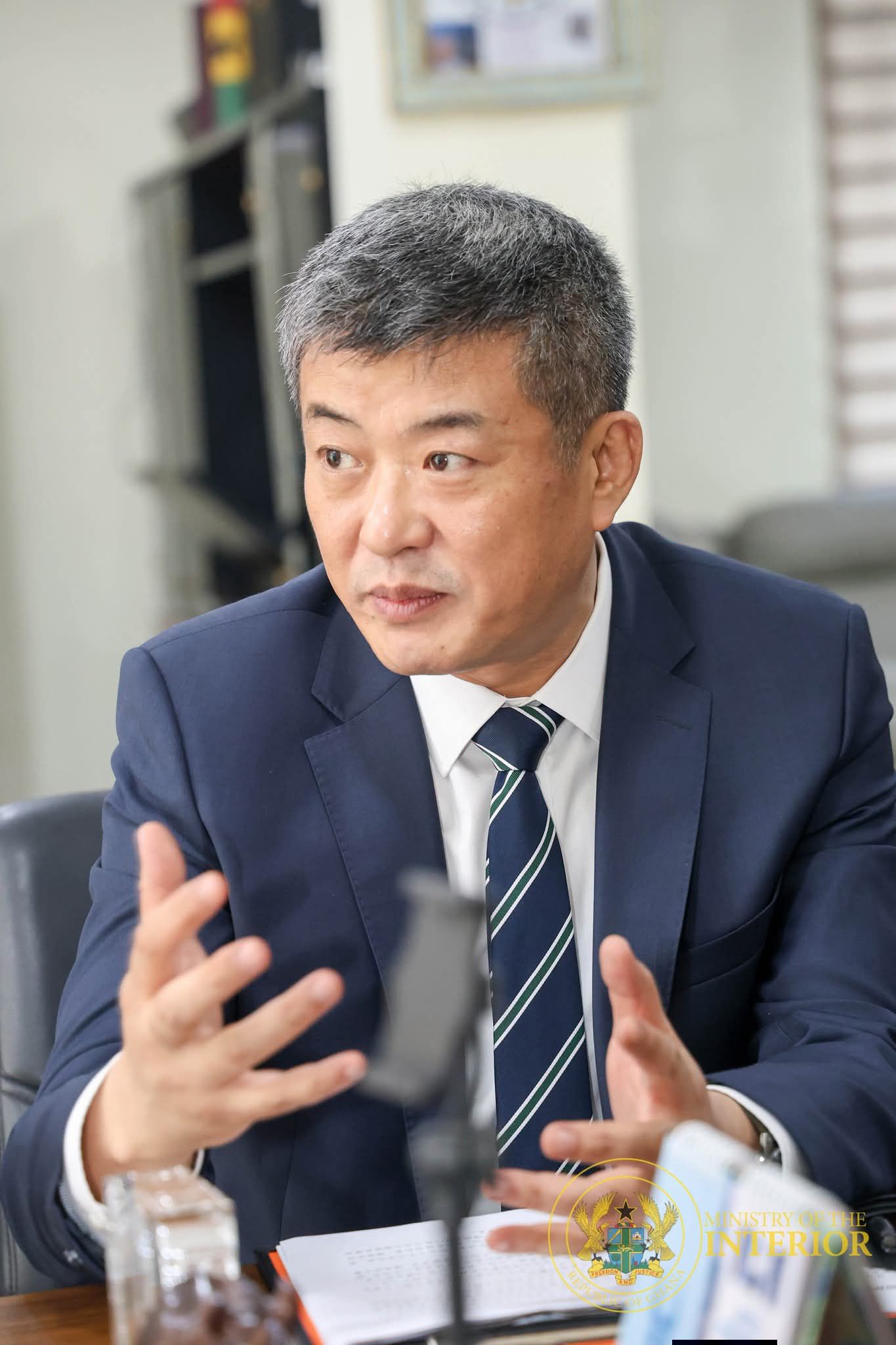

By H.E. CONG Song, Ambassador of China to Ghana
On 14th February, Chinese President Xi Jinping announced in his congratulatory message to the 39th African Union Summit that China would implement zero-tariff treatment on all products from 53 African countries that have diplomatic relations with China starting from 1st May, 2026, and continue to promote the negotiation and signing of economic partnership agreements for shared development.
As of now, China has become the first major economy in the world to unilaterally grant full zero-tariff treatment to all African countries and least developed countries with which it has diplomatic relations. China’s vast market will bring unprecedented new opportunities for Africa and will inject strong momentum into China-Africa trade and investment cooperation as well as Africa’s economic modernisation.
Sharing opportunities and pursuing development: China advances steadily in high-level opening-up
Upholding the principle of sincerity, real results, amity and good faith and the principle of pursuing the greater good and shared interests with Africa, since 2005, China has granted zero-tariff treatment on some products from least developed countries, including those in Africa. As China has expanded its level of openness, the range of products covered by zero tariffs has continued to grow.
This zero-tariff treatment is an innovative arrangement in the process of negotiating the economic partnership agreements for shared development with African countries that are not classified as least developed, and represents a major step in China’s firm commitment to expanding high-level opening-up.
During the 14th WTO Ministerial Conference held in March 2026, 129 parties to the WTO Investment Facilitation for Development (IFD) Agreement, including China, issued a joint ministerial declaration, announcing the firm commitment to the multilateral trading system with the WTO as its core, the opposition to all forms of unilateralism and protectionism, and the determination to defend the foundational principles such as the most-favored-nation treatment. China will promote global economic development through openness and cooperation, contributing to a more connected, dynamic, and inclusive global economic order.
Empowering trade and promoting transformation: zero-tariff treatment supports Africa’s industrialisation
The zero-tariff treatment will help reduce costs and increase profits by lowering the cost of African products entering the Chinese market, giving them a competitive edge. It will promote the integration of trade and investment, attracting investment in Africa from China and other trading partners, bringing capital, technology, equipment, and management expertise.
It will also drive economic upgrading by encouraging diversification of Africa’s export products, increasing added value, optimising export structures, benefiting small farmers and micro, small, and medium-sized enterprises, and creating many new jobs.
Furthermore, the zero-tariff treatment will facilitate the transformation and upgrading of China-Africa cooperation models. By empowering trade, it will expand cooperation from project-based engagement to industrial collaboration, forming comprehensive and multi-dimensional partnerships, stimulating Africa’s endogenous development momentum, extending industrial value chains, and supporting Africa’s industrialisation and agricultural modernisation.
Advancing globalisation and building a community with a shared future: China-Africa solidarity and cooperation bring stability to the world
With the acceleration of unprecedented transformation, the world has entered a new period of turbulence and change, with rising unilateralism and protectionism, while spillover effects from tensions in the Middle East are impacting the African continent.
China is proactively expanding its opening-up to Africa, using “tariff subtraction” to achieve “trade addition” and “livelihood multiplication.”
The zero-tariff treatment explores new paths for China-Africa development, injects greater stability into the world through the certainty of China-Africa solidarity and cooperation, opens a new chapter in advancing modernization together, and provides fresh momentum for global development.
China and Africa have stood shoulder to shoulder in struggles against imperialism, colonialism, and hegemony, and now move forward together on the path of development and revitalisation. This reflects the deep-rooted traditional friendship between the two sides. China welcomes Africa to board the “express train” of its development and helps Africa overcome development bottlenecks.
This demonstrates China’s global vision of mutual benefit. Both China and Africa view each other’s development as an opportunity and actively promote shared prosperity through strengthened cooperation. This highlights the mutually beneficial nature of the China-Africa community with a shared future.
President Kwame Nkrumah has said, “We have here, in Africa, everything necessary to become a powerful, modern, industrialized continent.” China’s zero-tariff policy will not only further unlocks the Chinese market, but also help Africa to achieve industrialization and self-development.
China has long been Ghana’s largest trading partner and a major source of investment. In 2025, our bilateral trade reached a record USD 14.1 billion, increasing 19.3% year on year. Hundreds of Chinese enterprises are investing and operating in Ghana, supporting Made-in-Ghana productions and the Ghana’s industrialisation drive.
This year marks the first year of China’s 15th Five-Year Plan and a crucial year for advancing Ghana’s “24-Hour Economy” and “Resetting Ghana” Agenda. China’s zero-tariff policy will further unlock Ghana’s export potential, and open up broader prospects for mutually beneficial cooperation between our two countries.
Let us join hands to become a steadfast force for safeguarding the common interests of developing countries and defending the multilateral system, harness the momentum of China’s zero-tariff policy to advocate an equal and orderly multipolar world and a universally beneficial and inclusive economic globalization, building a community with a shared future for humanity.
Post Views: 1
Discover more from The Business & Financial Times
Subscribe to get the latest posts sent to your email.