

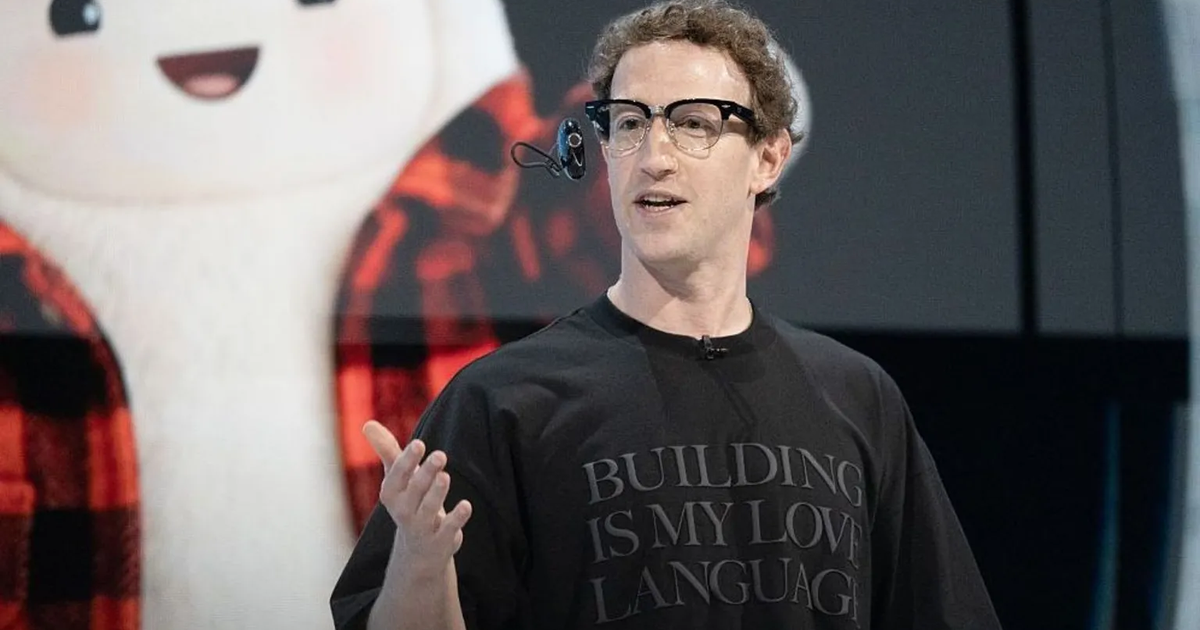

Meta has agreed to a new deal with chief executive Mark Zuckerberg to keep him in California over a proposed state tax on billionaires.
The agreement gives Zuckerberg, whose wealth is estimated at more than $200bn (£149bn), even more shares in Meta to offset the fraction of his fortune he may lose if the tax wins voter approval in November.
The measure would impose a one-time 5% tax on residents with net worth over $1bn. It would likely require the Facebook co-founder to pay about $10bn in additional state taxes.
He secured the deal with a special committee of Meta after “robust” and “at several points, contentious” negotiations, according to a Wednesday financial disclosure.
California is home to most of the US’s technology giants and there are around 225 billionaires who reside in the state, according to the Americans for Tax Fairness campaign group.
The wealth of such people, including Zuckerberg, has ballooned in recent years. Meanwhile, his estimated effective tax rate in California was less than 1% each year.
Nevertheless, Zuckerberg told Meta’s board last month that he was considering moving his primary residence out of California and even selling his property in the state. His main homes in California are in Palo Alto and Lake Tahoe.
Such a move “would be public and inevitably noted and commented upon by company employees”, Zuckerberg told the board.
It would also “raise questions for management of the company going forward”, he claimed.
In response, Meta decided to create more shares of stock to give Zuckerberg a way to make up any wealth he may lose through the tax proposal.
Through what’s known as a stock split, announced by the company on Wednesday, Meta created a new type of stock and gave one new share to each existing shareholder. Zuckerberg is one of the company’s largest shareholders and famously controls the company through the design of his holdings.
Under the deal, he will receive more stock more often and can sell it quarterly, according to the company’s financial filing. The shares will not change his level control over Meta, but they will allow him to cash in more easily on the company’s value.
The deal appears to be effective even if the one-time tax in California does not pass, and will go on for eight years – as long as Zuckerberg remains a resident of California.
‘Critically important’
Meta called the deal with Zuckerberg its “Founder Alignment Agreement,” saying it was “critically important” to keep him leading the company from California given the “dramatic and unprecedented transformation taking place in the tech industry and global economy related to artificial intelligence.”
The company alluded to problems the company experienced during the Covid-19 pandemic, when Zuckerberg began working outside of the office and mostly from his large compound in Kauai, Hawaii.
After a surge in hiring at Meta during the pandemic, a whistleblower scandal that led to renewed focus on child safety, and a refocus within the company to building out the “metaverse,” which included renaming the company Meta from Facebook, the company began mass layoffs and restructuring.
Layoffs have continued into this year. The company’s headcount is down 15% from a year ago, meaning it has shed at least 10,000 workers.
Today, the company has moved away from the “metaverse,” or virtual platforms, and is more focused on artificial intelligence products and related tools.
With Zuckerberg leading the company’s efforts to catch up in the AI race, Meta’s board said it sees a future of “tremendous market opportunity” for the company.
Major tech companies are set to spend an estimated $1 trillion this year alone developing AI and the costly infrastructure around it, like data centres.
Meta said on Wednesday it planned to spend as much as $145bn this year on AI projects. The company has increased the amount it expects to spend on AI each financial quarter so far this year.
It is spending so much on the technology that it posted negative cash flow for the first time since the company went public 14 years ago. Cash flow represents the money a company retains after paying for operations and investments, meaning Meta is now spending more money than it is bringing in.
And the company intends to spend even more in the year ahead. Susan Li, Meta’s chief financial officer, said on Wednesday that another benefit of the stock split would be to give the company more ways to finance future spending on AI work.
The degree of the company’s spending on AI, without an clear new revenue stream coming from it, appeared to spook investors on Thursday.
Meta’s shares fell more than 7%, wiping more than $100bn off of the company’s market capitalisation, a key metric used worldwide to measure the value of a publicly-traded company.
DISCLAIMER: The Views, Comments, Opinions, Contributions and Statements made by Readers and Contributors on this platform do not necessarily represent the views or policy of Multimedia Group Limited.
DISCLAIMER: The Views, Comments, Opinions, Contributions and Statements made by Readers and Contributors on this platform do not necessarily represent the views or policy of Multimedia Group Limited.
Source link