


The African Export-Import Bank (Afreximbank) and its subsidiaries have reported robust financial results for the year ended December 31, 2025, highlighting their resilience and strategic execution despite global economic uncertainties.
The Group’s total assets and contingencies rose by 21% to US$48.5 billion, compared to US$40.1 billion in 2024. Net loans and advances increased by 16% to US$33.5 billion, driven by disbursements across Africa and the Caribbean in sectors such as manufacturing, infrastructure, food security, and climate adaptation.
Gross income climbed to US$3.5 billion, up 6% from the previous year, while net income surged by 19% to US$1.2 billion. Shareholders’ funds grew to US$8.4 billion, supported by net earnings and new equity inflows under the General Capital Increase II initiative.
The Bank maintained strong asset quality, with the non-performing loan ratio stable at 2.43%, and liquidity remained solid with cash and cash equivalents at US$6.0 billion, representing 14% of total assets.
Operating expenses rose to US$459.2 million, reflecting staff expansion and inflationary pressures, but the cost-to-income ratio of 21% remained well below the strategic ceiling of 30%.
Afreximbank also demonstrated its fundraising strength by successfully raising over US$800 million through Samurai and Panda bonds in Japan and China, countering concerns raised by rating agencies.
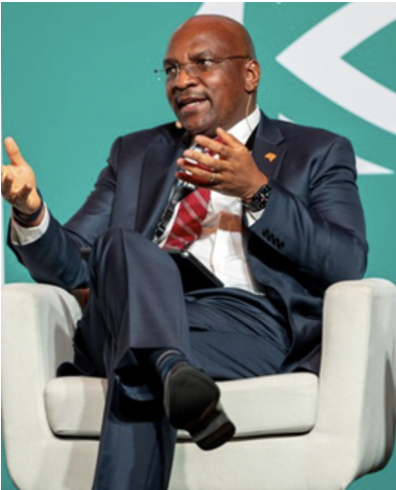
Senior Executive Vice President Denys Denya noted that the Group had delivered excellent financial performance in 2025, describing it as a tribute to a decade of leadership under President Benedict Oramah. He said the Bank’s balance sheet was at its strongest level ever, with liquidity and capitalisation well above target, and subsidiaries such as FEDA and AfrexInsure now profitable. Mr Denya added that Afreximbank entered 2026 with significant momentum to accelerate trade integration and value addition across Africa.
Highlights of the results for Afreximbank Group are shown below:
| Financial Performance Metrics | FY’2025 | FY’2024 |
| Gross Income (US$ billion) | 3.5 | 3.3 |
| Net Income (US$ million) | 1,156.8 | 973.5 |
| Return on average equity (ROAE) | 15% | 15% |
| Return on average assets (ROAA) | 3.04% | 2.96% |
| Cost-to-income ratio | 21% | 18% |
| Financial Position Metrics | FY’2025 | 9M’2024 |
| Total Assets (US$ billion) | 42.3 | 35.3 |
| Total Liabilities (US$ billion) | 33.9 | 28.1 |
| Shareholders’ Funds (US$ billion) | 8.4 | 7.2 |
| Non-performing loans ratio (NPL) | 2.43% | 2.33% |
| Cash/Total assets | 14% | 13% |
| Capital Adequacy ratio (Basel II) | 23% | 24% |
African Export-Import Bank (Afreximbank) is a Pan-African multilateral financial institution mandated to finance and promote intra- and extra-African trade.
For over 30 years, the Bank has been deploying innovative structures to deliver financing solutions that support the transformation of the structure of Africa’s trade, accelerating industrialisation and intra-regional trade, thereby boosting economic expansion in Africa.
A stalwart supporter of the African Continental Free Trade Agreement (AfCFTA), Afreximbank has launched a Pan-African Payment and Settlement System (PAPSS) that was adopted by the African Union (AU) as the payment and settlement platform to underpin the implementation of the AfCFTA.

Working with the AfCFTA Secretariat and the AU, the Bank has set up a US$10 billion Adjustment Fund to support countries effectively participating in the AfCFTA.
At the end of December 2025, Afreximbank’s total assets and contingencies stood at over US$48.5 billion, and its shareholder funds amounted to US$8.4 billion.
Afreximbank has investment grade ratings assigned by China Chengxin International Credit Rating Co., Ltd (CCXI) (AAA), GCR (A), Japan Credit Rating Agency (JCR) (A-), and. Moody’s (Baa2).
Afreximbank has evolved into a group entity comprising the Bank, its equity impact fund subsidiary called the Fund for Export Development Africa (FEDA), and its insurance management subsidiary, AfrexInsure (together, “the Group”). The Bank is headquartered in Cairo, Egypt.
Post Views: 12
Discover more from The Business & Financial Times
Subscribe to get the latest posts sent to your email.