
By Joshua Worlasi AMLANU
Government is preparing to launch a country-led health financing compact with the World Bank, signalling a shift toward aligning domestic resources and external funding under a single, government-defined framework for health investment.
Chief of Staff Julius Debrah said the planned ‘Country Compact’ will be co-led by the Ministries of Health and Finance and anchored in measurable targets and sustainable financing, marking a move away from fragmented donor-led interventions toward a coordinated national strategy.
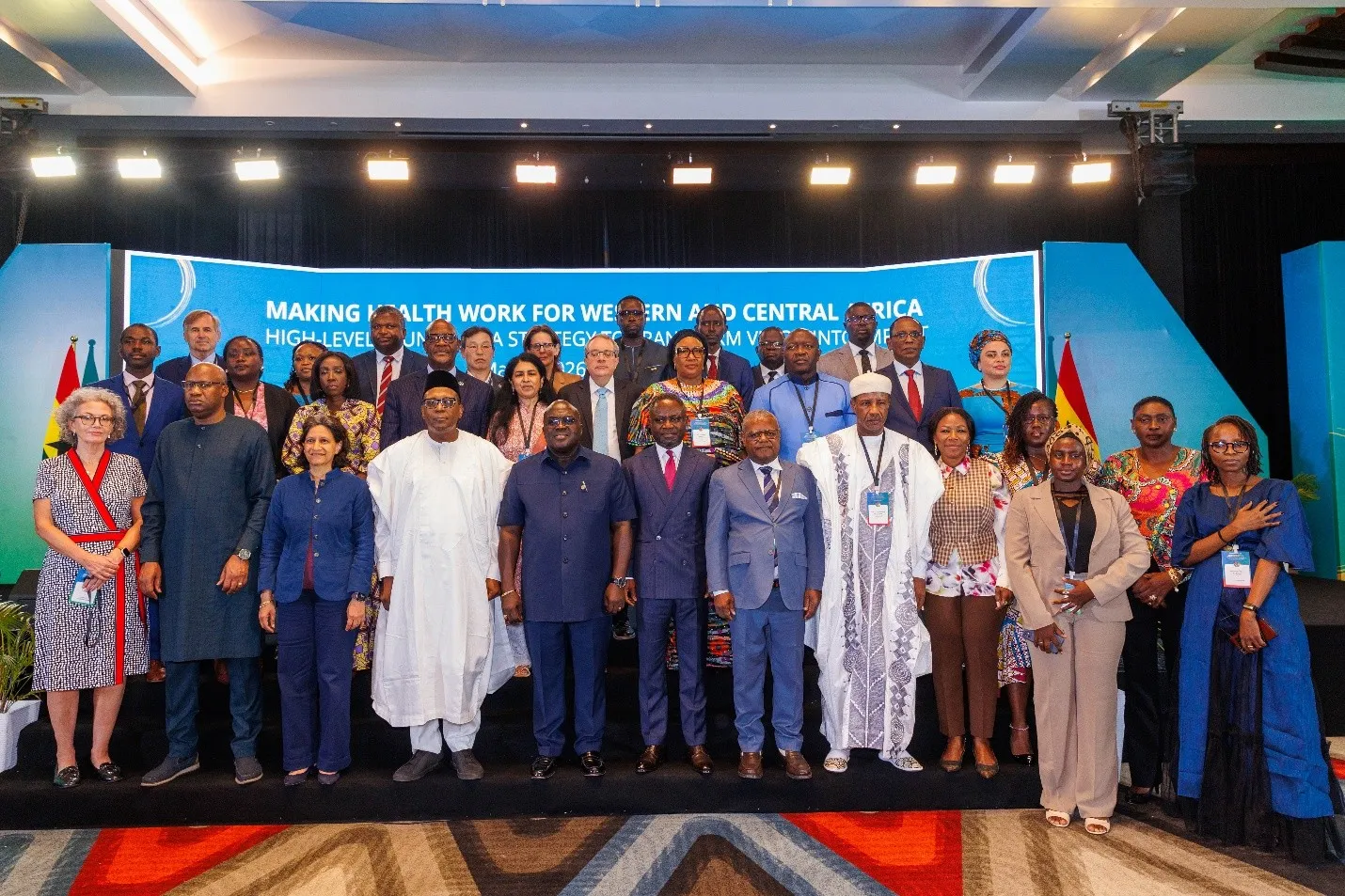
“This Compact represents a new way of working,” Debrah said at the World Bank’s Regional Health, Nutrition and Population Strategy launch in Accra.
He added that the framework will align domestic resources, concessional financing and partner support behind a single vision, positioning countries as “co-authors of their future”.
The compact aligns with a broader shift under President John Dramani Mahama’s ‘Accra Reset’ initiative, which seeks to redefine how African countries engage global health financing.
World Bank Division Director Robert R. Taliercio said the initiative reflects growing political commitment to national ownership of health systems.
“He is sending a strong signal that charting a new path forward is a matter of national priority and political commitment,” Mr. Taliercio said, noting the Bank’s support for this approach.
The World Bank is also preparing a new country partnership framework with Ghana to guide engagement over the next six years, building on a relationship that dates back to 1957 and spans sectors including health, energy, agriculture and macroeconomic stability.
The compact model is being introduced alongside the Bank’s ‘Fit to Prosper’ regional strategy, which targets delivery of quality, affordable health services to 200 million people in West and Central Africa by 2030. The Bank’s regional portfolio includes 24 active operations across more than 20 countries with commitments of about US$4.4billion, supported by an additional US$340million in co-financing.
Health Minister Kwabena Mintah Akandoh said Ghana’s planned Universal Health Coverage Compact will align domestic reforms and external support around measurable outcomes in primary healthcare, financial protection and service quality.
“Development support achieves its greatest impact when it is aligned with national priorities, coordinated around country systems and measured by the difference it makes in people’s lives,” he said.
Government reforms are already underway to strengthen financing and access. These include uncapping the National Health Insurance Levy to boost domestic revenue, rolling out a Free Primary Healthcare initiative to reduce out-of-pocket costs and establishing the Ghana Medical Trust Fund, also known as MahamaCares, to support treatment for non-communicable diseases and other high-cost conditions.
Mr. Taliercio said Ghana’s experience provides a template for the region, citing progress in reducing childhood stunting and strengthening health financing systems. He noted that Ghana is among a small group of countries in West and Central Africa that have improved health outcomes sufficiently to position themselves for a demographic dividend.
The regional strategy reflects broader macroeconomic and demographic pressures. Government health-spending across West and Central Africa averages about 1.5 percent of GDP, below peer regions, while debt servicing has outpaced health budget growth in most countries. At the same time, the region faces persistent health challenges- including high maternal and child mortality and rising burdens of non-communicable diseases.
By 2050 nearly one-fifth of the world’s young people are expected to live in the region, increasing the urgency of investments in health and nutrition as drivers of productivity and economic growth. The World Bank estimates that gaps in early childhood health outcomes continue to constrain human capital development, with long-term implications for labour markets.
Mr. Debrah said Ghana’s reforms are intended to shift the health system “from dependency to sustainability”, integrating domestic financing with concessional and partner resources while strengthening accountability through measurable targets.
The World Bank strategy emphasises three priorities: strengthening primary healthcare delivery, improving the efficiency and scale of health financing and building resilience against shocks including pandemics and climate-related risks. It also calls for better coordination of development assistance and stronger alignment with government systems.
Implementation risks remain. Health systems across the region face shortages of skilled personnel, infrastructure gaps and weak budget execution – with some countries underspending health allocations significantly. External financing flows are also expected to tighten, increasing pressure on domestic resource mobilisation.
Officials say the compact model offers a pathway to improve efficiency and long-term sustainability.
The health minister said focus is now trained on translating commitments into “action, budget, performance and results”, with primary healthcare positioned as the system’s foundation.
Post Views: 7
Discover more from The Business & Financial Times
Subscribe to get the latest posts sent to your email.