
…Between press Freedom Day and Mother’s Day are the women who held up both. It is time we named what it cost them.
On 3rd May every year, the world pauses to mark World Press Freedom Day. Governments issue statements. Journalists receive awards. Declarations are signed in rooms with good lighting and great coffee. UNESCO’s 2025 World Press Freedom Index recorded the steepest global decline in press freedom in over a decade. Three out of four women in journalism globally say they have experienced some form of online violence or harassment [UNESCO/ICFJ, 2022]. In sub-Saharan Africa, women make up fewer than a third of working journalists, and the numbers thin further the higher up the editorial ladder you go. These are the facts we cite. They are important. They are real.
But there are other facts. Facts that do not make it into indices. Facts that live in alarm clocks set for 4am in the morning, in school uniforms laid out the night before, in the invisible burden of a woman who has to be at a studio before the city has stirred and still has to make sure a child gets to school. These facts do not get a day. Nobody issues a declaration for them.
This week, as we marked Press Freedom Day, I found myself thinking not about governments or legislation or even the journalists imprisoned for telling the truth, important as all of that is. I found myself thinking about some women I know. Women I worked with. Women who gave this industry their best years, their sharpest instincts, their most creative hours and who did it whilst simultaneously being mothers, in an industry that has never quite worked out how to hold both things at once. I want to write about them today. Not as case studies.
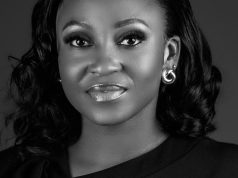
As people. Because Mother’s Day falls on 10th May this year, just seven days after Press Freedom Day, and it seems to me that the women who sit at the heart of both conversations have waited long enough to be named in the same breath. Eunice Tornyi is the kind of person who makes you feel, the moment she walks into a room, that proceedings can now begin. There is something about her presence warm, assured, completely alive to the moment that makes an occasion feel held. As a television host, PR professional, and business development expert, she has carried major platforms on the strength of that presence. She hosted the award-winning African Women’s Voice, and I want to pause on that title for a moment.

Not Women’s Corner. Not the soft, apologetic slot that so many broadcasters have historically offered women, as though female experience were a niche interest to be accommodated between the programmes that really matter. African Women’s Voices. It was a declaration. It said: what women on this continent think, feel, endure, and aspire to is not a sidebar. It is the story. Eunice understood that, and she brought to that programme the same ambition, the same editorial standards, the same expectation of excellence that any flagship show would demand. It won awards because she refused to treat it as anything less than important. Outside the studio, she has been MC at more events than I can count the kind of MC who does not merely open and close proceedings but holds the emotional architecture of an entire occasion together by instinct and craft. Eunice is also a mother. She will tell you herself, if you ask her, how she managed it. I suspect the real answer, like the real answer for most women in this industry, is: one impossible day at a time.
Press freedom, as we tend to discuss it, is about what the state withholds. The journalist jailed for a story. The broadcaster shut down by a government that does not like the coverage. The editor whose newspaper is pulled. These violations are real and they demand our outrage. But there is another kind of “unfreedom” that we discuss far less, and it is the one that Ghanaian women in the media have been navigating quietly for decades. It is the freedom or the absence of it to build a full career without your domestic life becoming your professional liability.
Research into the experiences of female journalists across West Africa consistently finds the same things: irregular and punishing hours, little or no maternity support beyond the legal minimum, newsroom cultures that regard a woman’s family responsibilities as her personal problem rather than a structural challenge the institution should share. These are not dramatic violations. Nobody goes to prison for them. But they are, in their quieter way, a form of captivity.

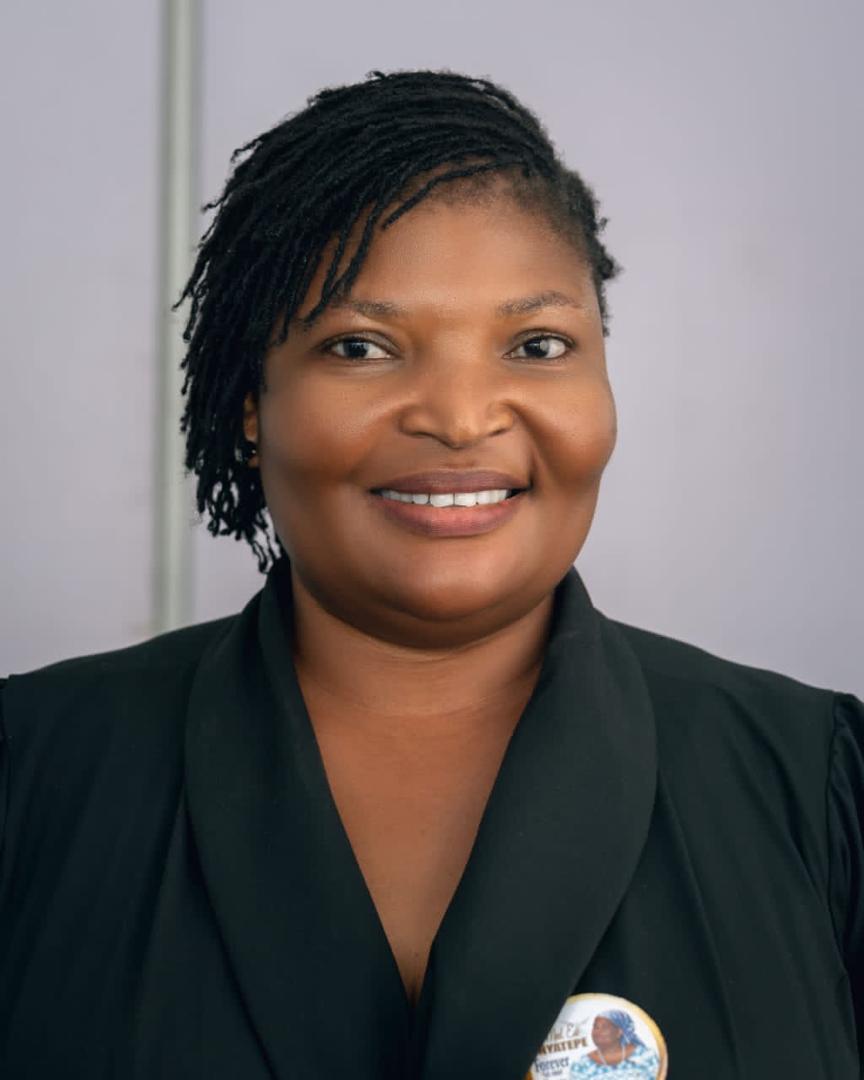
Fati Shaibu-Ali hosted the Happy Morning Show. I want you to sit with that for a moment. The morning show. She was at her microphone before most of Accra had opened its eyes, delivering the kind of warm, informed, energetic radio that makes people feel the day is worth beginning. What the listeners did not hear what nobody heard, because this is not the kind of thing that gets broadcast was everything that came before it. The alarm in the dark. The child to be dressed and fed. The thermos of koko left on the kitchen counter because there was no time to sit down.
The school drop-off arranged or completed before Fati herself could reach the studio on air before 6AM, school gates at 7AM, the whole morning a relay race that nobody in the credits ever ran with her. She later became editor for the news operation, overseeing content across multiple platforms a serious, senior editorial role that she earned entirely on merit. She was, across the arc of her career at those stations, managing the front and the back of the house simultaneously: the broadcast and the edit, the public voice and the private coordination. And she did all of it without, as far as I am aware, the industry ever formally acknowledging what the schedule was costing her at home. No employment contract I have ever seen in this industry contains a clause that says: we understand what this morning shift means for a mother, and here is how we intend to support you. The contract simply does not include that page.
Then there is Mercy Buabeng. Mercy Bee, to anyone who knows her work. She is one of the most complete entertainment media producers I have come across in my time in this industry, and I do not say that lightly. At Happy 98.9 FM, she produced Showbiz Extra, Ayekoo After Drive, DJ Adviser, and Dr Cann now of blessed memory, and their legacies are kept partly alive by the calibre of the work she built around them when they were with us. She was brilliant, inventive, funny, and completely committed to the work, all of this before she became a mother. She had already built a serious career on her own terms by the time motherhood arrived. And when it did, she went on to become the first producer of Happy Evening Drive with Akua Sika shaping a show, building its identity, managing its moving parts, doing the creative heavy lifting of a new programme as a new mother.
That is the detail I want people to understand. Not that she coped. That she pioneered. She went on from radio to television, hosting Girls Vibe and Countdown to Christmas on eTV Ghana, moving between formats and platforms with the ease of someone whose talent was never format-specific but simply and entirely her own. Mercy Bee did not let motherhood shrink her ambitions. But I find myself asking and I think it is a fair question whether the industry that benefited from her refusal to shrink ever truly reckoned with what that refusal cost her in the quiet hours nobody saw.
Lawrenda Danso’s name, in Ghanaian entertainment circles, requires no introduction. From Shatta Wale to Stonebwoy and every significant figure in between, she has navigated this landscape with a depth of access and a network of relationships that most of her male counterparts would envy. But the breadth of her career is worth stating plainly, because it tends to get taken for granted in the way that only women’s careers do. She began in television production, honing her craft across visual formats before making the transition to radio a move that, far from being a step down, demonstrated the range of a producer who understands storytelling in any medium.
Over more than fifteen years, she has produced the Late Night Celebrity Show, the Afia Schwarzenegger Show, Ghana Today, E Request, and African Women’s Voices yes, the same award-winning show that Eunice Tornyi hosted, a detail that says something about how tightly and brilliantly these women’s careers have been interwoven. She currently produces Happy Evening Drive with Akua Sika, the very programme that Mercy Baubeng was the first to build from the ground up. She has worked alongside some of the most significant names in Ghanaian broadcasting. And in 2025, she received a nomination for Media Producer of the Year at the Ghana Entertainment Awards USA recognition that arrived, it should be said, after fifteen years of work that fully merited it, which is itself a comment on how long the industry waits before it gets around to applauding its women.
I want to ask something that I think we should ask more often: did the industry give back what she gave it? Did fifteen years of output, access, and creative investment translate into the kind of security, seniority, and structural support that a man with the same portfolio would have been able to assume? I am not in a position to answer that definitively. But I am quite sure the question has not been asked nearly often enough, and I am not willing to celebrate her nomination as I genuinely, wholeheartedly do without asking it.
And then there is Stella Sweetie Aklika, who was a receptionist. I have been going back and forth about including her in this piece, and every time I do, I arrive at the same answer: of course she belongs here. She was not on air. She will not appear in a press freedom index or a year-end list of notable women in Ghanaian media. But she held the front of a media house together. She absorbed its culture, managed its daily pressures, facilitated the work of everyone around her and she went home to the same responsibilities that her colleagues with microphones went home to. Does she count? She counts. And the fact that the question feels at all necessary is its own verdict on an industry that has always been selective about whose experience deserves to be included in the story it tells about itself.
We are seven days away from Mother’s Day. Last Sunday, we marked World Press Freedom Day. The proximity of these two occasions is not, I think, a coincidence worth wasting. Because the women who deserve to be at the centre of both conversations are so often the same women. The ones who filed the copy, produced the shows, hosted the programmes, built the platforms and then went home and did the second shift that no job description has ever acknowledged and no editorial calendar has ever been built around.
Press freedom matters enormously. It is worth defending and worth celebrating. But freedom is not only what the state withholds. It is also what the industry declines to offer: the freedom to be a mother in the media without it being counted, quietly, against you. The freedom to be excellent at your craft without your domestic life becoming your professional liability. The freedom to have a full career that does not ask you, at every turning point, to sacrifice one part of yourself in order to sustain the other.
Eunice, Fati, Mercy, Lawrenda, Sweetie. They built something. They gave it everything. And the industry they gave it to was, by every structural measure, freer than they were. They deserved better. Most of them still do. Press Freedom Day should count them next year, not merely the journalists behind bars. Mother’s Day next week should thank them, not merely the mothers at home. And the industry, this industry that all of us have loved and argued with and given ourselves to should start paying what it owes: in policy, in equal pay, in flexible structures, and in employment contracts that finally, after all this time, include that missing page.
World Press Freedom Day: 3rd May 2026. Mother’s Day: 10th May 2026.
Bridget Mensah believes the right story, told well, can change everything. A communications strategist and gender equality advocate with 10+ years in Ghana’s media industry, she uses words as tools for accountability and amplification particularly for women. She leads communications for the Network of Women in Broadcasting (NOWIB), She is the Head of Corporate Affairs at Ghana Digital Centres Ltd (GDCL)
Post Views: 1
Discover more from The Business & Financial Times
Subscribe to get the latest posts sent to your email.