

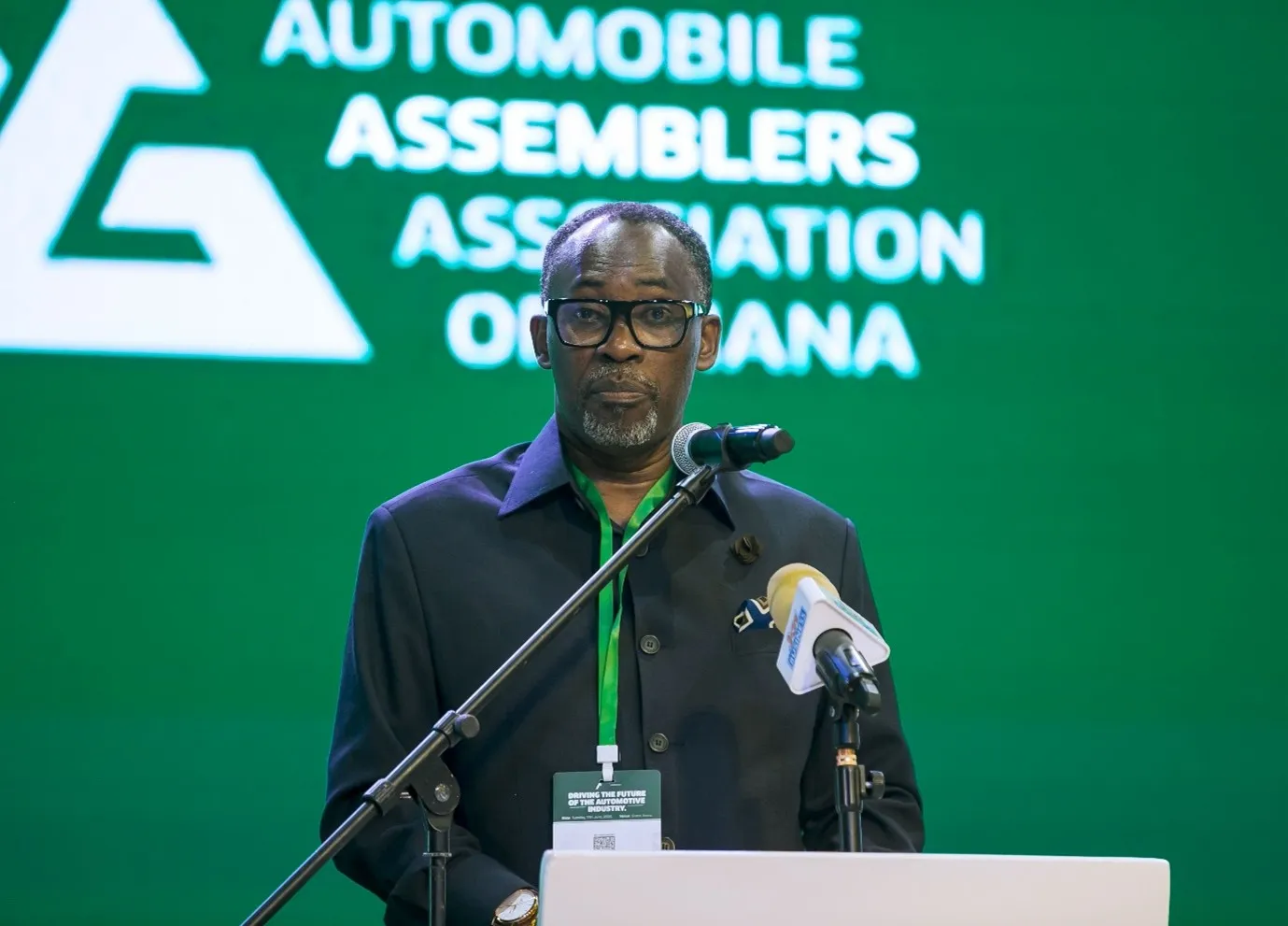

The local automobile assembly industry is facing a potential collapse following removal of key tax incentives in the 2026 national budget, according to the Automobile Assemblers Association of Ghana (AAAG).
AAAG warned that the decision to eliminate a 20 percent value added tax (VAT) exemption on applicable duties for locally assembled vehicles could severely undermine viability of the sector, which has only recently begun to take shape.
Speaking during the Presidential Dialogue held in Accra, AAAG president Jeffrey Oppong Peprah said the policy-shift has significantly altered the business environment for local assemblers.
The dialogue, convened by President John Dramani Mahama, brought together private sector leaders to explore partnerships aimed at accelerating economic growth and positioning the economy as a regional production hub.
Mr. Peprah, who also serves as Chief Executive Officer (CEO) of Volkswagen Ghana, stressed that sustained incentives are critical if the private sector is to respond meaningfully to government’s industrialisation agenda.
He cautioned that without immediate policy intervention, the sector risks losing gains made over the last five years.
Policy foundation under threat
The concerns stem from potential erosion of the Ghana Automotive Development Policy introduced under former Trade and Industry Minister Alan Kyerematen – aimed at attracting global automotive brands to establish assembly plants in the country.
The policy combined protective measures and targetted incentives, including duty waivers for Semi Knocked Down (SKD) vehicle imports, higher tariffs of up to 35 percent on fully-built imported vehicles and restrictions on vehicles older than 10 years.
To address implementation challenges, government later introduced additional support measures including a 20 percent VAT exemption and duty-waivers of between 5 and 10 percent.
According to AAAG, these interventions created a 25 to 30 percent cost advantage.
“For the last three to four years, these incentives enabled us to assemble vehicles competitively, reduce prices for consumers and justify our investments,” Mr. Peprah said.
Industry viability at risk
However, the of VAT exemption’s removal has fundamentally disrupted that balance. Mr. Peprah warned that this decision has effectively rendered the business model for local assembly unviable.
“This decision has effectively pulled the rug from under our feet. The business case for local assembly is no longer viable. If the policy is not reversed, we will be forced to halt operations. In fact, some global brands have already stopped ordering assembly kits,” he added.
He cautioned that the implications could be severe, including closure of up to seven assembly plants, loss of more than 400 skilled engineering jobs and reputational damage to Ghana as an investment destination.
Investment exposure and expansion plans stalled
Vice President-AAAG Salem Kalmoni, who is also Managing Director of Japan Motors Trading Company Ltd., said Association members have collectively invested nearly US$80million in assembly facilities, equipment and workforce development.
Japan Motors alone assembled about 1,400 vehicles in 2025 and had planned to expand its operations prior to the policy change.
“It is unfortunate that just five years into this journey our investments are under serious threat,” Mr. Kalmoni said.
Call for urgent policy intervention
The Association is now urging the Ministry of Finance – through the Ministry of Trade, Agribusiness and Industry – to urgently restore the VAT exemption or introduce a temporary 35 percent duty increase on imported vehicles as a stop-gap measure.
Mr. Kalmoni explained that local assembly industries typically incur higher production costs in their early stages and require sustained government support until they achieve scale. He noted that the withdrawn incentives had enabled manufacturers to offer high-quality vehicles at relatively competitive prices despite these constraints.
He further emphasised that strengthening local assembly will enhance Ghana’s ability to leverage opportunities under the African Continental Free Trade Area Secretariat by promoting component manufacturing and boosting intra-African trade.
Despite ongoing engagements with government, the Association says progress has been slow – raising concerns that the industry is approaching a critical breaking point.
“Local assemblers are now on their knees. Once current stock is depleted, operations will cease – inevitablly leading to job losses,” Mr. Kalmoni warned.
Industry representation
AAAG represents nine registered vehicle assemblers operating in Ghana: Toyota Tsusho Manufacturing Ghana, Silver Star Auto Ltd., Rana Motors Ghana, Hyundai Motors and Investments Ghana, Automobile Industries Limited, Honda Manufacturing Ghana, Zonda Tec Ghana and Kantanka Automobile.
The Association was established to unify the voice of local automobile manufacturers and advocate for policies that support the sector’s growth and long-term sustainability.
Post Views: 1
Discover more from The Business & Financial Times
Subscribe to get the latest posts sent to your email.